Support

Castello Malaspina di Massa

About

Majestically perched atop a limestone hill, Malaspina Castle in Massa stands as one of the most impressive fortifications in the region. This unique historical complex, located in the city of Massa, served for centuries as both an impregnable fortress and a luxurious residence for the nobility. The castle windows offer breathtaking views of the Apuan Alps and the endless blue of Italy's Tyrrhenian coast.
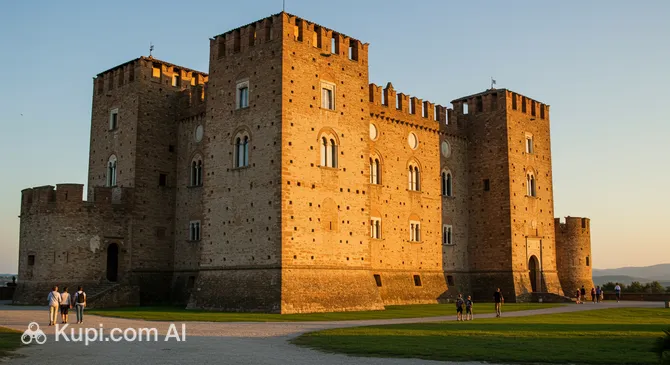
Malaspina Castle of Massa
Malaspina Castle of Massa. Иллюстрация. Источник: Kupi.com AI

The architecture of the complex is a harmonious blend of different eras. Here you can see the austere medieval keep (donjon) from the 11th–12th centuries, massive bastion walls with embrasures, and an elegant Renaissance-era residential palace. One of the main jewels of the castle is its inner courtyard with colonnades and intricately decorated facades, which emphasizes the status of its former owners—the Marquises of Malaspina.

Today, the castle is recognized as an important cultural and artistic center. After extensive restoration, it is open to the public, allowing visitors to touch the history of fortification and enjoy the atmosphere of aristocratic Tuscany. It is not just a museum, but a living testament to the evolution of Italian architecture from a defensive outpost to a magnificent palazzo.

Contacts

To contact the administration of the site or clarify details for your visit, you can use the official contact information. The castle is municipal property and is managed by local authorities.

How to contactContact
AddressVia del Forte, 15, 54100 Massa MS, Italy
Phone+39 347 816 3224
Websitewww.comune.massa.ms.it

What to Do

A stroll through the castle grounds is a true journey back in time. You can start by exploring the ancient keep, located at the highest point of the rock, and then walk along the long bastion walls. From their height, you can enjoy the best panoramic views of the city plains and the sea, allowing you to appreciate the strategic importance of this location. Don't forget to examine the deep moats cut directly into the stone and the remains of the old barbican.

The residential palace offers a special aesthetic pleasure. Its facades, decorated with Renaissance motifs, and the irregularly shaped courtyard create an atmosphere of refinement amidst the stern fortifications. Inside the rooms, temporary art exhibitions and historical displays are often held, telling the story of the Marquises' daily life and the history of fortification in the region.

If you are planning a visit in June, try to catch the Spino Fiorito festival. This vibrant gastronomic and cultural event turns the castle into a hub for foodies: it features tastings of the best local wines and products, costumed performances, and traditional attractions. At other times of the year, the castle remains an ideal place for quiet contemplation and studying the evolution of defensive architecture from the Middle Ages to the late Renaissance.

Getting There

The castle is located at Via del Forte, 15, at the very top of the hill overlooking the city's historical center. If you are traveling by car, follow the signs from the city center uphill. The roads can be quite narrow, so using a GPS is recommended. Parking is available both at the foot of the hill and in the immediate vicinity of the fortress entrance.

For those who prefer public transport, the most convenient way is to take a train to the Massa Centro station (on the Viareggio – La Spezia line). From the station, you can reach the castle by taking a local Lampo bus to the stop near Via del Forte, or take a taxi to save energy for the climb.

Walking enthusiasts can reach the fortress gates from the city center in about 15–25 minutes. The path goes uphill along the picturesque Via del Forte, offering gradually unfolding breathtaking views of the rooftops and the sea horizon.

Ближайший город: Massa

History & Facts

The first mentions of a settlement on this site date back to 882, but the castle began to take shape as a powerful defensive point in the 12th century. In 1164, Emperor Frederick Barbarossa granted part of the fortifications to the Malaspina family, whose name the fortress bears to this day. The castle's history has been eventful: it survived destruction in 1269 and a major reconstruction in the 14th century under the leadership of the legendary commander Castruccio Castracani.

The golden age of the fortress arrived in the 15th–17th centuries, when it transformed from a stern military facility into a luxurious Renaissance residence for the Marquises. Alberico I Cybo-Malaspina played a special role in its appearance, under whom the castle became the heart of a small but flourishing principality. It was during this period that the facades of the residential palace were decorated with elegant details, contrasting with the power of the bastions.

In later times, starting from the mid-17th century, the site's strategic importance changed again—it was used primarily for military purposes and then turned into a prison. The castle remained in this somber status until 1946. Today, after thorough scientific restoration, the complex appears to tourists as a unique chronicle of Tuscan architecture, preserving traces of all eras—from the medieval keep to the exquisite palace loggias.

Time Needed

To leisurely explore all the architectural levels of the fortification, peek into the palace's residential quarters, and fully enjoy the panoramas from the fortress walls, most travelers need about 1.5–2 hours. This is enough time to feel the change of eras and take beautiful photographs.

If your visit coincides with temporary art exhibitions or cultural festivals, it is worth setting aside half a day. A walk to the castle from the city center and back will also add about 40 minutes of pleasant walking to your itinerary.

Working Hours

Currently, the castle may be closed temporarily or accept guests on a limited schedule due to restoration work or changes in exhibitions. Usually, tours are conducted several times a day accompanied by a guide or in an open-access format.

Since opening hours can vary significantly depending on the tourist season (summer and winter schedules differ), we highly recommend checking the current schedule on the official website of the Massa municipality or by calling the contact phone number before planning your trip.

Nearby

After visiting the fortress, it is worth spending time exploring the surroundings, which preserve the atmosphere of old Tuscany. The area around the hill is literally steeped in history, and a short walk will allow you to see several more noteworthy sites.

NameDistance
La Bodeguita Mercurio0.4 km
Ducal Palace of Massa0.6 km
Il Colpo al Cerchio0.7 km
Cathedral of Saints Peter and Francis0.7 km
La Congiura Steakhouse1 km
Il Trillo Ristorante1.9 km
MareMonti Shopping Center3.1 km

Reached the end of the page?

That means the route is fully explored