Support

Palazzo Ducale di Massa

About

Strolling through the central square of Massa, it is hard to miss the grand building that has become the architectural symbol of the region. The Ducal Palace of Massa (Palazzo Ducale) is a majestic residence whose construction began back in the 16th century. Located in Italy, this site embodies the transition from the strict Renaissance to opulent Baroque, serving as the main monument of the Cybo-Malaspina family's rule.
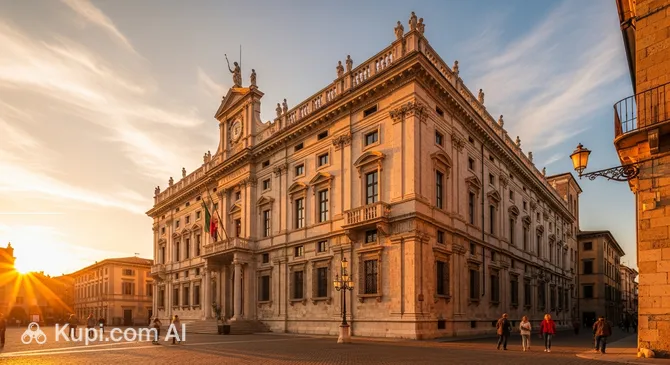
Ducal Palace of Massa
Ducal Palace of Massa. Иллюстрация. Источник: Kupi.com AI

One of the palace's most striking features is its unique facade. The contrasting combination of deep red walls and dazzling white Carrara marble creates an incredible visual effect. The architects skillfully used decorative elements and even false windows to achieve perfect symmetry for the building, despite the technical challenges of the time.

Today, the palace is not just a historical monument but a living cultural center. It houses the offices of the prefecture and the province, but the most significant historical halls remain open to art lovers. The interiors are breathtaking: from the grand marble staircase to the exquisite halls filled with mirrors and frescoes depicting the deeds of ancient lineages.

Contacts

For up-to-date information regarding events and potential access restrictions to administrative offices, you can use the following contact details:

How to contactContact
AddressPiazza Aranci, 35, 54100 Massa MS, Италия
Phone+39 0585 816252

What to Do

Start your visit by examining the unusual facade while standing on the famous Piazza Aranci. Be sure to notice how skillfully the marble decorations are woven into the building's appearance. Passing through the main entrance, you will find yourself in the inner courtyard, nicknamed the "artificial forest" due to the 100 slender marble columns supporting the elegant loggia. It is a perfect spot for atmospheric photos.

After climbing the wide grand staircase, try to visit the Swiss Salon and the magnificent Hall of Mirrors. The ceilings of these rooms are adorned with rich stucco and 18th-century frescoes depicting the triumph of human genius. Don't miss the nymphaeum—a decorative grotto located between the library and the stage—as well as the small but impressive Ducal chapel with its marble "Nativity" bas-relief on the altar.

If you are lucky enough to be here during cultural exhibitions or concerts, be sure to attend—it is the best way to experience the acoustics and grandeur of the halls where Elisa Bonaparte once hosted guests. Complete your visit with a slow walk across the square itself, breathing in the scent of the orange trees that gave it its name.

Getting There

The palace is located in the heart of the historic center at Piazza Aranci, 35. Thanks to its central location, it is easily reachable on foot from almost anywhere in the city. If you are traveling by train from Tuscan cities like Lucca or Pisa, get off at Massa Centro station. From the station, you can take a leisurely 5–10 minute walk to the palace square via Via Dante Alighieri.

For those who prefer buses, the Massa central bus station is also within walking distance (about 10–15 minutes). If you are coming from Pisa Airport, it is most convenient to take a train or a direct bus service; the journey takes about an hour.

Travelers by car should take the A12 motorway (Genoa — Livorno) to the Massa exit. Then, follow the signs to the city center (Centro). There are several paid parking lots around Piazza Aranci where you can leave your car before exploring the pedestrian zone.

Ближайший город: Massa

History & Facts

The construction of this majestic structure began in 1567 at the initiative of Prince Alberico I Cybo-Malaspina. His goal was to create a residence that could rival the finest palaces of the Italian Renaissance in its brilliance and emphasize the high status of the rulers. Over the centuries, the building was expanded: for example, under Carlo I, the luxurious Swiss Salon (Salone degli Svizzeri) was added, named after the guards, and the main entrance was decorated with an elegant terrace.

Teresa Pamphili, the wife of Duke Carlo II, played a special role in the palace's appearance. It was by her command that the courtyard was decorated with its famous one hundred marble columns. To hide architectural imperfections and the asymmetry resulting from numerous reconstructions, architect Alessandro Bergamini applied a genius solution — contrast finishing. The bright red plaster combined with snow-white marble created a harmonious and memorable image inspired by Roman Baroque.

A new chapter in the building's history began in 1806 when Napoleon granted the duchy to his sister Elisa Bonaparte. She transformed the palace into her official residence, creating royal apartments and halls for her ladies-in-waiting inside. It was by Elisa's order in 1807 that Piazza Aranci (Orange Square) was laid out in front of the building, becoming the city's signature landmark. Today, the palace remains a vital symbol of the region's cultural identity.

Time Needed

A quick look at the architectural ensemble and a stroll across the square takes about 30 minutes. However, if you plan to go inside, visit the colonnaded courtyard, and see the chapel, you should set aside 1 to 2 hours. This will allow you to appreciate the Baroque decor without rushing and take beautiful photos of the facade.

Keep in mind that the palace often hosts temporary exhibitions and cultural events. If your visit coincides with one of these events, your stay may be longer. We also recommend leaving some time to relax on Piazza Aranci to simply enjoy the atmosphere of this historical site.

Working Hours

The palace is typically open to the public on weekdays: from 08:00 to 13:00 and after the siesta from 15:00 to 20:00. On Saturdays, the building is usually closed to the public, while on Sundays it resumes work according to the standard schedule.

It is important to remember that the building houses government offices, so access to certain historical halls may be temporarily restricted due to official events. Before visiting, it is recommended to check for updates on the official city website or at the Massa tourist office.

DayWorking hours
понедельник08:00–13:00, 15:00–20:00
вторник08:00–13:00, 15:00–20:00
среда08:00–13:00, 15:00–20:00
четверг08:00–13:00, 15:00–20:00
пятница08:00–13:00, 15:00–20:00
субботаЗакрыто
воскресенье08:00–13:00, 15:00–20:00

Nearby

A walk around the Ducal residence allows you to dive deeper into the atmosphere of old Tuscany. The area is rich in historical details, from ancient gates and bridges to defensive structures from various eras.

NameDistance
La Bodeguita Mercurio0.2 km
Il Colpo al Cerchio0.2 km
Cathedral of Saints Peter and Francis0.2 km
Malaspina Castle of Massa0.6 km
La Congiura Steakhouse0.9 km
Il Trillo Ristorante1.3 km
MareMonti Shopping Center3 km

Reached the end of the page?

That means the route is fully explored