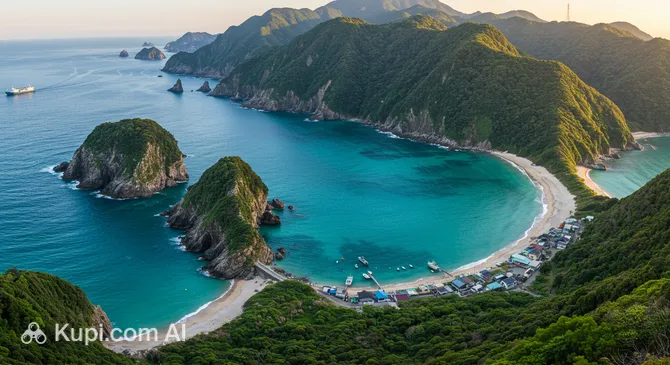
Navigating the Oki Islands requires a shift in mindset from the rapid-transit systems of major metropolises. As a remote archipelago, there are no subways, trains, or trams here. Instead, the public transport network relies entirely on a combination of local route buses for land travel and an extensive ferry system that connects the four inhabited islands. For tourists, understanding how to coordinate these two modes of transport is key to a smooth journey.
The local bus network is the primary way to get around on land for those without a vehicle. Each of the main islands—Dogo, Nishinoshima, Nakanoshima, and Chiburijima—operates its own municipal bus service. These buses generally connect the ferry ports to major villages, hospitals, and key tourist attractions. However, frequencies can be low, with some routes running only a few times a day. On Dogo Island, the network is slightly more extensive, covering the town center and outlying coastal areas, but planning your day around the timetable is still essential.
Given the geography, inter-island ferries function much like a metro system would in a big city, serving as the essential link between the islands. There are two main types of vessels: the large car ferries, which are slower and more stable, and the high-speed "Rainbow Jet" hydrofoils, which are faster but more expensive. There is also a smaller, frequent inter-island ferry specifically connecting the three islands of the Dozen group (Nishinoshima, Nakanoshima, and Chiburijima). These boats are lifelines for the locals and offer scenic rides for visitors.
The payment system on the Oki Islands is traditional and relies heavily on cash. Unlike on the mainland, IC cards like Suica or Pasmo are generally not accepted on local buses or ferries. When boarding a bus, you should take a numbered ticket (seiri-ken) from the machine by the door. A display at the front of the bus will show the fare corresponding to your ticket number. When you arrive at your destination, drop the exact change and your ticket into the box next to the driver. If you do not have exact change, the fare box usually has a machine that can break 1,000 yen bills and 500 yen coins.
For tourists planning to use the bus extensively, unlimited ride passes are a great value and a convenient option. "1-Day" or "2-Day" bus passes are often available for purchase at the tourist information centers located inside the ferry terminals. These passes allow you to hop on and off freely without worrying about carrying small change. Be sure to buy these upon arrival at the port, as they cannot usually be purchased on board the bus itself.
While public transport is reliable, it may not reach every secluded scenic spot or trailhead. Consequently, rental cars are the most popular alternative and are highly recommended for maximizing your time. Rental agencies are located near the ports and the airport. For those who prefer a slower pace, electric-assist bicycles (e-bikes) are widely available for rent at tourism associations. Given the hilly terrain of the islands, the electric assist is a game-changer, allowing you to breeze up slopes to reach observation decks. Taxis are available but can be expensive for long distances and typically need to be called in advance, as they do not cruise for passengers.
A final piece of practical advice: always double-check the weather conditions. Strong winds and high waves can lead to the cancellation of ferry services, particularly the fast hydrofoils. Bus schedules generally align with ferry arrivals and departures, but it is wise to confirm the return times, as services often stop running in the early evening. Tourist information staff at the ports are excellent resources for English timetables and current operating status.