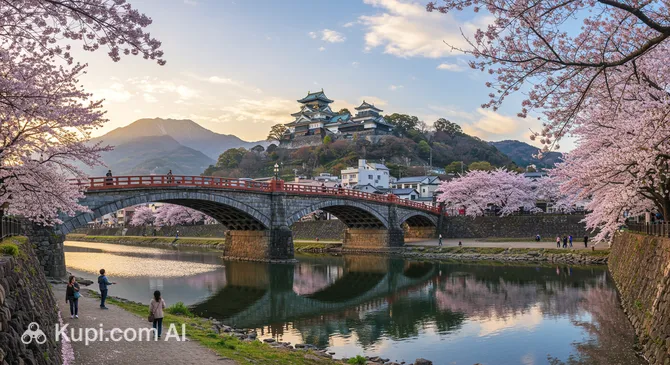
Navigating Iwakuni is relatively straightforward, thanks to a city layout that is compact and well-served by a reliable surface transport network. Unlike Japan's massive metropolises, there is no subway system here. Instead, the primary mode of public transportation for getting around the city center and reaching major tourist sites is the local bus service. This network is designed to efficiently connect the railway hubs with the historic districts, making it easy for visitors to travel between the downtown area and the scenic spots along the river.
The most popular route for visitors is the bus line connecting Iwakuni Station to the Kintaikyo Bridge area. These buses run frequently, typically every 5 to 15 minutes during the day, ensuring minimal wait times. Travelers will often encounter the charming "Kintaikyo" retro-styled buses, which add a nostalgic touch to the short journey. For those arriving via the high-speed rail network at Shin-Iwakuni Station, the bus is also the most practical method to reach the bridge or transfer to the main city station. While the scenic Nishikigawa Seiryu Line train also operates in the region, the bus offers a significantly more frequent and direct connection between the two stations.
Regarding payment, the system is modernized but retains traditional elements found across Japan. On most buses, you enter through the rear door and take a small numbered ticket from a machine, which indicates your boarding stop. When you exit through the front door, you pay the fare corresponding to your number, as displayed on the digital board near the driver. While cash (coins and 1,000 yen bills) is standard, major IC cards like ICOCA and Suica are widely accepted on local buses and JR trains, offering a convenient "tap-and-go" experience.
For rail travel beyond the city limits or for scenic excursions, the local trains are an excellent option. Iwakuni Station serves as a major hub on the JR Sanyo Main Line, providing easy access to neighboring Hiroshima and Miyajima. For a more leisurely pace, the aforementioned Nishikigawa Seiryu Line takes passengers along the winding Nishiki River, offering beautiful views of the countryside, though it is less suited for quick crosstown transfers than the bus.
A unique feature of the local transport landscape is the Iwakuni Castle Ropeway. While primarily a tourist attraction, it functions as a necessary mode of transport to reach the castle atop Mount Shiroyama. The gondolas offer stunning aerial views of the city and river delta. It operates daily, usually from 9:00 AM to 5:00 PM, with departures every 15 minutes. A convenient combined ticket is available that covers the bridge crossing, the ropeway fare, and castle entry.
For those seeking more flexibility, taxis are readily available at taxi stands outside both railway stations and near the Kintaikyo Bridge. They are safe and clean but can be more expensive than public transit. Alternatively, bicycle rentals are a popular choice, especially on sunny days. Rental shops are located near Iwakuni Station and the bridge area, allowing you to cycle along the flat, paved paths of the Nishiki River at your own pace.