Support

Suo-Oshima

About

Suo-Oshima is a charming island town nestled in the picturesque waters of the Seto Inland Sea in Yamaguchi Prefecture, Japan. The island is connected to the mainland by the impressive Oshima Bridge, turning the journey here into an exciting adventure. Suo-Oshima welcomes guests with rolling landscapes, green valleys, and a rugged coastline featuring secluded beaches and colorful fishing villages.

With a population of around 14,605, the town offers an atmosphere of tranquility and authentic rural Japan. Administratively, Suo-Oshima is part of Oshima District. Thanks to its mild climate, abundant greenery, and relaxing vibe, the island is often called the "Hawaii of Setouchi." This place is famous for its clean air and incredible sea views.
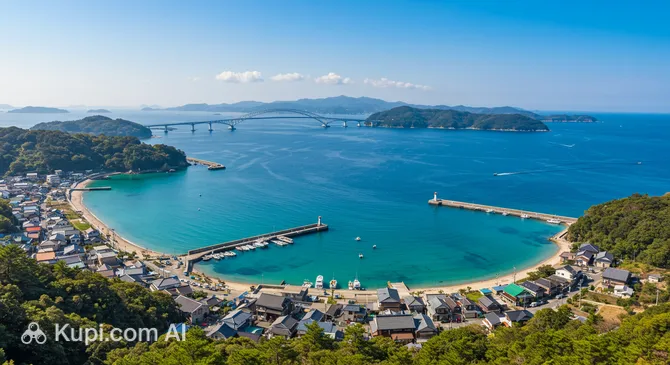
Suo-Oshima. Illustration.
Source: Kupi.com AI

The main appeal of Suo-Oshima lies in its special, slow-paced atmosphere. There is no city bustle here; instead, you'll find endless opportunities for walking and cycling, as well as peaceful relaxation in nature. Tourists are drawn to the beautiful beaches, interesting mountain trails, lush orchards, and panoramic viewpoints offering breathtaking vistas of the sea.

If you are looking for harmony, inspiration, and genuine Japanese hospitality away from the noise of big cities, Suo-Oshima is the perfect choice. This island provides unforgettable experiences and allows you to fully enjoy the beauty of Japanese nature.

You can find more interesting facts on the Suo-Oshima history page

Weather Overview

In Suo-Oshima, you can expect warm summers with occasional rain and cool winters. During the hottest months, July and August, the average temperature is +25.9°C and +27.3°C respectively, with July also being characterized by the highest amount of precipitation (9 mm, 17 rainy days). In winter, especially in January (average temperature +6.8°C), it becomes significantly cooler, and precipitation decreases to 2-3 mm per month, though rainy weather is still possible. Read more about the climatic conditions on the Suo-Oshima Climate page.

Average monthly temperature

Average monthly precipitation

Interesting Facts

Beyond its picturesque landscapes, the town of Suo-Oshima hides many amazing stories and features that make it a truly unique place to explore. Here are just a few interesting facts you might not have known:

  • Suo-Oshima is proud of its "Seto Inland Sea Alps"—a chain of mountain peaks, such as Mt. Monju and Mt. Kano, reaching nearly 700 meters in height. They offer breathtaking panoramas, and from the Iinoyama observation deck, you can witness a unique natural phenomenon: the largest difference between high and low tides in the world is recorded here.

  • The island is home to the unique Museum of Japanese Emigration to Hawaii. It is dedicated to the lives of Suo-Oshima residents who left for the Hawaiian Islands in the late 19th and early 20th centuries in search of a better life. Remarkably, many local families still maintain warm relations with the descendants of emigrants, and you can even find elements of Hawaiian culture and architecture on the island itself.

  • Suo-Oshima is often called the "Fruit Island" due to its extensive orchards. A particular point of pride is the local olive groves—a phenomenon not very typical for Japan. In summer, you can not only enjoy walks through the picturesque olive garden that has become the island's trademark but also participate in the harvest of mandarins and other citrus fruits.

  • Among the cultural treasures of Suo-Oshima are ancient temples such as Obiishi Kannon and Monjudo. These places are not only centers of spiritual life but also often serve as venues for colorful festivals where guests can experience the traditional crafts and arts of the region.

How to Get There

There are several ways to reach the charming island town of Suo-Oshima in Yamaguchi Prefecture, primarily through the nearest airports followed by ground transport. Since Suo-Oshima is an island connected to the mainland by the Oshima Bridge, route planning involves traveling to the island from mainland Japan.

The closest and most convenient airport for a trip to Suo-Oshima is Iwakuni Kintaikyo Airport (IWK). It is located in Iwakuni, about 24 km from Suo-Oshima. This regional airport handles domestic flights. From Iwakuni Airport, Suo-Oshima can be reached by car or taxi in about 45-60 minutes, depending on traffic and your destination on the island.

Another major airport to consider is Hiroshima Airport (HIJ), located in Hiroshima, approximately 87 km from Suo-Oshima. This is an international airport with a wide selection of flights. The drive from Hiroshima Airport to Suo-Oshima takes roughly 1.5-2 hours, including travel on expressways and the bridge to the island.

You may also consider flying into Matsuyama Airport (MYJ), located in Matsuyama on Shikoku Island, about 48 km (straight line across the sea) from Suo-Oshima. Although the direct distance is short, the path from here requires a ferry crossing (for example, to Yanai port on the mainland, and then to Suo-Oshima) and will take more time, approximately 2.5-3.5 hours including the ferry and ground transport.

For clarity, here is a summary of the main airports that can be used for a trip to Suo-Oshima:

AirportPassenger trafficDistance
Iwakuni Kintaikyo Airport655 47324 km
Matsuyama Airport3.2 mln48 km
Oita Airport1.9 mln66 km
Yamaguchi Ube Airport1.3 mln85 km
Hiroshima Airport2.7 mln87 km

Regarding rail travel, there is no direct train access to Suo-Oshima island. Travelers typically need to reach train stations on mainland Japan, such as Yanai (the closest to the Oshima Bridge) or larger hubs like Iwakuni or Tokuyama stations, and then transfer to a bus or taxi for the trip to the island. Note that while Sønderborg Station (QSG) appears in some data, it is located in Denmark and is not a relevant option for travel to Suo-Oshima.

Information on railway stations from the provided data:

StationPassenger trafficDistance
Sønderborg Station196 km

It is recommended to plan your route through the nearest Japanese cities with rail connections and check local transport schedules for travel to Suo-Oshima island.

Main Attractions

Suo-Oshima is a true treasure trove for travelers, where picturesque nature harmoniously intertwines with rich history. One of the island's main landmarks is the Oshima Bridge. This impressive green structure not only connects the island to mainland Yamaguchi Prefecture but also serves as a magnificent observation deck. The Obatake Strait, which the bridge spans, is known for its strong currents; many tourists come specifically to see the impressive sea whirlpools forming right under the bridge.

A special place in the island's cultural landscape is the Battleship Mutsu Memorial Museum. Located on the eastern tip of Suo-Oshima, it is dedicated to the tragic loss of one of the most powerful battleships of the Japanese fleet, which sank in these waters in 1943. The museum's exhibits include personal belongings of the crew recovered from the seabed, ship fragments, and archival photographs. This place is filled with quiet solemnity and allows visitors to touch upon dramatic pages of 20th-century history.

Equally interesting is the Museum of Japanese Emigration to Hawaii, which reveals the unique connection between this region and the distant Pacific islands. In the late 19th century, thousands of Suo-Oshima residents left for Hawaii in search of a better life, which forever changed the island's character. Here, you will learn why Suo-Oshima is often called the "Hawaii of Japan," see authentic household items of the emigrants, and understand how this amazing intercultural friendship was formed.

For lovers of panoramic views, a visit to Mt. Dake is a must. Climbing to an altitude of over 600 meters, you will find yourself at one of the region's best viewpoints. From here, a breathtaking view opens up over the cluster of islands in the Seto Inland Sea. On clear days, the blue of the sea and the green of the islands create an incredible contrast that attracts photographers and nature lovers from all over the country.

For a relaxed vacation, Katazoegahama Beach is ideal. This is not just a place for swimming, but a real resort park with palm-lined paths, white sand, and crystal-clear water, enhancing the feeling of being on a tropical island. Here you can not only swim but also enjoy a picnic or simply stroll along the shore, breathing in the fresh sea breeze.

Local Cuisine

A gastronomic journey through Suo-Oshima begins with its main treasure—the freshest seafood caught in the clear waters of the Seto Inland Sea. Be sure to try the exquisite sushi and sashimi prepared from freshly caught fish and shellfish. Local chefs also masterfully prepare seasonal delicacies, such as dishes made from tender octopus or aromatic sea eel, revealing the full palette of marine flavors.

Suo-Oshima is famous for its fertile orchards, and the true pride of the island is its local mandarins. Their unique taste is reflected in many products, from refreshing mandarin liqueur to delicious desserts infused with citrus. Don't miss the chance to try other unique sweets, such as signature cakes with olives or mandarins, which can be found in local pastry shops.

The food culture in Suo-Oshima is diverse and authentic. At the lively farmers' markets, you will find not only the freshest fruits and vegetables but also homemade sweets. Cozy little cafes offer traditional Japanese dishes with a distinct local flair. Street food lovers should look out for okonomiyaki—hearty Japanese savory pancakes with seafood—as well as various snacks made from fresh fish and vegetables. A visit to Suo-Oshima is a real gastronomic adventure where food allows you to dive deep into the taste and culture of the region, especially if you are lucky enough to catch one of the local food festivals.

Travel Tips

Welcome to Suo-Oshima! This charming island in Yamaguchi Prefecture offers a unique blend of natural beauty and Japanese hospitality. To make your journey as comfortable as possible and leave you with only pleasant memories, we have prepared some practical tips.

  1. Clothing and Essentials by Season:

    Suo-Oshima's climate is temperate, with four distinct seasons. In summer (June-August), choose light, breathable clothing, sunscreen, and a hat. In spring (March-May) and autumn (September-November), layered outfits and a light jacket are useful. In winter (December-February), warm clothing is a must. Be sure to bring: comfortable shoes for walking around the island, a universal adapter (types A and B sockets are used in Japan, 100V voltage), and a portable power bank. There is usually no specific dress code when visiting temples and shrines, but modest clothing is appropriate; be prepared to remove your shoes before entering some buildings.

  2. Getting Around the Island:

    Suo-Oshima is an island, and the best way to explore it depends on your plans. Public transport consists of local buses, but their routes and schedules can be limited. Taxis are available, but there may not be as many as in big cities. Car rental is an excellent option for freedom of movement and exploring every corner of the island. Remember that Japan has left-hand traffic, and you will need an international driving permit. For short trips, you can also consider renting a bicycle.

  3. Financial Matters:

    The local currency is the Japanese yen (JPY, ¥). It is recommended to carry enough cash, as not all establishments, especially small shops and restaurants on the island, may accept bank cards. Currency exchange is best done at the airport upon arrival in Japan or at banks in major cities. ATMs that accept international cards are usually found in post offices (Japan Post Bank) and 7-Eleven convenience stores. Tipping is not practiced in Japan.

  4. Health and Safety:

    Japan is a very safe country, and Suo-Oshima is no exception. Follow standard precautions. Pharmacies (薬屋 - kusuriya) are available, but staff may not always speak English. Bring necessary medications with a prescription (in English). Be sure to take out travel insurance before your trip. In emergencies, call 119 (ambulance, fire service).

  5. Language and Connectivity:

    The official language is Japanese. English proficiency levels may be low. Learn a few basic Japanese phrases: "Konnichiwa" (Hello), "Arigato" (Thank you), "Sumimasen" (Excuse me/I'm sorry). This is very appreciated by locals. We recommend purchasing a tourist SIM card or a portable Wi-Fi router. Google Maps and translation apps will be useful.

  6. Local Etiquette and Traditions:

    Greeting: A light bow is common. In public places: Speak quietly, and avoid eating while walking. Footwear: Remove shoes before entering Japanese homes, many temples, and traditional restaurants. Chopsticks (hashi): Never stick chopsticks vertically into rice and do not pass food from chopsticks to chopsticks.

  7. Things to Avoid:

    Loud behavior and conversations in public places—the Japanese value silence. Photographing people without permission—always ask before taking a picture. Also, pay attention to signs prohibiting photography in certain places.

  8. Special Tip for Suo-Oshima:

    Suo-Oshima is famous for its citrus fruits, especially mikan oranges. Be sure to try the fresh fruit or local products based on them. As an island in the Seto Inland Sea, Suo-Oshima offers wonderful opportunities to enjoy nature: explore its coastline, find secluded beaches, and enjoy the views from the Oshima Bridge connecting the island to the mainland.

We hope these tips help you better plan your trip to Suo-Oshima and enjoy every moment of your stay on this beautiful island. We wish you an unforgettable journey and vivid impressions of Japan!

Entertainment & Nightlife

Nightlife in Suo-Oshima is fundamentally different from the neon lights and noisy parties of metropolises like Tokyo or Osaka. Here, on the "Hawaii of Japan," evening is a time for relaxed rest, gastronomic discoveries, and communion with nature. Instead of crowded nightclubs, you will find cozy family restaurants, traditional izakaya bars, and an incredibly starry sky that can only be seen far from big cities.

The center of evening leisure on the island is local establishments serving the freshest seafood and sake. Most of the life is concentrated in small villages along the coast. The atmosphere here is very casual and friendly: there is virtually no dress code, and owners often serve guests themselves, creating a feeling of home comfort. Most places close quite early, around 20:00–22:00, so it's worth planning dinner in advance.

If you want to enjoy exquisite cuisine, look for the restaurant Sushiya Taisho. This establishment is famous for its exclusive approach: the chef prepares sushi from the morning catch right in front of the guests. You can only get here with a prior reservation, but the gastronomic experience is worth it. Another well-known place is Restaurant Arakawa, where you can try the famous local oysters and fish dishes accompanied by Japanese beer or sake. It’s an excellent choice for those who want to get acquainted with the authentic flavors of the island in a relaxed setting.

A unique feature of Suo-Oshima's nightlife is the summer festival SaturHula ("Saturday Hula"). Every Saturday in July and August, evening hula dance performances take place on the island. The stages are often outdoor areas under the stars, such as the grounds of the Sunshine Sazanseto resort. This is the brightest and most festive event of the season, where music plays, torches burn, and a real tropical holiday atmosphere reigns. The Sunshine Sazanseto hotel also has a lounge area where you can have a cocktail by the fireplace on a cool evening.

Romantics and those who appreciate silence should head for a night walk to the beaches or viewpoints. Due to the lack of light pollution, Suo-Oshima is an ideal place for stargazing. Night fishing is also popular: many local guides offer sea trips after sunset to catch squid or fish active during the dark hours.

Practical Tips:

  • Transport: Public transport practically doesn't run in the evening. You will definitely need a rental car or a taxi (which is better to book in advance, as catching a car on the street at night is difficult). If you plan to drink alcohol, use the "daiko" service (on-call driver), as Japan has zero tolerance for drinking and driving.
  • Payment: Many evening establishments only accept cash, so withdraw money in advance.
  • Safety: The island is very safe; you can walk at any time. The only caution should be taken on unlit sections of roads and near the water.

Parks & Museums

Suo-Oshima is a charming island town that offers its guests a harmonious blend of picturesque natural landscapes and unique cultural heritage. Here you can enjoy tranquility by the sea and explore interesting pages of the region's history.

Among the island's green spaces, Katazoegahama Seaside Park stands out. This park is famous for its beautiful sandy beach with crystal-clear water, perfect for swimming, sunbathing, and family vacations. Campgrounds and small resort facilities are often found here, making it a popular spot for summer leisure. Another natural attraction is Mt. Dake (嵩山). After climbing to its summit, tourists are rewarded with panoramic views of the Seto Inland Sea and surrounding islands. It is a great place for easy hikes and admiring nature.

The cultural life of Suo-Oshima also offers interesting discoveries. One of the most significant institutions is the Museum of Japanese Emigration to Hawaii. This unique museum tells the touching story of the island's residents who emigrated to the Hawaiian Islands in the past and their contribution to the development of both cultures. The museum's exhibition will be of interest to anyone fond of social history and intercultural connections. Another important site is the Battleship Mutsu Memorial Museum. It is dedicated to the history of the Japanese battleship that sank off the coast of the island in the mid-20th century and is of interest to maritime history buffs.

In addition to organized parks and museums, the island of Suo-Oshima itself preserves many historical corners. Strolling through old fishing villages with their traditional architecture or visiting local Shinto shrines and Buddhist temples will allow you to deeper experience the atmosphere of this place. Many of these small temples and shrines are scattered across the island and are an integral part of its landscape and spiritual life.

For a truly authentic experience, we recommend renting a car or a bicycle to explore the island's winding coastline, discovering secluded coves and scenic views. Also, don't miss the opportunity to visit local markets, where you can try the freshest seafood and the famous local "mikan" mandarins for which Suo-Oshima is renowned.

Getting Around

When planning your travel around Suo-Oshima, keep in mind that this is an island territory, and the public transport system has its own characteristics. The main form of public transport on the island is buses. They connect various settlements and attractions. The route network is likely not very extensive, and intervals between buses can be significant, especially in the evening and on weekends, so it is recommended to check the schedule in advance.

For connections to mainland Japan and possibly other nearby islands, ferries are used. Ferry terminals are important transport hubs, and ferry schedules should also be checked in advance, especially if your trip falls during the peak tourist season.

The fare payment system on Suo-Oshima buses, as in many small Japanese towns, is likely based on cash. Often when boarding the bus, you need to take a numbered ticket (整理券 - seiri-ken), and payment is made to the driver when exiting. The amount depends on the distance, and the current fare for your stop is usually displayed on a board at the front of the bus. It is recommended to have small change, as the driver may not have change for large bills. The use of national transport IC cards (like Suica or Pasmo) may be limited or non-existent here. Ferry tickets are usually purchased at ticket offices at the ferry terminal before departure.

Here are some practical tips for tourists:

  • Always have a bus and ferry schedule with you or access to it online if possible. Information can often be found on the official websites of transport companies or at tourist information centers.
  • Pay attention to the direction of the bus when boarding.
  • Be prepared for stop announcements to be in Japanese only, although they are sometimes duplicated in English on tourist routes. You can use navigation apps on your smartphone to track your location.

Alternative ways to get around Suo-Oshima include:

  • Taxis: Available, but can be a quite expensive option, especially for long trips. They can be found at stands near ferry terminals or major hotels, or called by phone.
  • Car Rental: If you plan to actively explore the island, renting a car may be the most convenient option. Rental points may be located near ferry terminals.
  • Bicycle Rental: For leisurely rides and exploring the immediate surroundings, a bicycle is perfect. This is a wonderful way to enjoy the island's nature. Bike rental points can be found in tourist areas or near hotels.
Given the island nature of Suo-Oshima, getting around is part of the adventure, allowing you to enjoy scenic views and local color.

Accommodation

When planning a trip to Suo-Oshima, you will find various accommodation options to suit different preferences and budgets. The town offers traditional Japanese inns (ryokans), standard hotels, and guest houses. Many of them offer beautiful sea or mountain views, adding a special atmosphere to your stay.

Choosing an area to stay in Suo-Oshima often depends on your plans. If you are looking for seclusion and proximity to nature, look for options along the coast or in more remote parts of the island. For those who want to be closer to local infrastructure, shops, and restaurants, options in the island's busier settlements are suitable. Overall, transport accessibility on the island is good, making it easy to reach major attractions from most points.

While specific hotel names require individual searching at the time of booking, in Suo-Oshima you can find both cozy family-run inns and larger hotel complexes offering a variety of services. It is recommended to check reviews and locations on maps when choosing.

As for the price range, you can find both budget options and mid-range accommodation in Suo-Oshima. There are fewer world-class luxury resorts here; the focus is on authenticity and peaceful relaxation. It is recommended to book accommodation in advance, especially if your trip coincides with peak tourist seasons (such as during cherry blossom season or summer festivals). The most common booking methods are popular online platforms and, in some cases, direct booking through hotel websites or by phone.

Nearby Cities

For those who want to explore the surroundings of Suo-Oshima, it serves as an excellent starting point for exciting day trips. The following cities are especially worth noting:

Iwakuni, located just 26 kilometers away, charms travelers with its famous Kintaikyo Bridge—an elegant five-arch wooden structure that is a symbol of the city. Nearby, Iwakuni Castle stands on a hill, offering picturesque views of the surrounding area.

Hiroshima, located about 56 kilometers away, is a city with a deep historical heritage and modern dynamics. A visit to the Peace Memorial Park and Museum leaves a lasting impression. It is also easy to reach Miyajima Island from Hiroshima, home to the famous Itsukushima Shrine with its iconic "floating" torii gate.

A full list of nearby cities, including their population and distance, is presented in the table below. This will help you plan short trips and get to know the region even better:

CityPopulationDistance
Yanai30 4619 km
Hirao11 83111 km
Tabuse14 51514 km
Hikari49 01324 km
Iwakuni128 40126 km

These nearby cities offer a variety of experiences, from historical monuments to beautiful natural landscapes, allowing you to better understand this region of Japan.

Shopping & Souvenirs

Shopping in Suo-Oshima offers a unique experience focused on local products and crafts rather than large shopping malls. Known as "Mikan Island," the town is famous for its citrus fruits, fresh seafood, and processed goods. Here, you will find small family-run shops and stalls offering authentic regional items.

In Suo-Oshima, there are no clearly defined large shopping streets like those in metropolises. Shops are generally scattered across the island's main settlements, especially near ports or the central parts of small villages. It's worth walking along the main streets of the small towns to discover local shops selling fresh produce, souvenirs, and daily necessities.

You are unlikely to find large modern shopping centers in Suo-Oshima. The charm of shopping here lies exactly in visiting small specialized shops and local cooperatives where you can purchase products directly from the producers.

While there may not be organized large markets in Suo-Oshima, look out for roadside farm stands, especially during the citrus harvest season. Also, in port areas, you can find fresh seafood outlets or small fish markets where local fishermen offer their catch.

As souvenirs from Suo-Oshima, it is definitely worth bringing back products made from local mandarins (mikan): juices, jams, and sweets. Dried seafood, local salt, and handmade items, if encountered, are also popular. These might include small ceramic items or textiles with local motifs. Ask locals what unique products are produced specifically on the island.

Shops in Suo-Oshima usually follow a standard schedule for small towns in Japan, often closing earlier than in big cities, around 17:00 or 18:00. Some small family shops may have their own schedules and closing days. Regarding payment, many small shops prefer cash, although some places, especially those geared towards tourists, may accept credit cards. It is recommended to have a sufficient amount of cash with you.

In Japan, there is a Tax-Free system for foreign tourists when purchasing goods over a certain amount at participating stores. Look for the "Tax-Free Shop" sign. If you make purchases in such stores in Suo-Oshima, don't forget to present your passport to process the tax refund.

Reached the end of the page?

That means the route is fully explored