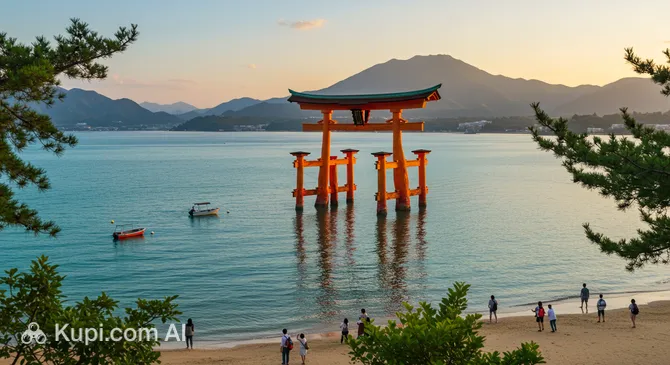
Miyajima, also known as Itsukushima, is an enchanting island rightfully considered one of the most picturesque and sacred places in Japan. It is famous for its unique atmosphere of tranquility, harmony, and rich history, attracting travelers from all over the world seeking both spiritual enlightenment and aesthetic pleasure.
Miyajima. Illustration.
Source: Kupi.com AI
Geographically, Miyajima is located in the Seto Inland Sea and is part of Hiroshima Prefecture. The island is characterized by a mild climate, making it attractive to visit at any time of year. Although the island is small in size, its cultural and natural heritage is immense.
The crown jewel of Miyajima is undoubtedly the Itsukushima Shrine (a UNESCO World Heritage site) with its iconic bright red torii gate, which appears to float on the water during high tide—a sight that has become the island's hallmark. Another major attraction is Mount Misen, the highest point on the island, which can be reached on foot or by ropeway to enjoy breathtaking panoramic views. Miyajima is also known for its friendly wild deer, which roam freely across the island and eagerly interact with tourists.
Miyajima is an ideal destination for those who want to immerse themselves in traditional Japanese culture, enjoy magnificent landscapes, and find peace of mind. A trip here promises to be an unforgettable experience filled with beauty and spirituality.
You can find more interesting facts on the Miyajima history page.
Weather Overview
The climate in Miyajima is characterized by a distinct change of seasons, allowing you to choose a comfortable time for your trip depending on your preferences. Summer here is warm and humid: the average temperature in July and August stays around 25–27°C, with maximum values reaching 28–30°C. Winters, by contrast, are quite cool, with an average temperature in January of about 4.6°C (minimum 1.5°C) and in December about 6.1°C (minimum 3.1°C).
As for precipitation, the wettest months are July (averaging 11 mm of rainfall and about 20 rainy days) and June (8 mm and 15 rainy days). The driest periods occur in November, December, and January, when only about 2 mm of precipitation falls. Overall, Miyajima is characterized by warm and humid summers with occasional rain and cool, relatively dry winters. Spring (March–May) and autumn (September–October) offer pleasant, moderate temperatures, making these seasons also attractive for a visit. You can find more detailed information on the Miyajima climate page.
Average monthly temperature
Average monthly precipitation
Interesting Facts
Beyond its world-famous attractions, the island of Miyajima holds many surprising stories and lesser-known features. Here are just a few that will add extra flavor to your trip:
Sacred Land Without Births or Deaths: To maintain the island's purity, a strict ban on births and burials was in place on Miyajima for centuries. Although rules have softened today, pregnant women nearing their due date and the terminally ill are still encouraged to leave the island if possible.
The Eternal Flame of Mount Misen: At the top of the sacred Mount Misen, near the Misen Main Observatory, burns the Kiezu-no-hi (Eternal Flame). Legend has it that it was lit by the monk Kobo Daishi over 1,200 years ago and has never gone out since. This flame was used to light the Flame of Peace in Hiroshima's Peace Memorial Park.
Home of the Giant Rice Scoop: Miyajima is famous for producing wooden rice scoops called "shamoji." On Miyajima Omotesando Shopping Street, you can see the world's largest shamoji, which is 7.7 meters long and weighs 2.5 tons! It was created in 1983 and is a popular photo spot.
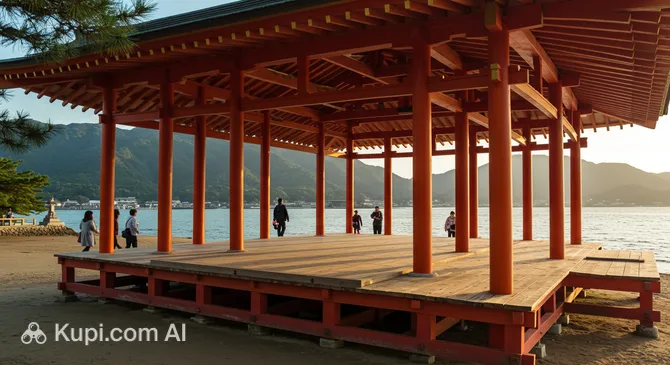
The Unfinished Hall of a Thousand Tatami Mats: The impressive Senjokaku Pavilion, which translates to "pavilion of a thousand tatami mats," was commissioned by the warlord Toyotomi Hideyoshi in 1587. However, due to his death, construction was halted, and the pavilion remains without its main walls and ceiling, giving it a unique, slightly mystical atmosphere.
Reaching the island of Miyajima, located in Japan's Hiroshima Prefecture, can be done in several ways by combining air and ground transport with a mandatory ferry crossing, as the city itself is on an island. Primary routes for tourists usually involve flying to one of the nearest airports and then traveling by train and ferry.
The closest airport to Miyajima is Iwakuni Kintaikyo Airport(IWK), located in Iwakuni city just 15.7 km away. This is a regional airport, and from here, the total travel time to Miyajima, including the ferry, is approximately 45-60 minutes. A larger option is Hiroshima Airport(HIJ), located in Hiroshima city at a distance of about 59.3 km. This is an international airport serving many flights, and the journey from there to Miyajima takes roughly 1 hour 50 minutes to 2 hours 10 minutes. You might also consider Matsuyama Airport(MYJ) in Matsuyama city. This major airport is located about 61.4 km from Miyajima, with a total travel time of around 1 hour 55 minutes to 2 hours 15 minutes.
For your convenience, here is a summary of the main airports used to reach Miyajima:
For rail travel to Miyajima, it is important to remember that the island itself has no direct rail connection. The key point on the mainland is JR Miyajimaguchi Station. Trains on the JR Sanyo Line (for example, from Hiroshima) arrive here, and the ferry pier is just a few minutes' walk from the station. The ferry crossing itself takes about 10 minutes. In the data provided for this section, Fukai Station in Sakai city is mentioned. This is a major transport hub with high passenger traffic; however, it is located quite far from Miyajima (about 295 km) and is not used as a direct point for traveling to the island.
Below is information regarding the railway stations from the provided list:
The island of Miyajima, or Itsukushima, is a true gem of Japan, where every corner breathes history and natural beauty. In addition to the world-famous Itsukushima Shrine, the island offers many other fascinating sites that can charm any traveler.
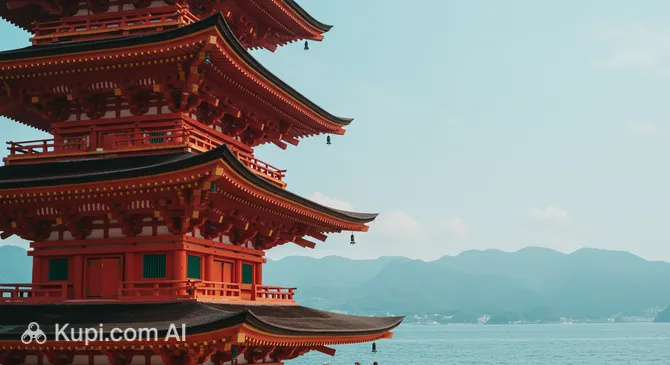
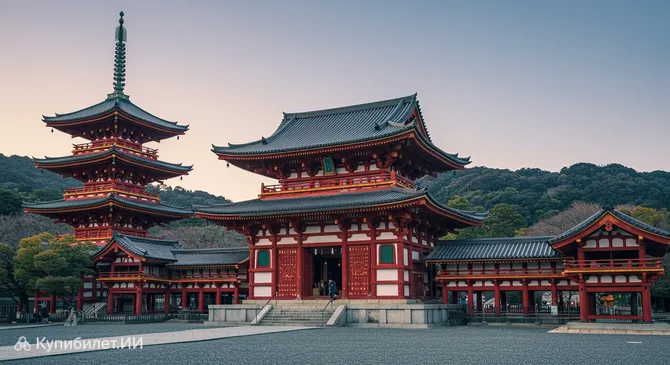
One of the most recognizable and photographed landmarks is the Five-Story Pagoda of Itsukushima Shrine. This elegant, bright red pagoda, built in 1407, towers near the main shrine. It is a magnificent example of traditional Japanese architecture, combining Japanese and Chinese styles. The pagoda is interesting not only for its beauty and photogenic qualities but also as an important part of the sacred Itsukushima complex, symbolizing harmony and spirituality.
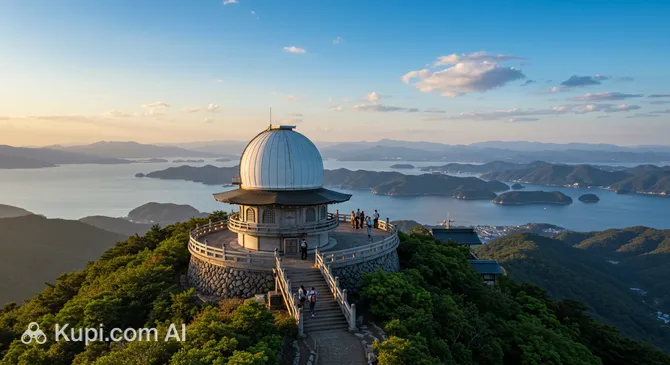
For those seeking breathtaking panoramic views, a climb to Mount Misen, the highest point on the island, is a must. The Misen Main Observatory is located at its summit. From here, you can enjoy stunning views of the Seto Inland Sea, the islands, and the coastline. Besides the observation deck, Mount Misen itself is a sacred site with several temples and natural wonders, including the "eternal flame" which, according to legend, has been burning for over 1,200 years. You can reach the summit by following scenic hiking trails or by taking the ropeway.
Mount Misen Observatory. Illustration.
Source: Kupi.com AI
Traveler photos:
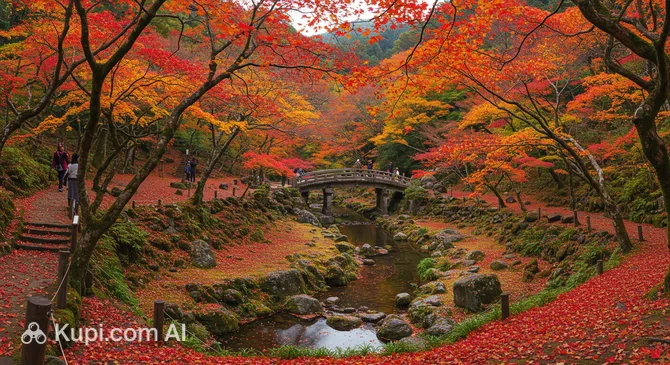
Nature lovers and those who enjoy quiet walks will certainly appreciate Momijidani Park, which translates to "Maple Valley." This park is especially beautiful in autumn when around 200 maple trees turn vibrant shades of crimson and gold, creating a magical atmosphere. However, the park charms visitors year-round with its peacefulness, shaded paths, and streams. It is an ideal place to relax and spot the tame deer that often wander in.
Momijidani Park. Illustration.
Source: Kupi.com AI
Traveler photos:
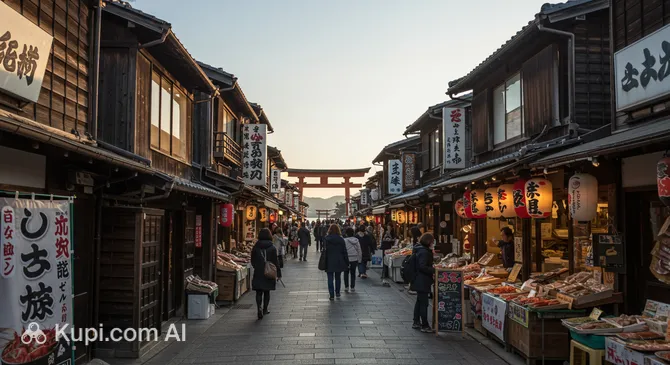
To experience the daily life of the island and pick up some souvenirs, take a stroll down Miyajima Omotesando Shopping Street. This is the main commercial artery of Miyajima, stretching from the ferry terminal toward the Itsukushima Shrine. Here you will find many shops offering local delicacies, such as momiji manju (maple-leaf-shaped cakes) and fresh oysters, as well as traditional crafts, including the famous "shamoji" wooden rice scoops. The street is always lively and is a great place to try local cuisine and buy memorable gifts.
Another iconic site is the Senjokaku Pavilion (Toyokuni Shrine). This spacious wooden hall, whose name translates to "pavilion of a thousand tatami mats," was built by order of the influential warlord Toyotomi Hideyoshi in the late 16th century but was never completed due to his death. Its open, breezy structure and impressive size make it a unique architectural monument. Located on a hill, it also offers beautiful views of the surroundings and the neighboring Five-Story Pagoda.
Local Cuisine
The culinary scene on Miyajima is a true immersion into the traditions of the Hiroshima region, with a special emphasis on fresh seafood. The island is rightfully famous for its oysters (kaki) and sea eel (anago), which are prepared here in special ways, turning every meal into a small discovery.
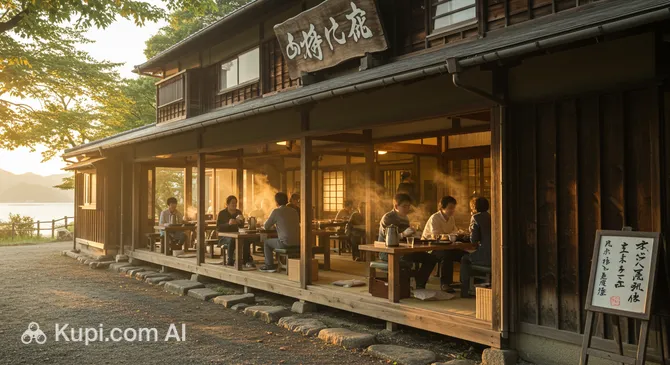
A must-try is "yakigaki"—oysters grilled right in their shells, often with a dash of lemon or soy sauce. Their juicy, slightly smoky flavor leaves no one indifferent. Many small restaurants on the waterfront and along Miyajima Omotesando Shopping Street offer this treat. One well-known place to enjoy this delicacy is the Yakigaki no Hayashi restaurant. Another iconic dish of the island is "anago-meshi": tender steamed or grilled sea eel served on a bed of rice infused with a flavorful sauce.
Yakigaki no Hayashi. Illustration.
Source: Kupi.com AI
Traveler photos:
For dessert or as a delicious souvenir, you cannot overlook "momiji manju"—the famous maple-leaf-shaped cakes that serve as a symbol of Miyajima. They are traditionally prepared with a sweet azuki red bean paste filling, but today you can find many variations: with chocolate, custard, matcha (green tea), and even cheese. You can try them almost everywhere, especially on the bustling Miyajima Omotesando Shopping Street, where they are often made right before your eyes.
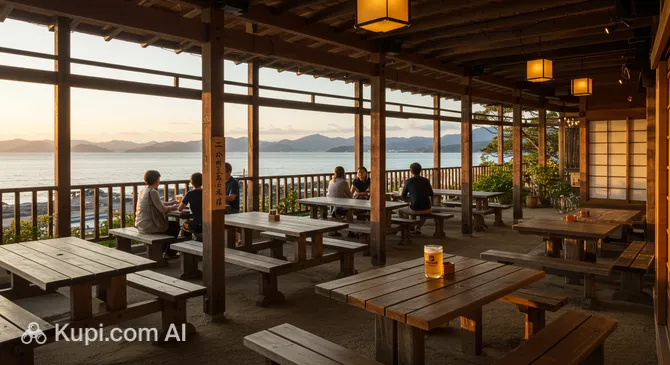
As for drinks, be sure to try the local sake, which perfectly complements seafood dishes, enhancing their flavor. For beer lovers, the products of the local Miyajima Brewery will be a pleasant discovery, where you can taste freshly brewed craft beer with unique local notes. Of course, traditional Japanese non-alcoholic drinks, such as various types of green tea, are always available, offering both refreshment and health benefits.
Miyajima Brewery. Illustration.
Source: Kupi.com AI
Traveler photos:
The dining culture on Miyajima is quite diverse and attractive to tourists. On one hand, there is the lively street food offered in abundance by stalls and small shops, especially along Miyajima Omotesando Shopping Street. Here you can have a quick and tasty snack of freshly prepared oysters, grilled squid, fish cakes, and, of course, momiji manju. On the other hand, the island has many restaurants specializing in local cuisine where you can enjoy a full lunch or dinner in a calm setting. Some traditional Japanese inns (ryokans) also offer their guests exquisite Kaiseki-style dinners, representing a true gastronomic journey.
Travel Tips
Welcome to the enchanting island of Miyajima! To ensure your journey through this sacred and picturesque corner of Japan is as comfortable as possible and leaves only pleasant impressions, we have prepared a few practical tips.
Clothing and Essentials:
The climate on Miyajima is temperate, but the weather can change. In summer (June–August), choose light, breathable clothing. In spring (March–May) and autumn (September–November), layering is useful—T-shirts, sweaters, and a light jacket. In winter (December–February), dress warmly, including a hat and gloves. The key element of your wardrobe is comfortable shoes, as the island is best explored on foot, especially if you plan to climb Mount Misen. Don't forget an adapter for your electronics (Type A and B sockets are used in Japan, 100V), a portable power bank, and sunscreen. When visiting temples and shrines like Itsukushima, show respect by choosing modest clothing (covered shoulders and knees are preferred).
Transport on the Island:
Miyajima is a small island, and its main attractions are easily accessible on foot. This is the best way to enjoy the atmosphere and beauty of the island. To ascend Mount Misen, you can use the Miyajima Ropeway, which will save time and energy while providing stunning views. Renting a car on the island is unnecessary and not common among tourists. The main transport for arriving at the island is the ferry from Miyajimaguchi Station.
Finances:
The official currency is the Japanese Yen (JPY). It is recommended to carry a sufficient amount of cash, as not all small shops, souvenir stalls, and some cafes may accept credit cards. It is better to exchange currency in advance in major cities or at the airport, as exchange options on the island itself are limited. International ATMs can be found at post offices (Japan Post Bank) or 7-Eleven stores (if available, check current locations before traveling, or withdraw cash on the mainland). Credit cards (Visa, Mastercard) are usually accepted in hotels and larger restaurants. Tipping in Japan is not practiced and can be perceived as impolite.
Health and Safety:
Miyajima is a very safe place with a low crime rate. However, always follow basic precautions: keep an eye on your belongings, especially in crowded areas. Pharmacies on the island may have limited stock and hours, so bring a small first-aid kit with necessary medications. For medical assistance, it is best for tourists to have travel insurance. Be cautious with the wild deer: they are friendly but can be persistent when looking for food. Do not feed them human food, as it is harmful to their health.
Communication:
The official language is Japanese. In tourist areas, hotels, information centers, and some shops, staff may speak basic English. Many signs and information boards are duplicated in English. Learn a few simple phrases in Japanese: "Konnichiwa" (Hello/Good afternoon), "Arigato gozaimasu" (Thank you very much), "Sumimasen" (Excuse me/Sorry). For constant internet access, consider buying a travel SIM card or renting a pocket Wi-Fi router. Free Wi-Fi is available in some hotels and cafes.
Local Etiquette:
Japanese people highly value politeness and respect. When greeting, a slight bow is appropriate. In public places, try to speak quietly. When visiting temples and shrines, behave quietly and with respect, following instructions (for example, the ritual of washing hands and mouth before entering a shrine—temizu). Remove your shoes before entering temple buildings, traditional restaurants, and ryokans if required. Always take your trash with you to the nearest bin (they can be scarce).
What to Avoid:
Do not feed the deer anything other than specifically designed crackers (if sold). Human food can harm them and provoke begging or even aggressive behavior. Also, try not to eat while walking on busy streets, especially near shrines—it's better to find a designated spot or sit on a bench.
Special Tip for Miyajima:
Be sure to check the tide schedule before visiting Itsukushima Shrine. To see the famous torii gate "floating" on the water, arrive during high tide. During low tide, you can walk right up to it across the exposed sea floor. Both sights are unique and unforgettable in their own way!
We hope these tips help you plan the perfect trip to Miyajima. Enjoy every moment in this amazing corner of Japan, full of beauty, history, and peace!
Entertainment & Nightlife
In the evening, Miyajima is transformed, trading its daytime bustle for an atmosphere of peace and serenity. This is not the place to look for noisy nightclubs or parties that last until dawn. Instead, the island offers quiet walks, exquisite dinners, and the chance to contemplate the beautifully illuminated shrines from afar. Nightlife here centers around cozy restaurants and a few bars where you can enjoy your time after a busy day.
Most evening activity is concentrated along Miyajima Omotesando Shopping Street and its surrounding areas, where many restaurants remain open into the evening, serving fresh local delicacies. For instance, you can enjoy the famous oysters or sea eel dishes at one of the many establishments, such as the Yakigaki no Hayashi restaurant, known for its grilled specialties. For those who prefer to relax with a glass of local beer, the Miyajima Brewery is an excellent choice, offering various craft brews. The atmosphere in these venues is generally very welcoming and relaxed, with no special dress code required. Most places close relatively early, usually by 9:00 PM or 10:00 PM, so plan your evening in advance.
It is important to understand that Miyajima is not a hub for clubbing or late-night entertainment. There are no districts with neon bar signs operating all night or large concert venues. The charm of the island in the evening lies in its silence and the opportunity for a peaceful walk, perhaps seeing the illuminated Itsukushima Shrine from a distance (check local lighting times). If you are not staying on the island itself, it is critically important to keep an eye on the schedule for the last ferries to the mainland. Movement around the island in the evening is done on foot. Miyajima is a very safe place, and evening walks here are quite comfortable.
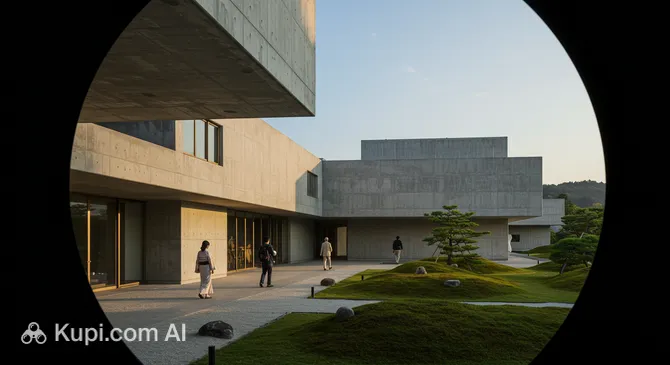
While the main focus here is on evening leisure, daytime activities are also worth mentioning. During the day, the island comes alive: you can visit the interesting Shimose Art Museum, stroll through scenic parks like Momijidani Park or Harumi Seaside Park, and explore numerous temples and shrines. Miyajima Omotesando Shopping Street is also a major draw during the day, offering many souvenirs and local treats.
Simose Art Museum. Illustration.
Source: Kupi.com AI
Traveler photos:
Parks & Museums
Miyajima, beyond its famous shrines, offers guests the chance to immerse themselves in peaceful green zones and learn about its rich cultural heritage through museums and historical monuments. The island carefully preserves both its natural beauty and the evidence of its centuries-old history, inviting slow-paced exploration.
One of the most charming natural corners of the island is Momijidani Park, which translates as "Maple Valley." This place is especially beautiful in autumn when hundreds of maples burst into bright colors, but in other seasons, the park delights with its serenity, shaded paths, and babbling streams. Here you can take a break from the hustle and bustle and watch the friendly deer that often visit the park.
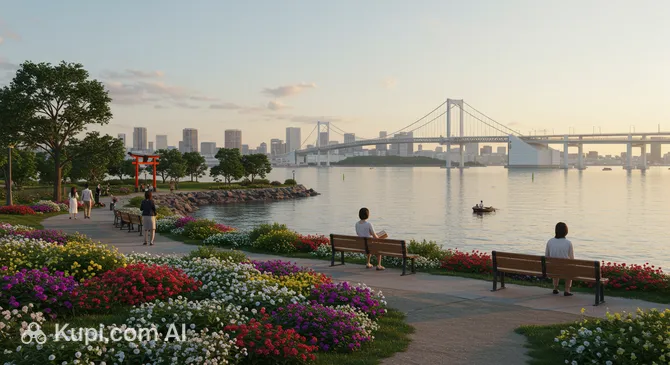
For those seeking tranquility by the water, Harumi Seaside Park is an excellent choice. This coastal park offers scenic views of the Seto Inland Sea and the surrounding area, making it a great place for leisurely walks and picnics. Its well-kept lawns and proximity to the water create a relaxing atmosphere, ideal for contemplating the island's beauty.
Harumi Seaside Park. Illustration.
Source: Kupi.com AI
Traveler photos:
To get a deeper look at the art and culture of the region, pay attention to the island's museums. One such place is the Shimose Art Museum. The museum presents an interesting collection that may include both traditional Japanese art and works by modern masters, offering visitors unique exhibits to broaden their horizons.
Another important cultural site is the Miyajima History and Folklore Museum (Miyajima Rekishi Minzoku Shiryokan). Housed in a former merchant's home from the Edo period, this museum introduces visitors to daily life, crafts, and the island's history through a collection of authentic household items, tools, and historical documents. It is a wonderful opportunity to look into Miyajima's past and better understand its unique character.
Equally interesting is the Itsukushima Shrine Treasure House (Homotsukan), which houses an impressive collection of artifacts related to the famous shrine. Here you can see ancient scrolls, ritual objects, weapons, masks, and other valuables, many of which are national treasures of Japan. Visiting the treasure house allows for a deeper appreciation of the historical and cultural significance of Itsukushima.
The island is also rich in historical and architectural landmarks. Among the many shrines, Daigan-ji Temple stands out as one of the three most famous temples dedicated to the goddess Benzaiten in Japan. Located next to the famous Itsukushima Shrine, this ancient Buddhist temple attracts pilgrims and tourists with its rich history and beautiful architecture. Inside the temple, important cultural assets are kept, including statues of Buddha and the goddess Benzaiten.
One cannot overlook iconic architectural monuments such as the majestic Senjokaku Pavilion (Toyokuni Shrine), known as the "pavilion of a thousand tatami mats," and the graceful Five-Story Pagoda of Itsukushima Shrine. These structures are vivid examples of traditional Japanese architecture and important elements of Miyajima's historical landscape, offering visitors a glimpse into the island's past.
For an authentic experience, take a walk through the less crowded streets branching off from Miyajima Omotesando Shopping Street. Here you can discover small family shops, traditional houses, and feel the calmer pace of Miyajima life, hidden away from the main tourist flows. It is also worth noting the many small temples and shrines scattered across the island, each with its own unique atmosphere and history waiting for explorers.
Getting Around
Getting around the island of Miyajima itself is primarily done on foot. It is a small island, and most of its attractions, shops, and restaurants are within walking distance of each other, especially in the area around Itsukushima Shrine and the ferry terminal. The main form of public transport to reach Miyajima is the ferry, which runs regularly from the mainland (Miyajimaguchi Station) to the island.
For those planning to climb the sacred Mount Misen, the highest point on the island, the Miyajima Ropeway is available. This is essentially the main form of "transport" for overcoming the significant elevation on the island. The ropeway consists of two sections and takes visitors to the upper station, from where magnificent views open up and hiking trails lead to the summit and other mountain attractions. Ropeway tickets can be purchased on-site, usually with either cash or a bank card.
The payment system for ferries to Miyajima is quite simple: tickets are bought at the ticket offices at the piers. Generally, cash is accepted, as well as the transport IC cards popular in Japan (such as Suica, Pasmo, ICOCA), which are very convenient for tourists traveling around the country. Ferries run frequently throughout the day, usually from early morning until late evening, but it is always recommended to check the current schedule, especially for the last trip to the mainland. The ropeway also operates on its own schedule, which can vary depending on the season and weather conditions, so it's worth checking its operating hours before your visit.
Regarding alternative forms of transport on Miyajima island itself, choices are extremely limited. Taxis can be found in very small numbers, mainly near the ferry terminal. They can be useful if you have heavy luggage or are heading to a ryokan located somewhat away from the main walking routes. Car rentals are not common or practical on the island due to its compact size and pedestrian orientation. Bicycle rentals might be available, but the hilly terrain of some parts of the island should be considered. The vast majority of visitors prefer to explore Miyajima on foot.
Thus, when planning your trip to Miyajima, be prepared for walking to be your primary way of getting around. Comfortable shoes will be your best companion. Public transport in the traditional urban sense—such as a metro, an extensive bus network, trams, or trolleybuses—is absent from the island, which only emphasizes its unique, calm atmosphere that encourages leisurely contemplation.
Accommodation
Miyajima offers tourists a variety of accommodation options to suit different preferences and budgets. Here you can find traditional Japanese ryokans, offering a unique cultural experience with tatami mats, futons, and exquisite local cuisine, as well as more modern hotels and guesthouses (minshuku). For travelers on a tighter budget, hostels or simpler rooms for rent may be available, though luxury resorts in the western sense are less common here, giving way to authentic Japanese forms of hospitality.
Most accommodation options on Miyajima are concentrated in a few key areas. The most convenient area logistically is near the ferry terminal, providing easy access to the main attractions. Many tourists prefer staying close to the famous Itsukushima Shrine and Miyajima Omotesando Shopping Street to enjoy the island's atmosphere and have easy access to shops and restaurants. Some ryokans may be located in more secluded spots, such as at the foot of Mount Misen or with a sea view, offering peace and beautiful scenery.
When planning a trip to Miyajima, especially during peak tourist seasons (such as cherry blossom season or autumn foliage), it is highly recommended to book accommodation in advance. This is particularly true for popular ryokans, which can be fully booked months ahead. The price range varies from more affordable guesthouses to mid-range and high-end ryokans that offer full board with Kaiseki-style dinners. Booking is convenient through popular online platforms or directly on the websites of hotels and ryokans. Some smaller minshuku may require booking by phone or email.
Nearby Cities
For those who want to explore the surrounding area, Miyajima serves as an excellent starting point for day trips to several interesting nearby locations.
Among them, Hiroshima stands out, located just 19 km away. This city offers a deep dive into history at the Peace Memorial Park and Museum, as well as the chance to visit the reconstructed Hiroshima Castle and the picturesque Shukkeien Garden. Nearby is Kure (24 km), a port city with a rich maritime heritage where you can visit the impressive Yamato Museum, dedicated to the battleship of the same name, and the JMSDF Kure Museum (Iron Whale Museum). These and other cities in the region, presented in the table below, are easily accessible for day visits.
These nearby destinations allow for a more complete understanding of the diverse culture, history, and landscapes of the Chugoku region, complementing the experience of visiting Miyajima island itself.
Shopping & Souvenirs
Shopping on Miyajima is more of a pleasant addition to sightseeing than an end in itself. The island is famous not for large shopping centers, but for unique souvenirs, traditional crafts, and local delicacies. Here you will find many small shops and stalls where you can purchase something special to remember your trip to Japan.
The main and essentially the only major shopping area on the island is the famous Miyajima Omotesando Shopping Street. This lively street stretches from the ferry pier to the foot of Itsukushima Shrine. Countless souvenir shops, local sweet shops, snack bars, and workshops where you can watch traditional products being made are located along it. This is where the commercial life of the island is concentrated.
On Miyajima, you will not find large multi-story shopping centers or malls in the conventional sense. The island retains its traditional atmosphere, and shopping here is more intimate, focused on small specialized shops and souvenir stalls.
There are no classic markets—whether food or flea markets—on Miyajima as such. Their role is partly fulfilled by the same Miyajima Omotesando Shopping Street, where many shops display goods on open counters, creating a lively fair-like atmosphere. Here you can find freshly prepared local snacks and various souvenirs.
From Miyajima, it's worth bringing home unique local souvenirs. The most popular ones are:
Momiji manju – maple-leaf-shaped cakes with various fillings (sweet azuki bean paste, chocolate, custard, matcha). This is the sweet hallmark of the island.
Shamoji – wooden rice scoops. Miyajima is considered the birthplace of these scoops, and here you can find handmade products of various sizes, including those with wishes and engravings.
Deer-themed items – as deer are the symbol of the island, you will find many souvenirs featuring them: from plush toys to ceramics, keychains, and textiles.
Local crafts – ceramics (such as Miyajima-yaki), woodwork, traditional dolls, fans, and other handmade items reflecting the region's culture.
Oyster products – canned oysters, oyster sauce, or other delicacies, if transportation allows.
You can also consider products from the local Miyajima Brewery or local sake as a gastronomic souvenir.
Most shops on Miyajima, especially on Miyajima Omotesando Shopping Street, open around 9:00–10:00 AM and close by 5:00–6:00 PM. Some souvenir stalls and sweet shops may stay open a bit longer, especially during peak tourist season. Regarding payment, cash (Japanese yen) is still widely used and preferred in many small shops and street stalls. However, larger souvenir shops and restaurants usually accept credit cards (Visa, Mastercard). It is recommended to have some cash on hand for small purchases.
In Japan, there is a value-added tax refund system (Tax Free) for foreign tourists. Some shops on Miyajima may participate in this program. Look for the "Tax-Free Shop" sign. To process a tax refund, you usually need to make a purchase over a certain amount (most often 5,000 yen excluding tax in one shop on one day) and present your passport. Conditions may vary, so check the details directly at the shop.