Support

Yurihonjo

About

Yurihonjo is a charming city nestled in the south of Akita Prefecture, in the heart of the Tohoku region in Japan. Its atmosphere is imbued with tranquility, friendliness, and a slow-paced joy of life, making it an ideal destination for those seeking peace and authentic experiences. The city seems designed for leisurely walks, contemplating nature, and getting to know the Japanese countryside away from the hustle and bustle of megacities.

Geographically, Yurihonjo is located in a picturesque area where the majestic Mount Chokai transitions into coastal plains, and the fresh air is filled with the scents of pine needles and the sea. Surrounded by vast rice fields and clean rivers, the city offers magnificent landscapes. The population of Yurihonjo is about 74,000 people, making it quite large by northern Japanese standards while still maintaining the cozy feel of a small town. It serves an important administrative function in the region, harmoniously blending historical districts and modern quarters.
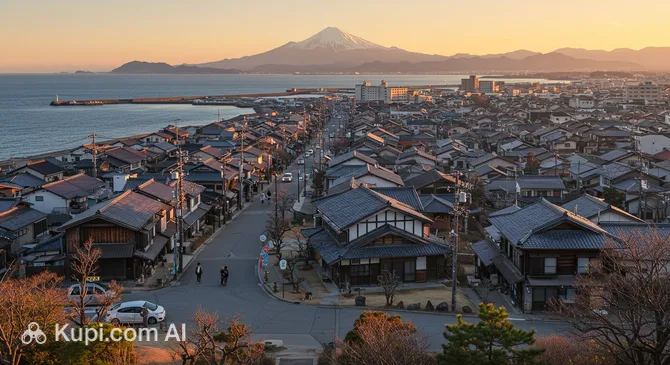
Yurihonjo. Illustration.
Source: Kupi.com AI

Yurihonjo attracts tourists with a variety of offerings. Nature lovers will appreciate the local hot springs and scenic waterfalls. Connoisseurs of history and culture will find ancient legends, historical sites, and old temples neighboring modern buildings. The city is also famous for its authentic Japanese cuisine, prepared with heart and respect for tradition. Bustling markets and quiet streets create the unique flavor of this place.

If you are looking for an opportunity to touch true Japanese culture, enjoy natural wonders, and take a break from the city noise, Yurihonjo will be a real discovery for you. This city offers a unique experience of immersion in the slow pace of life and traditions of the Tohoku region, leaving every visitor with warm and bright memories.

You can find more interesting facts on the history of Yurihonjo page.

Weather Overview

The weather in Yurihonjo is characterized by warm and fairly humid summers, as well as cold and snowy winters. In the summer months, especially in July and August, the average air temperature reaches +23-25°C, with fairly frequent precipitation. In winter, especially in December and January, when the average temperature is near zero, there is the highest number of days with precipitation, mainly in the form of snow. To get a more detailed idea of the weather conditions, you can check the information on the Climate in Yurihonjo page.

Average monthly temperature

Average monthly precipitation

Interesting Facts

In addition to its main attractions, Yurihonjo holds many fascinating secrets and amazing stories that make it truly special. Here are just a few of them:

  • In the mountainous areas of Yashima, part of Yurihonjo, legends of the secret settlement of Kurisawa still live on. It is believed that this is where the surviving supporters of the powerful Taira clan fled in the 12th century after their crushing defeat in the war against the Minamoto clan, seeking refuge in these remote lands.

  • Ancient giant trees grow in the vicinity of Yurihonjo, the most famous of which is the "Thousand-Trunk Katsura of Chokai." Local legends say that these mighty trees were silent witnesses to the prayers of the famous general Takeda Shingen, who asked the deities for victory in his many battles.

  • Once upon a time, Yurihonjo played a key role on the ancient Obi Kaido tract, an important path connecting the provinces of Shinano and Kai. In memory of this glorious past, today you can see not only restored signal towers but also the picturesque ruins of Shishiku-jo Castle, whose name is poetically translated as the "Lion's Roar Castle."

How to Get There

There are several ways to reach the city of Yurihonjo, located in the picturesque Akita Prefecture in Japan. For most tourists, especially those arriving from afar, the most convenient option is a flight to one of the nearest regional airports followed by a ground transfer.

The main air hub for a trip to Yurihonjo is Akita Airport (AXT). It is located in Akita City, about 29 km north of Yurihonjo. This is a fairly large regional airport that accepts many domestic flights from Japan's major cities. A trip by car, taxi, or bus from the airport to the center of Yurihonjo takes about 60-70 minutes.

Another option is Shonai Airport (SYO), located in Sakata City, approximately 68 km south of Yurihonjo. This airport is somewhat smaller but may be convenient depending on your route and flight availability. The drive from Shonai Airport to Yurihonjo by car usually takes about 1.5-2 hours.

You can also consider Hanamaki Airport (HNA), located in Iwate Prefecture near Morioka City. It is at a significant distance, approximately 93.5 km east of Yurihonjo; however, it is also a relatively large airport that may offer more flight options, including some international charters. The journey from Hanamaki Airport to Yurihonjo takes about 2.5-3 hours by car.

For convenience, here is a summary of the main airports through which you can reach Yurihonjo:

AirportPassenger trafficDistance
Akita Airport1.8 mln29 km
Shonai Airport364 81568 km
Hanamaki Airport739 12394 km
Odate Noshiro Airport195 91794 km
Junmachi Airport223 111112 km

Regarding rail service, there are no major hub stations in Yurihonjo itself serving Shinkansen bullet trains or major trunk lines for long-distance travel. Travelers who prefer trains will most likely need to first reach one of the region's major cities, such as Akita, and then transfer to local rail lines or buses going to Yurihonjo. For example, from Akita Station, Yurihonjo can be reached via the Uetsu Line.

Additionally, Yurihonjo can be reached by car. Japan has a well-developed network of roads, including expressways, which makes traveling by car comfortable, especially if you plan to explore Akita Prefecture and neighboring regions.

Main Attractions

Yurihonjo, nestled in Akita Prefecture, offers its guests a variety of attractions—from majestic natural wonders to historical corners that preserve the memory of the past. This city and its surroundings will be a real discovery for curious travelers.

One of the main natural landmarks of the region is the majestic Mount Chokai (鳥海山), often called "Dewa Fuji" for its conical shape resembling the famous Mount Fuji. This impressive mountain, located on the border of Akita and Yamagata prefectures, attracts hikers with scenic trails, climbers, and, in winter, skiers. Breathtaking panoramas open from its slopes, and alpine meadows and forests, which are part of the Chokai Quasi-National Park, stretch at its base. A visit to Mount Chokai is an opportunity to touch the pristine nature of Japan.

In the heart of Yurihonjo lies Honjo Park (本荘公園), built on the ruins of the castle of the same name. It is a favorite resting place for citizens and a popular attraction for tourists, especially in spring. At this time of year, the park is transformed by the blooming of hundreds of cherry trees, creating a magical atmosphere. Walking along its shady paths, you can see the remains of ancient fortress walls and moats, reminding of the rich historical heritage of these places. The park also often serves as a venue for various local festivals and cultural events.

For lovers of natural beauty, a visit to Hottai Waterfall (法体の滝) is a must. This picturesque multi-level cascade, located at the foot of Mount Chokai, is rightfully included in the list of "Japan's Top 100 Waterfalls." It impresses with its power and pristine beauty at any time of year. Hottai Waterfall looks especially stunning in autumn, when the surrounding forests are painted in bright crimson and gold tones, creating an unforgettable contrast with the snow-white foam of the churning water.

If you want to enjoy the coastal scenery of the Sea of Japan, head to Sai-no-kami Park (賽の神公園). This place is famous for its unusual rock formations known as Oyado-iwa Rocks (お宿岩). These whimsical rocks, rising straight out of the water near the coast, create amazingly scenic marine views that are particularly impressive at sunset. Sai-no-kami Park is a great place for leisurely walks, meditation, and contemplating the harsh but enchanting beauty of Japan's northern coast.

Local Cuisine

Yurihonjo is a true gastronomic paradise for those who appreciate authentic Japanese cuisine and fresh local products. The city and its surroundings are famous for the gifts of the Sea of Japan, as well as the fertile lands of Akita Prefecture, which supply rice, vegetables, and even game to the table.

Be sure to try dishes made from the freshest seafood caught in the Sea of Japan—this is a hallmark of local cuisine. Another iconic treat is Akita Kiritanpo: these are cylinders of mashed rice that are grilled over charcoal and often served with a fragrant chicken or miso-based broth. Meat lovers should pay attention to dishes made from wild boar, as well as seasonal dishes with mountain herbs and vegetables.

Among the beverages, local sake holds a special place. The surrounding villages produce unique and even rare varieties of this traditional Japanese drink, which will perfectly complement any meal. Of course, a variety of non-alcoholic drinks, including green tea, are always available as well.

The dining culture in Yurihonjo is diverse. Locals and tourists love to visit farmers' markets where you can find seasonal vegetables, fresh fish, and try street food. Special mention goes to the Iwaki Shimashiki Gyoko Park roadside station: here you can not only taste fresh seafood but also purchase homemade pickles, traditional sweets, and souvenirs. In addition, the city regularly hosts gastronomic festivals showcasing the full diversity of local cuisine, from traditional soups to rare delicacies.

Travel Tips

Planning a trip to the charming city of Yurihonjo? Wonderful! To ensure your journey through this corner of Japan goes smoothly and leaves only pleasant impressions, we have prepared some practical tips.

  1. Clothing and Essentials: The climate in Akita Prefecture, where Yurihonjo is located, is characterized by all four seasons: warm and humid summers and cold, snowy winters. Therefore, choose clothing according to the season: light things for summer and warm layered clothing, including a waterproof jacket and shoes, for winter. Be sure to bring comfortable walking shoes, as exploring the city on foot is a real pleasure. Don't forget an adapter for electronics (Japan uses type A and B sockets). When visiting temples and shrines, show respect by choosing modest clothing.
  2. Transport in the City: Getting around Yurihonjo is most convenient by local buses or trains, if the route allows. For more flexible exploration of Akita Prefecture, you can consider renting a car—remember that Japan has left-hand traffic and an international driving permit with a Japanese translation will be required. Taxis are available but can be more expensive compared to public transport.
  3. Financial Matters: The official currency is the Japanese Yen (JPY). Despite the development of cashless payments, many small shops, cafes, and markets in Yurihonjo may prefer cash. You can exchange currency at banks or post offices. Cards from major international systems are accepted in hotels and large stores. ATMs that work with foreign cards are most often found in 7-Eleven stores or at the post office (Japan Post Bank). Tipping in Japan is not practiced—good service is already included in the bill.
  4. Health and Safety: Yurihonjo, like Japan in general, is a very safe place for tourists. Follow usual precautions. Pharmacies (look for the sign "薬" - kusuri) are available in the city, but staff do not always speak English, so have a list of necessary medications with you. Be sure to take out travel medical insurance before your trip.
  5. Communication: The main language of communication is Japanese. The level of English proficiency among the local population may be limited, especially outside tourist zones. Learn a few basic phrases in Japanese: "konnichiwa" (hello), "arigato" (thank you), "sumimasen" (excuse me/sorry). For internet access, consider purchasing a tourist SIM card or renting a pocket Wi-Fi router. Free Wi-Fi may be available in some public places and hotels.
  6. Local Etiquette: Japanese people highly value politeness and respect. When greeting someone, a slight bow is sufficient. In public places, especially on transport, try to speak quietly and not disturb others. When entering a Japanese home, some temples, and traditional inns (ryokans), it is customary to remove your shoes.
  7. What to Avoid: To avoid offending locals and awkward situations, try not to stick your chopsticks vertically into your rice (this is associated with funeral rites). Also, avoid loud phone conversations on public transport and do not blow your nose too loudly in public.
  8. An Extra Tip from Us: Yurihonjo is in Akita Prefecture, famous for its rice, sake, and unique cuisine. Be sure to try local delicacies like kiritanpo nabe (a hearty soup with rice cylinders). Also, before your trip, inquire about local festivals or events—you might be lucky enough to catch one and dive deeper into the region's culture.

We hope these tips help you better prepare for your trip and get the most out of your stay in Yurihonjo. We wish you an unforgettable journey!

Entertainment & Nightlife

Yurihonjo, nestled in Akita Prefecture, offers its guests a quiet but by no means boring evening leisure. While the city cannot boast the vibrant nightlife of megacities, you can find pleasant places to relax after a busy day and immerse yourself in the local atmosphere.

The foundation of evening entertainment in Yurihonjo is traditional Japanese pubs—izakaya, where you can not only drink sake or local beer but also try a variety of snacks. For example, you can look for establishments like "Kamakura no Yoru" (which can be translated as "Kamakura Night") for an authentic experience or drop into a bar like "Honjo Beer House," offering both local and imported beers. There are also small venues like snack bars, such as a hypothetical "Yotsuba" ("Four-Leaf Clover"), where you can have a snack and chat in a relaxed setting. The atmosphere in such places is usually friendly and inviting, attracting a mostly local crowd. There is generally no dress code, and casual wear is welcome. Most establishments stay open until late evening, especially on weekends.

The charm of Yurihonjo's nightlife lies in its compactness. The main places where you can spend the evening, including the mentioned types of izakayas and bars, are usually concentrated in the central part of the city, near the train station or on the main shopping streets. In addition to general examples, it's always useful to check current recommendations locally or through tourist information centers and online maps, as the list of popular spots can change. Nightclubs in their classic sense may be rare here, giving way to more intimate formats of relaxation.

The best time for evening outings is after 19:00, when locals finish work and head out to relax. Prices in Yurihonjo's bars and izakayas are generally moderate, allowing you to enjoy the evening without significant expense. Regarding night transport, after public transport stops running, the main way to get around is by taxi. It is recommended to find out the numbers of local taxi services in advance or use apps to call them.

Yurihonjo, like most cities in Japan, is characterized by a high level of safety. Evening walks through the central areas of the city are usually comfortable and cause no concern. Nevertheless, you should always take basic precautions, especially if you are in an unfamiliar place late at night.

During the day, Yurihonjo also offers interesting leisure options. Guests can visit local museums to learn about the history and culture of the region, walk through scenic parks, or explore the surroundings rich in natural beauty. While there are no large amusement parks here, the city's charm lies in its authenticity and calm atmosphere.

Parks & Museums

The city of Yurihonjo offers its guests a harmonious combination of well-kept green areas for outdoor recreation and interesting cultural sites that introduce the rich heritage of this corner of Japan. Here, everyone will find something for the soul, whether it's a quiet park or an informative museum.

Nature lovers will appreciate the diverse green corners of Yurihonjo and its surroundings. One of the main places for walks is Honjo Park, spread over the site of the castle ruins of the same name. In spring, the park is steeped in cherry blossoms and azaleas, attracting many visitors. For those looking for more active recreation and impressive landscapes, the majestic Mount Chokai, an active stratovolcano and symbol of the region, is a must-visit. Its slopes, part of the Chokai Quasi-National Park, offer numerous hiking trails and breathtaking panoramic views. For a more secluded holiday and acquaintance with impressive coastal scenery, visit Sai-no-kami Park. Located on the Sea of Japan coast, this park is famous for its scenic views and remarkable rock formations, including the famous Oyado-iwa rock. It offers a great opportunity to enjoy maritime panoramas and unique natural forms.

To dive deeper into the history and culture of Yurihonjo, it's worth visiting local museums. The Yurihonjo City Museum of History and Folklore, located in the Boat Plaza Aquapal complex, introduces the life, traditions, and developmental stages of the region. Its exhibits tell the story of local residents, their crafts, and their connection with nature. Another interesting site is the TDK Museum, dedicated to the history and achievements of the world-famous corporation whose origins are linked to this region. Here you can learn about the development of technology and the company's contribution to modern electronics.

Walking through Yurihonjo, you will also find many pieces of evidence from the past. In addition to the already mentioned ruins of Honjo Castle, old temples and shrines have been preserved in the city and its surroundings, each with its own unique atmosphere and history. Some of them can be examples of traditional Japanese architecture, offering a quiet place for reflection and acquaintance with the spiritual side of the region's life.

To get a truly authentic experience of Yurihonjo, don't be afraid to step off the beaten tourist path. Visit a local market to try fresh seasonal products or stop by a small family-run artisan shop. Sometimes the brightest discoveries and warmest memories are born exactly in such little-known but charming corners of the city.

Getting Around

When planning movement around Yurihonjo, tourists can count on several convenient public transport options. The foundation of the city's transport system consists of buses and local rail lines, which provide connections both within the city and with neighboring settlements.

Buses are one of the main ways to get around Yurihonjo. The route network covers most areas of the city. Typically, entry to the bus is through the back door, where you need to take a ticket (if you don't have an electronic card), and exit is through the front, paying the fare to the driver. The cost depends on the distance. Schedules can be found at stops and, sometimes, online.

Rail transport plays an important role, especially for traveling longer distances or to the suburbs. Local trains, including JR East lines, pass through Yurihonjo Station, linking the city with other points in Akita Prefecture and beyond. Train tickets are purchased at stations from machines or ticket offices before boarding.

The fare payment system in Yurihonjo is fairly standard for Japan. For convenience, you can use rechargeable smart cards (IC cards), such as Suica or Pasmo (or their regional counterparts if accepted), which allow you to pay the fare with one touch on validators in buses and at station turnstiles. Payment in cash is also always possible, especially on buses. It is recommended to have small change for paying the driver.

Tourists should note that public transport in Yurihonjo, as in many small Japanese cities, may not run as frequently as in megacities, especially in the evening and on weekends. Therefore, plan your route in advance and check the current schedule. Train tickets can be bought just before departure, and on buses, payment is made upon exit.

As an alternative to public transport, taxis are available in Yurihonjo. They can be found at stands near the train station or called by phone. This is a more expensive but more comfortable way to get around, especially if you are traveling with luggage or in a group. Also, for exploring central areas of the city or scenic surroundings in good weather, you can consider bicycle rental, if such a service is available.

Accommodation

In the city of Yurihonjo, travelers will find various accommodation options to suit different tastes and budgets. The choice ranges from traditional Japanese inns known as ryokans, where you can immerse yourself in local culture and enjoy unique hospitality, to modern business hotels offering convenience and functionality. You can also find small guest houses (minshuku) or apartments for short-term rent, suitable for those looking for a more homey atmosphere or traveling as a family.

When choosing a place to stay in Yurihonjo, it's worth paying attention to areas located near major transport hubs, such as the train station, which will provide easy movement around the city and its surroundings. Central areas are also popular due to their proximity to shops, restaurants, and some local attractions. The choice of a specific area will depend on your plans and preferences during the trip.

Yurihonjo features both standard hotels focused on comfort and a familiar range of services, as well as more authentic accommodation options. While there may be few large international hotel chains here, local hotels and ryokans offer high-quality service. We recommend checking reviews and the location of specific hotels to choose the option that best suits you.

To guarantee the best choice and the most favorable prices, especially if your trip falls during the peak tourist season or during local festivals, it is recommended to book accommodation in advance. The most common methods are online platforms for booking hotels and apartments, as well as direct inquiries through official hotel websites. The price range in Yurihonjo is quite wide: from budget options for economy travelers to mid-range hotels with an expanded set of services. Luxury options may be limited, but finding comfortable and high-quality accommodation at a reasonable price is entirely possible.

Nearby Cities

For those who want to explore the surroundings, Yurihonjo serves as an excellent starting point for day trips to several interesting nearby places. This region offers a variety of experiences, from cultural centers to scenic landscapes.

For instance, you can head to Akita (about 37 km), the prefectural capital, where you can visit the beautiful Senshu Park, the former site of Kubota Castle, or the Akita Museum of Art featuring works by Tsuguharu Foujita. Another interesting option is Sakata (approximately 56 km), a port city with a rich history of rice trading, where you should see the famous Sankyo-soko wooden warehouses and the former residence of the wealthy Honma merchant family. Also noteworthy is Tsuruoka (about 76 km), known for its impressive Kamo Aquarium, one of the world's largest in terms of jellyfish species, and as a starting point for pilgrimages to the three sacred mountains of Dewa Sanzan. Below is a list of these and other cities with their population and exact distance:

CityPopulationDistance
Nikaho22 98124 km
Ugo13 54737 km
Akita302 98437 km
Yuza12 89543 km
Yokote84 55645 km

These nearby destinations allow for a deeper acquaintance with the diverse culture, history, and natural beauty of the Tohoku region, complementing the impressions from visiting Yurihonjo.

Shopping & Souvenirs

Shopping in Yurihonjo offers tourists the opportunity to get to know local goods and products of Akita Prefecture rather than a race for global brands. The city is not a major shopping center, but here you can find authentic Japanese products, fresh food, and souvenirs reflecting the region's culture. Special attention should be paid to shops offering local sake and traditional crafts.

Main shopping opportunities in Yurihonjo are likely concentrated in the central part of the city, possibly near the train station or along the main streets. Here you will find small specialty stores, shops with everyday goods, and perhaps a few department stores or supermarkets offering a wider range of items.

Large modern shopping malls characteristic of megacities may be absent in Yurihonjo. However, the city may have local shopping complexes or larger supermarkets where you can buy food, clothing, and other necessary items. Look for the signs of chains common in Japanese regions.

Information about large, permanently operating markets in Yurihonjo may be limited. However, as in many Japanese cities, farmers' or morning markets may be organized periodically here, where locals sell fresh agricultural products, seafood, and handmade items. Visiting such a market is a great opportunity to taste local delicacies and plunge into the daily life of the city.

As souvenirs from Yurihonjo and Akita Prefecture, consider:

  • Local sake: Akita Prefecture is famous for its high-quality rice and, consequently, excellent sake.
  • Wood products: Although the famous magewappa items are produced in Odate, you can find other interesting wooden crafts in Akita's souvenir shops.
  • Rice-based products: For example, kiritanpo (grilled rice "sausages") or various rice crackers and sweets.
  • Akita Inu souvenirs: Images or figurines of the famous Japanese dog breed, originally from this prefecture.
  • Traditional sweets: Try local wagashi, which often reflect seasonal motifs.

Look for goods labeled "made in Akita" or "local product."

Most shops in Japan, and Yurihonjo is no exception, are usually open from 10:00 or 11:00 to 19:00 or 20:00. Small private shops may have individual schedules. As for payment, credit cards are accepted in large stores and supermarkets. However, it is always useful to have cash with you, especially for purchases in small shops, at markets, or when paying for inexpensive items. Also, in some places, Japanese transport IC cards (e.g., Suica, Pasmo) may be accepted for payment.

For foreign tourists in Japan, a tax refund system (Tax Free) is available. Look for shops with the corresponding "Tax-Free Shop" logo. Usually, to issue a tax refund, you need to make a purchase of over 5000 yen (excluding tax) in one store in one day and present your passport. Check the conditions directly in the store, as not all goods may fall under this system, and not all shops, especially small ones, provide such a service.

Reached the end of the page?

That means the route is fully explored