Support

Bukchon Hanok Village

About

Bukchon Hanok Village is a unique historical district in the heart of Seoul, where time seems to have stood still. Here, amidst modern skyscrapers, hundreds of traditional Korean houses known as hanok have been preserved. A stroll through the narrow streets of Bukchon allows you to immerse yourself in the atmosphere of Joseon-era South Korea and see how the Korean nobility lived several centuries ago. This place is a true time machine, transporting visitors to the country's past.
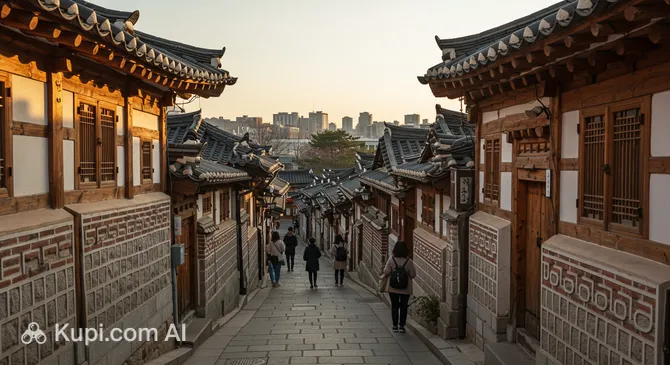
Bukchon Hanok Village. Illustration.
Source: Kupi.com AI

Traveller photos:

The name "Bukchon," which translates as "North Village," was given to the area because of its location to the north of the capital's main palaces—Gyeongbokgung and Changdeokgung. Historically, aristocrats, high-ranking officials, and members of the royal family lived here, which is reflected in the elegant architecture and the special cultural heritage of the place. The houses were built from natural materials in harmony with the surrounding landscape, and their distinguishing feature was the "ondol" underfloor heating system.

Today, Bukchon is not just an open-air museum but a vibrant residential neighborhood. Many hanoks are still private homes, so visitors are asked to keep quiet and respect the peace of the local residents. At the same time, some of the houses have been transformed into cultural centers, craft workshops, cozy tea houses, restaurants, and guesthouses where anyone can get a closer look at Korean traditions. This makes Bukchon an ideal place for those looking not only for beautiful views but also for a deep cultural immersion.

Contacts

Since Bukchon Hanok Village is primarily a residential historical district rather than a single tourist site, it does not have a general official website or a single information telephone number. It is important to keep this in mind when planning your visit so as not to disturb the local residents.

For the convenience of travelers and to obtain all necessary information, including maps and guidebooks, it is recommended to visit tourist information booths. These can be found at the main entrances to the village and near Anguk Metro Station. Information center staff will help you find your way around and suggest the best walking routes.

How to contactContact
AddressGyedong-gil, Jongno District, Seoul, South Korea
Phone+82 2-2133-1371
Websitebukchon.seoul.go.kr

What to Do

Visiting Bukchon Village is primarily an opportunity to leisurely stroll through its picturesque streets, take atmospheric photos against the backdrop of traditional architecture, and visit observation decks with views of Seoul and the palaces. One of the most popular activities here is renting a national hanbok costume. Numerous rental shops offer a wide choice of outfits, and their staff will help you with your hair and accessories so that you can fully immerse yourself in the atmosphere of the historical era and take memorable photos.

Besides walking, Bukchon offers a deep dive into the culture of South Korea. The village is home to many small museums, art galleries, and traditional tea houses, where you can sample local sweets and fragrant tea. This is a wonderful opportunity to relax after exploring the streets and enjoy the calm atmosphere in the authentic interiors of old Korean houses.

For those seeking a more interactive experience, some hanoks hold workshops on traditional crafts, calligraphy, or even Korean cooking. And for a complete immersion in the atmosphere of the old city, you can stay overnight in one of the guesthouses set up in real hanoks. This is a unique chance to feel like part of history and wake up in the heart of a metropolis, but in the silence and tranquility of a bygone era.

Getting There

Bukchon Hanok Village is conveniently located in the heart of Seoul, between the famous Gyeongbokgung and Changdeokgung palaces, making it easily accessible for travelers. The simplest and most popular way to reach this historical area is by metro. You need to take Line 3 to Anguk Station and use Exit 2. From the metro station, it’s a pleasant 10-15 minute walk to the village entrance. Tourist information centers often operate near the metro exit, where you can pick up a map and get route recommendations.

In addition to the metro, Bukchon Village can be reached by other forms of public transport, such as city buses, many of which stop nearby. Taxis are also always an option, which is particularly convenient if you are traveling from a distant part of the city. However, it is best to avoid driving a private or rental car: the streets in the village are very narrow, and finding a free parking space is extremely difficult. For this reason, public transport is considered the best choice for visiting this picturesque corner of old Seoul.

Nearest city: Seoul

History & Facts

The history of Bukchon Hanok Village is inextricably linked to the Joseon Dynasty era (1392–1897), when Seoul became the capital. This area emerged as a prestigious residential location for the upper class—aristocrats, scholars, and high-ranking officials serving at the royal court settled here. Its proximity to the two main palaces, Gyeongbokgung and Changdeokgung, made Bukchon an exclusive neighborhood, whose high status was reflected in the elegance and quality of the houses built here.

The architecture of the traditional houses, hanoks, was designed in accordance with the philosophy of harmony with nature. Exclusively natural materials were used for their construction: stone, wood, clay, and hanji paper, which was used to cover doors and windows. Every detail mattered—from the elegantly curved tiled roofs to the famous "ondol" underfloor heating system, which warmed the home during the cold season. This approach made a hanok more than just a house; it was an eco-friendly and wise living space, perfectly integrated into the surrounding landscape.

Over time, especially during Seoul's period of rapid modernization, the unique appearance of Bukchon was threatened with extinction. However, thanks to the efforts of local residents and special government heritage preservation programs, the area was saved from demolition. That is why today Bukchon is one of the few places in the capital where you can see authentic Joseon-era houses rather than modern reconstructions. This fact turns the village into a true living museum, where history continues to live within the walls of ancient buildings.

Time Needed

To explore Bukchon Hanok Village, it is recommended to set aside 2 to 4 hours. This is quite enough time to leisurely stroll through the main picturesque streets, take memorable photos against the backdrop of traditional hanok houses, and feel the unique atmosphere of this historical district. During this period, you can also visit one of the small museums, stop by a craft shop, or relax in a cozy tea house.

If you plan a deeper immersion into Korean culture, the duration of your visit may increase to half a day. For example, renting a national hanbok costume and having a photo session can take an extra hour or two. Participating in a traditional crafts workshop, visiting several galleries, or having a full lunch at one of the local restaurants will also require more time. Thus, the final length of your walk depends on your interests and how packed your program is.

Working Hours

The main advantage of Bukchon Hanok Village is its 24-hour accessibility. Since it is primarily a residential area, you can stroll through its atmospheric streets at any time of day or night all year round. However, it is important to remember that people live here, so during your visit, especially in the early morning or late evening hours, it is necessary to maintain silence and respect the peace of the local residents.

At the same time, most tourist sites within the village—museums, cultural centers, and galleries—operate on a more standard schedule, typically from 09:00 to 18:00. Some private establishments, such as tea houses or craft workshops, may have their own schedules, so it is recommended to check current opening hours on their website or on-site before visiting a specific place. Advance booking is not required for a regular walk, but it may be necessary for participating in workshops or guided tours.

Nearby

A stroll through Bukchon Hanok Village is just the beginning of exploring the rich history and culture of this district in Seoul. Thanks to its central location, the village is surrounded by many other iconic sites within walking distance. Exploring the surroundings will allow you to get a more complete picture of the capital of South Korea, combining visits to ancient palaces, museums, and modern recreation areas in one itinerary.

This is an excellent opportunity to make the most of your time and see the main treasures of the historical center without excessive travel across the city. Below is a list of interesting places located very close to Bukchon, along with the distance to each.

NameDistance
Changdeokgung Secret Garden0.7 km
Gwanghwamun Gate0.9 km
Changgyeonggung Palace0.9 km
National Palace Museum of Korea1 km
Bar Cham1.3 km
Charles H1.5 km
Four Seasons Hotel Seoul1.5 km

Reached the bottom of the page?

Looks like you know this route inside out