Support

Mersing

About

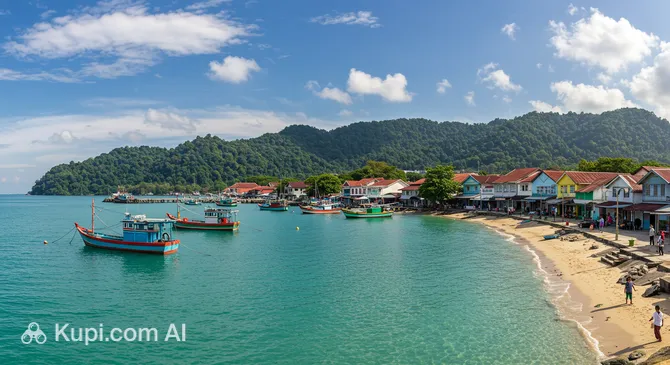
Mersing is a cozy port town located on the eastern coast of the state of Johor. It stretches along the South China Sea, in a picturesque spot where the river meets the salt waves. For many tourists, Malaysia reveals a new, leisurely side here: just a couple of hours' drive from bustling Johor Bahru, and you find yourself in an atmosphere of tranquility and provincial charm.

Mersing. Illustration.
Source: Kupi.com AI

With a population of about 28,000 people, the town lives at its own steady pace. Mersing is widely known as the main gateway to popular islands such as Tioman, Rawa, and Besar. However, this town is more than just a transit point. Its unique atmosphere is shaped by the friendliness of the locals, fresh sea air, and the absence of the hustle and bustle typical of large metropolises.

Walking through the streets, you can spot authentic houses from the last century, whose architecture reflects the rich history of Mersing. There are no ultra-modern hotels or glossy storefronts here, but there is sincerity and naturalness. Travelers should linger here to wander along the waterfront, meet dozens of local street cats that have become a trademark of the city, and visit the market for fresh impressions.

This town is perfect for those who want to touch the authentic culture of the region, and not just enjoy a beach holiday. Be sure to try the local cuisine and feel the authentic rhythm of coastal life before heading to the emerald waters of the islands.

Weather Overview

Mersing is located in a humid tropical climate zone, so it is warm all year round. Temperatures are remarkably stable: average figures range from 26.2°C in January to 28.0°C in May. During the day, the air usually warms up to 30°C, and nights remain comfortable with temperatures around 24-25°C, creating pleasant conditions for evening walks.

Travelers should be prepared for frequent rainfall in any season. Expect warm weather with high humidity, where even in the "driest" month, February, there are about 18 rainy days. The peak of precipitation occurs at the end of the year: in November and December, it can rain almost daily (up to 29 days a month). To choose the ideal time for your transfer to the islands, we recommend checking the current weather in Mersing in advance and considering the forecasts when planning your route.

Average monthly temperature

Average monthly precipitation

Interesting Facts

In addition to its primary role as a transport hub, Mersing holds many fascinating secrets and features that make it unique. This town can surprise the attentive traveler with details hidden from the eyes of those who are simply rushing to catch a ferry.
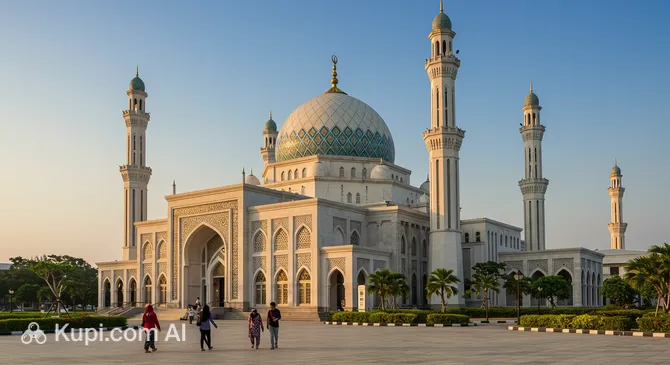
Bandar Mersing Mosque. Illustration.
Source: Kupi.com AI

Traveler photos:

  • Kingdom of Cats. The town is literally filled with cats, which are considered a symbol of domestic comfort here. There is a local legend that these furry inhabitants bring luck to travelers: if a cat shows you favor before you set sail, your trip to the islands will go perfectly.

  • Walking on the Sea Floor. In Mersing, you can witness impressive tides. At certain times, the sea retreats so far that visitors have the rare opportunity to walk along the exposed seabed, looking at shells and observing marine life in its natural environment.

  • Architectural Contrasts and a Mysterious Museum. The town's appearance wonderfully combines old houses with wooden shutters and modern buildings. Special attention is drawn to the new museum building, which, while remaining closed, has already sparked rumors and become a subject of lively discussion among locals.

  • Gateway to Paradise. Residents of the city proudly bear the title of guardians of the "gateway to the islands." It is through the local port that the path lies not only to the famous Tioman but also to Malaysia's more secluded gems—the islands of Rawa and Besar.

How to Get There

When planning a trip to this coastal town, it is important to think through the logistics in advance, as there are no direct flights here. To find out all the details and choose the best route, we recommend reading more about how to get to Mersing by various modes of transport.

There is no airport in Mersing itself, but you can fly into Senai Airport (IATA: JHB) in Johor Bahru, which is about 89 km from the resort. This is the nearest regional aviation hub, handling both domestic and some international flights. The journey from there by taxi or bus takes about 2.5 hours, making it one of the most convenient arrival options.

Another popular option for international tourists is Changi International Airport (IATA: SIN), located in Singapore, 120 km from the city. This is one of the world's largest aviation hubs, offering excellent connections. The trip from Changi to Mersing takes approximately 3.5 hours, though you should allow extra time for the border crossing between Singapore and Malaysia.

For clarity, here is a summary of the main airports:
AirportPassenger trafficDistance
Tioman15 00056 km
Senai Airport4.3 mln89 km
Changi International Airport67.7 mln120 km
Hang Nadim International Airport4.0 mln148 km
Sultan Haji Ahmad Shah Airport176 100164 km

There is no railway station in Mersing itself, but you can arrive at KL Sentral station (IATA: XKL) in Kuala Lumpur, which is about 251 km away. This is the capital's main transport hub, where trains arrive from all over the country. From there, you can reach the coast by bus or taxi.

Below is information about the nearest railway stations:
StationPassenger trafficDistance
KL Sentral Station36.5 mln251 km

Main Attractions

Attractions:

While many view this city only as a starting point for the islands, there are places here that deserve attention and can help brighten the wait for a ferry. A walk through Mersing allows you to see a harmonious blend of cultures, religions, and the daily life of a Malaysian province.

One of the most prominent architectural landmarks in the city is the Masjid Bandar Mersing. Located on a hill, it catches the eye with its blue and white facade, which looks magnificent against the backdrop of the tropical sky. Climbing up to the mosque, tourists can enjoy a panoramic view of the city and the South China Sea coast. It is an ideal place for those seeking peace and wanting to take beautiful photos of the surroundings from above.

The heart of tourist life is undoubtedly the Mersing Harbour Centre. It is not just a ferry terminal, but a true multifunctional complex. Here, travelers can not only buy tickets for boats but also browse souvenir shops, purchase beach supplies, or simply relax in air-conditioned halls. The complex is brightly decorated and serves as the main landmark for all visitors.

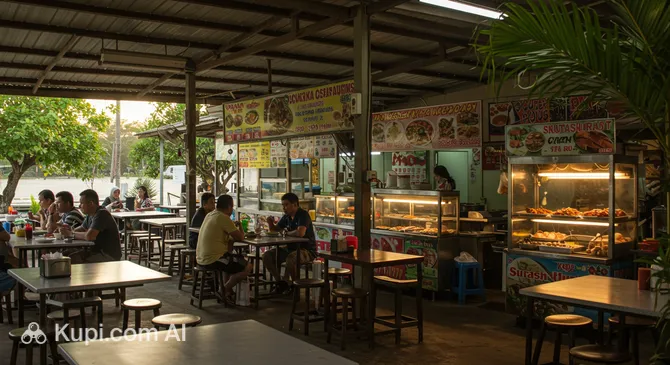
Ucu Selera Kita Restaurant. Illustration.
Source: Kupi.com AI

Traveler photos:

To truly understand the local culture, it is worth getting to know the region's gastronomic traditions. Popular among locals and guests alike, Uchu Selera Kita Restaurant offers an excellent opportunity to try authentic Malaysian dishes. A simple but welcoming atmosphere prevails here, and the menu delights with a variety of flavors—from spicy curries to fresh seafood. It is a great place to fuel up before a sea voyage.

Also worth noting is the Fushun Temple, the oldest Chinese temple in the city, dedicated to the deity Tua Pek Kong. The building stands out with its traditional architecture featuring curved roofs and intricate wood carvings. A visit to this temple, which is over a hundred years old, allows you to touch the spiritual heritage of Mersing's Chinese community and feel the contrast with the modern bustle of the port.

Local Cuisine

Mersing's culinary scene is a true feast for seafood lovers, as the proximity to the South China Sea ensures the freshness of the ingredients. Local establishments prepare an abundance of shrimp, squid, crab, and various fish, which often reach the kitchen directly from fishing boats. The main gastronomic hit that every guest must try is ikan bakar—charcoal-grilled fish seasoned with spicy sauces, chili, and aromatic herbs, wrapped in banana leaves.

The city is famous for its diversity: Malay, Chinese, and Indian culinary traditions are harmoniously intertwined here. For breakfast or a quick snack, roti canai flatbreads with curry sauce or the famous laksa soup with its rich flavor are perfect. In the evening at street markets and small cafes, you should order satay—miniature skewers of meat or chicken served with a thick peanut sauce and rice cubes (ketupat).

Among drinks, fresh coconut water, often sold right in the nut, and freshly squeezed tropical fruit juices remain absolute favorites in the heat. Don't miss the chance to try teh tarik—sweet milk tea that is frothed by pouring it back and forth until a thick foam forms. Alcoholic beverages (mainly beer) are available in Chinese restaurants, such as seafood establishments, while Malay cafes offer exclusively non-alcoholic menus.

The dining culture in Mersing is very casual: locals prefer to eat in simple street restaurants and food courts where a lively atmosphere prevails. For a taste of authentic flavors, you can visit Uchu Selera Kita Restaurant, which is popular with both locals and tourists. And if you are lucky enough to be here during a holiday season, you will encounter small food festivals where the streets are filled with the tantalizing aromas of homemade dishes and spices.

Travel Tips

A trip to Mersing will be much more comfortable if you consider the local peculiarities of this port town in advance. We have prepared a list of practical recommendations to help you navigate the area easily, save time, and get the most out of your stay in the state of Johor.

  1. Clothing and Essentials. Given the hot and humid climate, prioritize loose-fitting clothing made from natural fabrics (cotton, linen). Since Mersing is a town with strong Muslim traditions, modest dress is recommended: avoid very short shorts and low necklines, especially when visiting markets or areas away from the beaches. Be sure to bring a light raincoat or umbrella, as tropical downpours are sudden, and a Type G power adapter (British standard).

  2. Transport Accessibility. The town center is compact, and most interesting places, including the ferry terminal, are within walking distance. There is virtually no public bus transport within the town (buses are used for intercity travel). For longer distances, it's most convenient to use the Grab app (the local equivalent of Uber) or take a taxi at the bus station stand. Renting a car only makes sense if you plan to travel around the state's surroundings.

  3. Finances and Payment. The national currency is the Ringgit. In Mersing, it is extremely important to have cash: street vendors, small cafes, and souvenir shops often do not accept cards. ATMs can be found near the ferry terminal and in the town center (Maybank, CIMB). International cards work in chain stores (e.g., 7-Eleven, KFC). Tipping is not mandatory, but rounding up the bill will be appreciated.

  4. Health and Safety. Mersing is a safe town, but keep an eye on your belongings in crowded places. The main "natural" danger is mosquitoes carrying dengue fever, so be sure to use repellent, especially in the evening. Pharmacies (such as Watsons or Guardian) are located on the main streets and sell basic medicines, but 24-hour outlets are rare. Drink only bottled water.

  5. Communication and Internet. The primary language is Malay, but thanks to tourism, English is understood quite well, especially in the service industry. For stable connectivity, we recommend buying a local SIM card (Celcom, Maxis, or Digi) at mobile phone shops or convenience stores upon arrival. Wi-Fi is available in most hotels and cafes, though its speed may be modest.

  6. Local Etiquette. Greetings are usually limited to a nod and a smile; do not initiate handshakes with members of the opposite sex unless they offer their hand first. Be sure to remove your shoes when entering private homes and mosques. It is customary to pass food and money only with the right hand, as the left is considered "unclean."

  7. What to Avoid. Do not show intense public displays of affection (hugging, kissing)—it is not customary in this conservative society. Also, avoid consuming alcohol on the street and in Muslim establishments; alcohol is only sold and served in specialized shops and Chinese restaurants.

  8. Important Logistics Tip. The ferry schedule from Mersing to the islands is highly dependent on tides. Departure times can change every day. Be sure to check the current schedule in advance and arrive at Mersing Harbour Centre at least an hour before departure to register and pay the marine park conservation fee.

By following these simple tips, you can avoid unnecessary hassle and focus on the main thing—the unique atmosphere of Malaysia. May your stay in Mersing, whether a short stopover or a full holiday, leave you with only warm and pleasant memories!

Entertainment & Nightlife

Nightlife in Mersing is fundamentally different from the noisy parties of megacities or beach discos of popular resorts. It is a quiet, conservative town where the rhythm of life slows down as the sun sets, giving way to leisurely relaxation. You won't find neon signs of nightclubs here; instead, the town offers an immersion into the authentic atmosphere of a Malaysian province, where the main entertainment is seaside walks and live conversation.

The main center of attraction in the evening is the Laman Samudera waterfront. This is a well-maintained area along the shoreline where both tourists and locals come to enjoy the cool sea breeze after a hot day. It is pleasant to just sit on a bench, watching the fishing boats and the view of the islands in the distance, or to take a leisurely stroll, soaking up the tranquility of the South China Sea. The atmosphere here is very family-oriented and relaxed.

For a taste of real local flavor, head to the night markets (Pasar Malam). They do not operate every day and may change locations, but this is where life is in full swing. It is not just a place for trade, but a kind of open-air social club. People come here to buy fresh fruit, try street snacks, and discuss the latest news. The noise, the smell of spices, and the bright lights of the stalls create a unique mood that cannot be found in shopping centers.

Those who like to stay up late should check out "mamak" stalls. These are an integral part of the culture Malaysia is famous for: here they watch football matches on big screens, drink hot "teh tarik," and have long conversations. These are the most casual places for nightly gatherings, where you can feel like part of the local community.

During the day, while waiting for a ferry, you can relax in small parks located near the shoreline. Although Mersing does not have large entertainment complexes, the green zones by the sea offer shade and solitude, allowing you to get into the right mood for your upcoming island holiday.

Parks & Museums

Mersing may seem like a modest provincial town, but behind the facade of a transit port lie cozy green zones and places that preserve memories of the past. For those with time before their ferry departure, the town offers several picturesque corners for walking and getting to know the local heritage, where nature coexists with history.

The main green artery of the city is the waterfront and Laman Samudera park. This is a well-kept coastal area that serves not only as a place for an evening stroll but also as an excellent spot for daytime relaxation in the shade of trees. It is equipped with playgrounds and picnic spots, and the view of fishing boats and islands creates a peaceful atmosphere. The park is a center of social life where local events are often held.

For lovers of wilder nature, a trip to Air Papan Beach, located 15 minutes from the center, is a must. This is not just a beach, but a real natural area with groves of casuarina trees providing deep shade. People come here to enjoy the silence, see traditional Malay rural life, and walk along the long shoreline free from urban development.

The city's cultural scene is relatively understated but has its gems. The most intriguing site is the Mersing Museum (Muzium Mersing). The museum building, located on a hill, is an attraction in itself due to its architecture. It was built as a tribute to the events of World War II, specifically the Battle of Endau. Although the museum's opening hours can be unpredictable (it is often closed for renovation or maintenance), it is worth the climb for the panoramic view of the town and port.

Architecturally, the town is a colorful mosaic of cultures. Alongside Chinese temples, the vibrant Hindu Sri Subramaniar Temple stands out with its colorful gopuram (entrance tower) decorated with numerous sculptures of deities. This place is eye-catching and serves as a reminder of the region's multi-ethnic population.

The majestic Masjid Bandar Mersing remains an undisputed symbol of Islamic architecture. Situated on a hill, it dominates the city skyline, and its elegant minarets are visible from almost anywhere in the center. It is not only an active religious site but also an important monument reflecting the spiritual traditions of the state of Johor.

Insider Tip: Don't limit yourself to the main streets—peek into the "back lanes" of the old town. In recent years, local artists have begun decorating the walls of houses with colorful murals depicting scenes from fishermen's lives and the region's flora, turning ordinary walls into an open-air gallery.

Getting Around

The public transport system in Mersing is very simple and matches the measured pace of life of a small port town. You won't find a metro, trams, or an extensive network of city trains here. The town is so compact that most central locations, including restaurants, shops, and the waterfront, are within walking distance of each other.

The main transport hub is the Mersing Bus Terminal, located near the river. Although it mainly handles intercity services connecting the town with the rest of the peninsula, occasional local buses (Omnibus) also depart from here to nearby settlements such as Endau. Bus tickets are purchased at the terminal's ticket counters for cash; the cost of travel around the vicinity is very low and rarely exceeds a few Ringgit.

For moving around the city and trips to remote beaches, the most convenient option is a taxi or using mobile apps. The Grab service (the local equivalent of Uber) operates in Mersing, but the number of cars may be limited, especially early in the morning or late at night. Payment in the app is possible both by linked card and in cash to the driver. This is the most transparent way to travel with a fixed price.

Classic taxis usually wait for passengers at the stand by the bus terminal or near the Mersing Harbour Centre ferry terminal. In these cars, meters are rarely used, so the price of the trip must be agreed with the driver in advance before getting into the vehicle. Payment is made exclusively in cash in the local currency.

Transport rentals, such as cars or scooters, are poorly developed in the town itself and are more informal. Some guesthouses may offer bicycle or motorbike rentals by arrangement, but there are no specialized large car-sharing services here. Given the small distances and flat terrain of the center, walking remains the most reliable and pleasant way to explore the town.

Accommodation

Since Mersing is a transit point for most travelers on their way to the islands, the local hotel stock is primarily focused on practicality and convenience. You won't find luxury five-star chain resorts here—they await you on Tioman or Rawa. Instead, the town offers a wide selection of budget hostels, functional mid-range hotels, and cozy family homestays.

The majority of accommodation is concentrated in Mersing Town Centre, in the immediate vicinity of the Mersing Harbour Centre ferry terminal and the bus station. Staying here is a strategically sound decision if your ferry leaves early in the morning. You can walk to the pier in 5–10 minutes without wasting time looking for a taxi. Small city-style hotels predominate in this area, offering clean rooms with basic amenities and air conditioning.

For those planning to stay in town for more than one night and looking for a more relaxed atmosphere, consider accommodation in the Air Papan beach area or around the village of Penyabong. These locations are a 15–20 minute drive from the center and offer stays in chalets or bungalows by the sea. This is an excellent choice for nature and peace lovers who want to escape the city bustle.

Booking Tip: Despite its status as a transit town, demand for accommodation in Mersing can be very high, especially on weekends, school holidays, and public holidays in Malaysia. We strongly recommend booking your room in advance if your trip falls during the peak season (March to October) to guarantee a comfortable night's sleep before your sea voyage.

The price range in Mersing can be described as budget and mid-range. A night in a hostel or a simple guesthouse is very affordable, and prices in 3-star hotels remain very reasonable. Large hotels are available for booking through popular online aggregators, but many small family guesthouses still operate on a direct booking basis via messaging apps or by phone. Keep in mind that small hotels may ask for payment or a deposit in cash.

Nearby Cities

For those who want to explore the surrounding area, Mersing serves as an excellent starting point for day trips to several interesting nearby locations:

One of the most accessible options for a change of scenery is Kuantan. It is the capital of the neighboring state of Pahang, located to the north along the coast. The city attracts tourists with its famous Teluk Cempedak beach, with its picturesque boulders and promenade, as well as beautiful waterfalls in the vicinity. It is an ideal place to combine a beach holiday with a visit to modern shopping centers and an introduction to the urban culture of the East Coast.

If you are ready for a longer journey for vivid impressions, you can head to the country's capital, Kuala Lumpur. Although the journey takes several hours, the trip is worth it: here you will find the legendary Petronas Twin Towers, the historical Merdeka Square, and vast shopping opportunities. The contrast between quiet, provincial Mersing and the dynamic metropolis will allow you to see Malaysia in all its diversity.

Also of interest is Shah Alam, known for its magnificent Blue Mosque (Sultan Salahuddin Abdul Aziz Mosque), which is considered one of the most beautiful in the country. The city is famous for its parks and calm, orderly atmosphere, making it a pleasant place for a cultural walk.

CityPopulationDistance
Tioman Island50054 km
Kluang169 82872 km
Taman Johor Jaya66 00099 km
Johor Bahru497 097105 km
Pasir Gudang312 499106 km

These nearby destinations offer insight into the diverse culture and landscapes of the region.

Shopping & Souvenirs

Shopping in Mersing is more practical than recreational. This town doesn't boast huge malls or high-fashion boutiques like Kuala Lumpur. People come here not for brands, but for the necessities before a trip to the islands: beach gear, sunscreen, snacks, and local delicacies. Nevertheless, browsing the local shops can be an interesting experience of immersion into the everyday life of a Malaysian province.

The town's commercial life is concentrated on several central streets, particularly around Jalan Ismail and Jalan Abu Bakar. Here, in low-rise shophouses, you will find pharmacies, clothing stores, electronics shops, and mini-marts. Everything is within walking distance of the waterfront, allowing tourists to quickly buy everything they need while waiting for their ferry.

There are no large shopping centers in the traditional sense here, but the main point of attraction for tourists is the Mersing Harbour Centre. This is a complex by the ferry terminal where you can find many kiosks with souvenirs, beachwear, hats, and flip-flops. There are also chain supermarkets in town, such as TMG Mart and Mr. DIY, where food and household goods are sold at fixed prices, which is very convenient for stocking up before setting off for the islands, where prices will be higher.

The true flavor of Mersing can be felt at the local markets. The main town market, Pasar Awam Mersing, is located near the river. It's worth a visit not only for fresh fruit but also to see the variety of seafood. In the evenings, the "night markets" (Pasar Malam) come to life, moving around different neighborhoods depending on the day of the week. There you can buy inexpensive clothes, toys, and try street food.

As for souvenirs, Mersing is famous for its fish products. The most popular gift Malaysians take from here is keropok (crispy fish crackers) and keropok lekor (fish sausages). They are sold in large bags at the market and in specialized shops. Dried fish and seafood (ikan bilis) are also popular. In the souvenir kiosks at the port, you can find magnets, T-shirts with "Tioman" or "Mersing" inscriptions, and shell crafts.

Shops in town usually open around 9:00–10:00 AM and work until 9:00–10:00 PM. Supermarkets and stores like 7-Eleven may stay open longer or operate 24/7. The main method of payment is cash (Ringgit). Cards are accepted in chain stores (Watsons, Guardian, KFC) and some hotels, but in souvenir stalls, at the market, and in small cafes, it is almost impossible to pay by card, so always have a supply of small bills.

It is important to remember that Mersing is not a tax-free zone, unlike popular Langkawi or the nearby Tioman Island. If you are heading to Tioman, it makes sense to postpone buying chocolate or alcohol until you arrive on the island, as these goods can be cheaper there thanks to its Duty Free status. In Mersing itself, the tourist tax refund system is practically non-existent due to the lack of large stores participating in the program.
Reached the end of the page?

That means the route is fully explored