Support

Tanjung Pelepas

About

Tanjung Pelepas is a strategically important point in the state of Johor, located on the southern coast of the peninsula where Malaysia borders Singapore. The city is primarily known for its eponymous port, which ranks among the largest and most technologically advanced container terminals in the world. This is a place where cutting-edge logistics achievements coexist with evergreen tropical nature, creating a unique atmosphere of dynamic development.

Tanjung Pelepas. Illustration.
Source: Kupi.com AI

Geographically, the city is situated at the mouth of the Pulai River, providing it with not only access to the sea but also a distinctive landscape. The climate here is equatorial, hot, and humid throughout the year, so travelers should be prepared for bright sunshine and brief tropical downpours. Although the area appears ultra-modern, the history of Tanjung Pelepas' development clearly demonstrates the region's rapid economic rise and the transformation of fishing grounds into a global hub.

For tourists, this area is interesting for its location and surroundings. Nearby lie the vast mangrove forests of the Sungai Pulai Nature Reserve, home to many species of birds and marine life. Furthermore, its immediate proximity to the Second Link bridge makes the city a convenient transit point for those planning to combine a trip through Johor with a visit to neighboring Singapore. A visit to Tanjung Pelepas allows a glimpse into Asia's industrial power and an appreciation of the scale of the country's maritime gateway.

Weather Overview

The climate in this region is typically equatorial, which means consistent warmth and high humidity year-round. Travelers should expect hot weather with daytime highs around 29–31°C and nighttime figures between 24–26°C. There are practically no seasonal temperature fluctuations, so light clothing made of natural fabrics will be appropriate regardless of when you visit.

Precipitation is a frequent occurrence here, typical for the tropics. Even in the "driest" month, February, there are about 16 rainy days, while in May or November, rain can occur almost daily (up to 28–29 days a month). Despite the high frequency of precipitation, it often falls as powerful but brief downpours, after which the sun comes out again. When planning your trip, be sure to check the detailed weather in Tanjung Pelepas to choose the best time for excursions and walks.

Average monthly temperature

Average monthly precipitation

Interesting Facts

Tanjung Pelepas hides several curious details beyond its role as a global logistics hub that will surprise even experienced travelers. This city is a prime example of how high technology can coexist with wilderness and local traditions.
  • World Record for Growth Rate. The Port of Tanjung Pelepas made maritime logistics history by reaching a throughput of 1 million TEUs (standard containers) in just 571 days from its official opening. This achievement secured its status as one of the fastest-growing ports in the world.

  • Proximity to a Unique Ecosystem. Despite the industrial landscape, the terminals border the Sungai Pulai Nature Reserve — the largest riverine mangrove forest in the state of Johor. This area is a Ramsar site and serves as a home for rare bird species and marine life, proving the possibility of a balance between the economy and ecology.

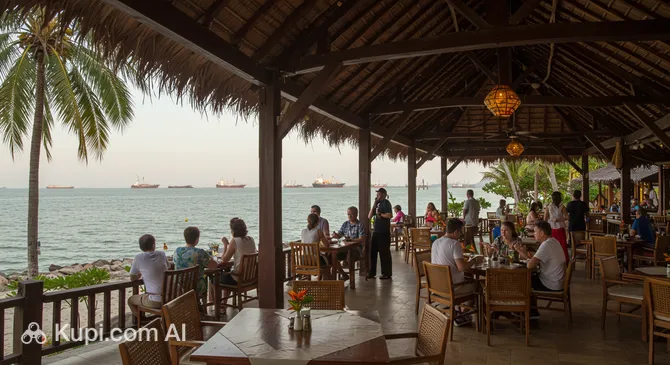
  • Gastronomic Contrast. Among the port facilities and warehouses, one can find pockets of tranquility with authentic cuisine. For instance, Saujana Restaurant offers guests the chance to relax and enjoy local Malaysian dishes while observing the steady pace of coastal life.

  • Shift in Trade Routes. In the early 2000s, Tanjung Pelepas became the center of global economic attention when the shipping giant Maersk Line moved its hub here from neighboring Singapore. This event permanently changed the logistics map of the Malacca Strait and gave a powerful boost to the region's development.

Saujana Restaurant. Illustration.
Source: Kupi.com AI

Traveler photos:

How to Get There

Tanjung Pelepas occupies a strategically important position in the south of the peninsula, serving as a key logistics hub for the region. Since the city is primarily oriented toward freight transport, passenger logistics are structured through neighboring large transportation centers. You can find all the route details and plan your trip by following this link: more on how to get to Tanjung Pelepas.

The nearest air hub to the city is Senai (IATA: JHB), located in Johor Bahru. It is approximately 33.5 km from the port and serves many domestic and regional flights. The taxi ride from the airport usually takes about 40–50 minutes, making it the most convenient option for arrival from within Malaysia.

For international tourists, Changi International Airport (IATA: SIN) in Singapore serves as an excellent alternative. It is one of the world's best airports, located just 48.6 km away. However, keep in mind that the route crosses an international border via the Second Link bridge. Travel time depends heavily on customs traffic, but the trip itself usually lasts around 1.5 hours.

Below is summary information on the main airports within reach:

AirportPassenger trafficDistance
Senai Airport4.3 mln33 km
Changi International Airport67.7 mln49 km
Hang Nadim International Airport4.0 mln68 km
Kidjang Airport264 000119 km
Tioman15 000175 km

If you prefer ground transportation or are traveling by rail, KL Sentral (IATA: XKL) in Kuala Lumpur is an important reference point. The distance to Tanjung Pelepas is about 285.5 km. Thanks to the high-quality coverage of the North-South Expressway, the journey from the station by car or taxi will take approximately 3.5–4 hours, making this route quite comfortable for road travelers.

Information on the nearest major hub station:

StationPassenger trafficDistance
KL Sentral Station36.5 mln286 km

Main Attractions

Tanjung Pelepas, being primarily a major industrial and logistics center, does not abound with classic tourist monuments directly within the port area. However, its favorable location provides access to unique natural areas and modern entertainment facilities located in the immediate vicinity. Travelers can combine a business trip with ecotourism and gastronomic discoveries.

One of the main points of attraction for lovers of an authentic atmosphere is Saujana Restaurant. This place is popular not only among locals but also with city guests wishing to take a break from the hustle and bustle of the port. Here you can try traditional Malaysian dishes and fresh seafood while enjoying a peaceful view of the coastal area. A visit to this establishment allows you to feel the true taste of the region and the rhythm of life of the local population.

Nature enthusiasts should look toward the Sungai Pulai Nature Reserve, which borders the city. These are vast mangrove forests that are home to rare species of birds, monkeys, and marine creatures. River cruises are organized here, during which you can see the unique ecosystem of the wetlands. This is an excellent opportunity to swap industrial landscapes for tropical greenery in just a few minutes' drive.

Very close by is the futuristic Forest City district — an ambitious "city of the future" project built on reclaimed islands. Tourists come here for duty-free shopping, walks along artificial beaches, and to see the unusual architecture draped in greenery. This place creates a striking contrast with the traditional Malaysian villages and port cranes of Tanjung Pelepas.

For those traveling with family, a significant advantage is the proximity to the famous Legoland Malaysia theme park. It is located in the neighboring Iskandar Puteri district, which is easily accessible by car. The park offers many attractions, a water park, and an aquarium, making it an ideal destination for a day trip when staying in the Tanjung Pelepas area.

Local Cuisine

The culinary scene in Tanjung Pelepas is a vibrant reflection of Johor's traditions, where Malay, Chinese, and Indian flavors blend. As the city is a port and industrial hub, hearty and spicy dishes predominate, perfect for a quick lunch or a relaxed dinner after a work day. The main highlight of the region is Laksa Johor — a unique version of the famous soup that uses spaghetti instead of rice noodles, served with a thick sauce made from minced fish, coconut milk, and a blend of spices.

Proximity to the sea dictates the rules, so menus in local establishments always feature plenty of fresh seafood. Tourists should try Otak-otak — a spicy fish paste grilled in banana leaves. This dish is often served as a snack. If you are looking for a place to get acquainted with local cuisine in a comfortable setting, look no further than Saujana Restaurant. They prepare traditional Malaysian dishes that allow you to appreciate the authentic flavors of this region.

As for drinks, the absolute favorite among locals is Teh Tarik — hot tea with condensed milk, "pulled" by pouring it between cups until a thick foam forms. In hot weather, fresh coconuts and drinks based on lime or sugar cane are popular. Alcohol can be found in Tanjung Pelepas, but not everywhere: it is sold mainly in Chinese restaurants, hotel bars, or specialized shops, as it is not served in halal establishments.

The food culture in the city is democratic and diverse. Locals often eat at "mamak stalls" — 24-hour Indian-Muslim open-air cafes with a lively atmosphere. These are the best places for an inexpensive snack like roti canai or nasi goreng (fried rice). For a more substantial meal, tourists usually choose food courts or seafood restaurants located closer to the coast, where the meal is accompanied by a sea breeze.

Travel Tips

Tanjung Pelepas is not a typical resort but a dynamic port and industrial center, so preparing for a trip here has its nuances. To ensure your journey to this region, where Malaysia meets Singapore, is as comfortable as possible and free of surprises, we have gathered the most important practical recommendations for you.

  1. Clothing and Essentials. Due to the hot and humid equatorial climate, choose loose clothing made of natural fabrics like cotton or linen. Be sure to bring a raincoat or a compact umbrella — tropical downpours here are sudden and heavy. If you plan to visit mosques in the area, remember the strict dress code: shoulders and knees must be covered. You will also need a Type G power adapter (British standard with three flat pins).

  2. Transport. Public transport within the port area itself is underdeveloped and oriented toward terminal employees. The most convenient and reliable way for a tourist to get around is by taxi, best ordered via the Grab app (the local equivalent of Uber). If you want to freely explore Johor or visit neighboring Legoland, it makes sense to rent a car, but remember that traffic here is on the left.

  3. Finances. The national currency is the Malaysian Ringgit (MYR). Large hotels and shopping centers accept Visa and Mastercard without problems, however, for payments in small street cafes ("mamak"), souvenir shops, or taxis, you will definitely need cash. It is more profitable to exchange money at banks or licensed exchange offices in Johor Bahru than at arrival points.

  4. Health and Safety. The Tanjung Pelepas area is safe for tourists, but basic precautions should be followed. Drinking tap water is not recommended — buy bottled water. Since the city borders mangrove forests, be sure to use mosquito repellent, especially in the evening, to avoid insect bites. Pharmacies (Farmasi) are available in residential areas, but 24-hour ones are hard to find.

  5. Communication. The official language is Malay, but the level of English proficiency in this business-oriented region is very high, so there is virtually no language barrier. For stable internet, we recommend buying a local SIM card (operators Celcom, Maxis, Digi) at any convenience store, such as 7-Eleven.

  6. Local Etiquette. Malaysians are very polite and value respect. Always remove your shoes when entering a private home or a place of worship. You should pass money, business cards, or accept food using only your right hand, as the left is considered "unclean" in local culture. Greetings are usually limited to a handshake (among men) or a slight nod with a smile.

  7. What to Avoid. Do not point at people or objects with your index finger — this is considered a rude gesture (locals use the thumb of their right hand for this, with the other fingers folded). Also, refrain from public displays of affection (kissing, long hugs), as society in the state of Johor is quite conservative.

  8. Accounting for Border Traffic. Since Tanjung Pelepas is in close proximity to the Second Link bridge to Singapore, roads can be very congested on weekends and public holidays. If you plan to leave the area by car during these times, allow an extra hour for potential traffic jams.

Tanjung Pelepas is a place where the paths of world trade and the natural beauty of mangrove forests intersect. By following these simple tips, you can avoid everyday inconveniences and focus on the main thing — getting to know the unique rhythm of life and culture of the southern part of the peninsula.

Entertainment & Nightlife

The nightlife in the Tanjung Pelepas area differs significantly from bustling metropolises like Kuala Lumpur. Since it is primarily an industrial and port zone, you won't find districts with neon signs of nightclubs or discos operating until morning. Evening leisure here is of a more measured, relaxed nature and is centered around gastronomy, socializing, and strolls in neighboring, more lively areas.

The center of attraction in the evening is the surroundings of Gelang Patah and the modern Forest City district. This is where locals and expats flock after a working day. Gelang Patah exudes the atmosphere of traditional Malaysia: bustling street cafes, the aromas of spices and grilled food. Meanwhile, Forest City offers a more cosmopolitan experience with waterfront bars where alcoholic drinks can be found (which is not always easy in the main part of the state) thanks to its duty-free zone status.

One of the best places for a quiet evening is Saujana Restaurant. This establishment is perfect for a sunset dinner. Located by the water, it offers guests not only the freshest seafood but also a peaceful view of the strait. There is no loud music here, but there is an opportunity to enjoy the sea breeze and excellent cuisine in the company of friends or family.

Saujana Restaurant. Illustration.
Source: Kupi.com AI

Traveler photos:

If you are looking for a more lively atmosphere, it is worth heading to the night markets (Pasar Malam), which open in neighboring settlements at dusk. This is the heart of local culture: here you can try inexpensive snacks, buy fruit, and simply observe local life. The markets operate on a rotating schedule on different days of the week, so check the schedule with hotel staff or locals.

For those who prefer a more traditional bar scene and cocktails, it is better to drive a bit further toward the Puteri Harbour area or the aforementioned Forest City. There you will find establishments with European service standards, live music, and a relaxed lounge atmosphere. The dress code in most places is casual, but beachwear is not appropriate for hotel bars.

Practical tips for evening outings:

  • Transport: Public transport is virtually non-existent at night. The only reliable way to get around is by calling a taxi via the Grab app. Make sure your phone is charged and you have an internet connection in advance.
  • Safety: The area is considered safe, but roads may be poorly lit. Avoid walking along the highways connecting the port with residential zones.
  • Alcohol: Remember that "mamak" (Muslim-run) cafes and many restaurants do not serve alcohol. For beer or wine, you should go to Chinese restaurants or international hotel bars.

As for daytime entertainment, it is predominantly related to nature and sports. World-class golf courses are popular in the vicinity, as are eco-tours to the mangrove forests. Proximity to the sea allows for fishing trips or short boat tours to see the industrial might of the port from the water.

Parks & Museums

Although Tanjung Pelepas is known to the world as an industrial and logistics giant, its surroundings hide surprising natural treasures and cultural sites. Travelers in this area should venture a little away from the port terminals to immerse themselves in the world of ancient mangrove forests and discover the rich heritage of the state of Johor.

Green Zones and Nature Reserves

The region's primary natural asset is the Sungai Pulai Nature Reserve. This is a vast wetland area protected by the Ramsar Convention. It is home to some of the oldest and most pristine mangrove forests in Malaysia. For tourists, it is an opportunity to see a unique ecosystem where the river meets the sea. Boat trips through winding river channels allow for the observation of wildlife, including monitor lizards, macaques, and many species of migratory birds, in their natural habitat.

Not far away, in the neighboring Pontian district, is the famous Tanjung Piai National Park. This place holds a special geographical status as the southernmost point of mainland Eurasia. The park is equipped with convenient wooden boardwalks that lead through thick mangrove thickets directly to the sea. Visitors come here to take a commemorative photo at the globe monument, enjoy the fresh sea breeze, and watch ships passing through the Malacca Strait.

Museums and Cultural Heritage

Since Tanjung Pelepas itself is a new district, classic museums are located in its historical surroundings. One of the most interesting places is the Bugis Museum (Muzium Bugis). It is dedicated to the history and culture of the Bugis people — skilled seafarers who played a key role in the development of Johor. The exhibits include traditional costumes, weapons, household items, and historical documents. It is a small but very atmospheric museum that helps visitors understand the roots of the local population.

Architecture and history buffs should visit Kota Iskandar in nearby Iskandar Puteri. Although it is the administrative center of the state government, it is designed as an "open-air living museum." The buildings are constructed in a unique style combining Moorish-Andalusian motifs with Malay elements. The complex is surrounded by magnificent themed gardens, such as Laman Kasturi, where you can relax in the shade and enjoy the scents of tropical flowers.

Insider Tip

If you want to see living history rather than a museum, head to the fishing village of Kukup, located nearby. This settlement is built entirely on stilts over the water. There are no ticket collectors or tour guides here, but a walk along the narrow wooden walkways between houses will give you a better understanding of the traditional way of life on the coast than any gallery.

Getting Around

The public transport system in Tanjung Pelepas has a specific character due to its status as a major industrial and port hub. Unlike tourist centers or the capital, you won't find a metro, trams, or an extensive trolleybus network here. Passenger logistics are primarily built around bus services connecting the port with the nearest residential areas and Johor transport hubs.

The main form of public transport is buses. The key operator in this region is Causeway Link (known for its yellow buses). Routes generally connect the port zone with the terminal in Gelang Patah (Gelang Patah Bus Terminal). From there, you can transfer to services going to central Johor Bahru or the Singapore border. Bus schedules are often aligned with port employee shifts, so intervals can be significant, especially during the day.

To pay for travel on buses and other transport across the country, including this region, the Touch 'n Go universal contactless card is used. It can be purchased and topped up at 24-hour convenience stores (e.g., 7-Eleven, Watsons) or gas stations. Some buses still accept cash, but it's important to remember: drivers do not give change, so you must have small bills and coins for the exact fare. The fare is affordable and depends on the distance.

Given the limited bus routes, the most convenient and popular way for tourists to get around is by taxi or ride-sharing. It is highly recommended to install the Grab app (the local equivalent of Uber). This allows you to see the fixed price of the trip in advance, pay for the service with a linked card, and avoid the language barrier when explaining your destination. Cars in this area are found quickly, and a trip to nearby attractions or restaurants is inexpensive.

If you plan to travel extensively around the area, the best alternative to public transport is car rental. The road network around Tanjung Pelepas is modern and high-quality, and traffic is less dense than in central Johor Bahru. This will give you the freedom to visit remote nature parks and beaches that are difficult to reach by bus. Rental points are usually located at the airport or in major nearby cities.

Rail transport directly in Tanjung Pelepas is used exclusively for container freight. The nearest passenger railway station is in Johor Bahru (JB Sentral). Therefore, when planning your logistics, do not count on arriving at the port by train: the "last mile" will have to be covered by car or bus in any case.

Accommodation

Tanjung Pelepas is a restricted port and industrial zone, so there are no tourist hotels directly on its territory. However, travelers have a wide choice of accommodation options in the immediate vicinity, just a 10–20 minute drive away. The range of offers varies from simple budget hotels for transit passengers to modern apartments and resort complexes.

The most popular and convenient area to stay is the town of Gelang Patah. This is the nearest settlement with developed infrastructure: it hosts many affordable 2-3 star hotels. Accommodations here are surrounded by 24-hour shops and street cafes, making the district an excellent choice for those seeking functional lodging at an affordable price and wanting to be closer to local character.

For those who prefer comfort and a resort atmosphere, the Forest City area or the neighboring Iskandar Puteri are worth considering. Here you can find offers in the luxury and premium segments, including spacious apartments in high-rise buildings with strait views and private pools. These areas are convenient due to their proximity to the Second Link bridge to Singapore, as well as theme parks, making them attractive for family vacations.

Booking Tips:

  • Price Range: The cost of living here is generally lower than in central Johor Bahru or Singapore. A budget room is very inexpensive, while prices for luxury apartments remain highly competitive by international standards.
  • When to Book: It is recommended to look for accommodation in advance, especially during school holidays and public holidays. During these times, domestic tourism in Malaysia peaks, and the flow of guests from neighboring Singapore increases significantly.
  • How to Book: The most reliable way is to use major international online platforms. This guarantees up-to-date prices and the availability of real reviews. Walk-in check-ins are possible in small Gelang Patah motels, but free rooms are not always guaranteed.

Nearby Cities

For those wishing to explore the surroundings, Tanjung Pelepas serves as an excellent starting point for day trips to several interesting nearby locations:

Just a 30–40 minute drive away is Johor Bahru — the state capital and one of the fastest-growing cities in the country. People come here for excellent shopping in large malls, walks through the historical quarter with its colonial architecture, and a visit to the famous Sultan Abu Bakar State Mosque. It is an ideal option for those who want to feel the rhythm of a big city without straying far from the coast.

Nature lovers and those seeking an authentic atmosphere should head toward Kukup and Pontian. These small towns are famous for their fishing villages built on stilts directly over the water and their fresh seafood restaurants. A trip here is often combined with a visit to Tanjung Piai National Park, where you can walk through mangrove forests and stand at the southernmost point of mainland Asia.

Although the country's capital is quite far away, thanks to the high-speed expressway, travelers can reach other major centers in the region. Below is information on significant cities available for visiting:

CityPopulationDistance
Johor Bahru497 09727 km
Singapore5 983 00030 km
Taman Johor Jaya66 00033 km
Pasir Gudang312 49941 km
Batam1 300 00061 km

These nearby destinations provide an insight into the diverse culture and landscapes of the region.

Shopping & Souvenirs

Shopping in the Tanjung Pelepas area has its own specifics due to the industrial nature of the zone. There are no large shopping galleries directly in the port; however, its favorable location near the developing districts of Iskandar Puteri and Gelang Patah gives tourists access to a variety of shopping experiences. Here you can find an interesting balance between colorful local shops selling essentials and traditional items, and modern shopping spaces with international brands located just a 10–15 minute drive away.

The main shopping area for locals and visitors is the center of Gelang Patah. Rows of traditional two-story shophouses line the main streets here. This is the best place to find authentic goods: from household knick-knacks and affordable clothing to Chinese pharmacies with herbal remedies. A stroll here allows you to immerse yourself in the atmosphere of provincial Malaysia, where trade is unhurried and shop owners often know their customers by name.

If you are interested in more modern and large-scale shopping, head to Sunway Big Box Retail Park. This is a unique open-air warehouse-style shopping complex (a hybrid of a mall and a retail park). It features large outlets of sports brands, bookstores, and supermarkets. Another key spot is the duty-free zone in Forest City. This futuristic district offers shops with alcohol, chocolate, and cosmetics at duty-free prices, making it a popular place to buy gifts.

An integral part of the local trade culture is the night markets (Pasar Malam). They operate in surrounding settlements on specific days of the week, usually from 5:00 PM until late evening. These are noisy and vibrant places where you can buy not only street food but also fresh tropical fruits, inexpensive accessories, toys, and clothes. Bargaining is appropriate and even welcomed here, and prices are significantly lower than in permanent stores.

As souvenirs from a trip to this region, tourists often bring back traditional Malay sweets such as dodol (a chewy coconut dessert) or pineapple tarts, for which the state of Johor is famous. It is also worth looking at batik products — hand-painted fabric that can be purchased as ready-made clothing or fabric cuts. In Forest City shops, sets of premium chocolate and imported drinks are popular.

Most major shopping centers and supermarkets are open daily from 10:00 AM to 10:00 PM. Small private shops in Gelang Patah may close earlier, around 6:00–7:00 PM. Regarding payment, malls widely accept Visa and Mastercard credit cards as well as contactless payments. However, for visiting night markets and small shops, it is essential to have cash ringgits with you, as terminals there are very rare.

Special attention should be paid to the Tax Free status. While the tax refund system for tourists in Malaysia changes periodically, the Forest City area is officially a Duty Free Zone. This means that certain categories of goods (mainly alcohol and tobacco, within limits, as well as chocolate) are sold here without excise duties and taxes. A passport is often required to make purchases in such shops.

Reached the end of the page?

That means the route is fully explored