Support

Copernicus Science Centre

About

The Copernicus Science Centre is a modern interactive museum located on the picturesque banks of the Vistula River in the heart of Warsaw. It is the largest science center in Poland and one of the most advanced in Europe, offering visitors a unique opportunity to dive into the world of science through play and personal experience. This is not just a museum with exhibits behind glass, but a vast space for research and discovery.

The main feature of the center is its interactivity. Guests can expect more than 450 exhibits to interact with: press buttons, turn levers, conduct experiments, and observe the results. Here, everyone can create a tornado, feel what it's like to walk on the Moon, or even move a ball with the power of thought. The exhibition is divided into several themed zones dedicated to different fields of knowledge, from physics and chemistry to biology and astronomy.
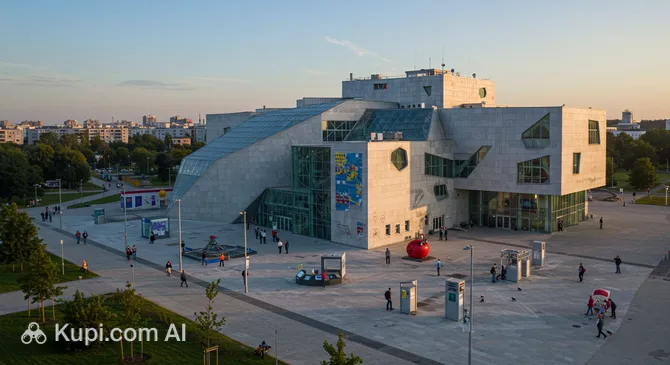
Copernicus Science Centre. Illustration.
Source: Kupi.com AI

Traveler photos:

Opening in 2010, the Copernicus Science Centre building is a work of modern architectural art in itself. Designed with an emphasis on sustainability, it is harmoniously integrated into the surrounding landscape. In addition to permanent and temporary exhibitions, the complex includes laboratories, the Heavens of Copernicus planetarium with stunning 3D shows, and the outdoor Discovery Park. It is a place where science becomes an exciting adventure, interesting for visitors of all ages.

Contacts

To plan your visit and find up-to-date information on exhibitions, ticket prices, and opening hours, it is recommended to consult the official sources of the Copernicus Science Centre. You can contact museum representatives by phone or email, and find all the necessary details on the official website.

How to contactContact
AddressWybrzeże Kościuszkowskie 20, 00-390 Warszawa, Poland
Phone number+48 22 122 55 55
Websitewww.kopernik.org.pl

What to Do

Visitors to the Copernicus Science Centre can expect an exciting journey through the world of knowledge, divided into several themed zones. The main exhibition consists of five primary interactive galleries, each offering its own unique experience. In the "On the Move" zone, you can explore the phenomena of movement; in the "Humans and the Environment" gallery, you can understand the complex interconnections in nature; and in "Roots of Civilization", you can trace the development of humanity. Particular highlights include the "LightZone" gallery, dedicated to light, and the special "Bzzz!" zone designed for the youngest researchers.

Beyond the main exhibitions, the center offers many other activities. Be sure to visit the Heavens of Copernicus planetarium, where captivating astronomical shows allow you to travel through the Universe. For those who want to dive deeper into science, specialized labs — chemistry, biology, and physics — are open, along with a robotics workshop where you can participate in real experiments. For teenagers, there is a separate exhibition called "RE: generation" that addresses topics relevant to them.

In the warmer months, the park adjacent to the building becomes an essential part of the visit, where you can not only relax in the fresh air but also continue exploring science through outdoor exhibits. This variety of interactive zones and laboratories makes the Copernicus Science Centre an ideal place for educational leisure, where everyone, from children to adults, will find something interesting and make their own little discovery.

Getting There

The Copernicus Science Centre boasts an excellent location in the heart of Warsaw, on the picturesque banks of the Vistula River. This makes it easily accessible for visitors using public transport. Perhaps the most convenient way to get here is by metro. Right next to the museum is the namesake station on the second line (M2) — Centrum Nauki Kopernik, which allows you to reach your destination quickly and without transfers from many parts of the city.

Thanks to its central position, the museum is also easy to reach by surface transport. Several bus and tram stops are within walking distance of "Kopernik". This is a great option for those who want to combine their trip with some sightseeing. If you are traveling by car, keep in mind that, as in any major city center, parking can be a challenge. However, there are city parking zones near the attraction where you can leave your vehicle.

For those staying in central districts, a walk is a pleasant alternative. The path to the center along the Vistula embankment offers beautiful views and allows you to better experience the atmosphere of the capital of Poland. Of course, you can always use taxi or car-sharing services, which is especially convenient if you are traveling with family or are short on time.

Nearest city: Warsaw

History & Facts

The history of the Copernicus Science Centre is an example of how a bold idea can evolve into one of Europe's most advanced science museums. The concept originated in the early 2000s with an ambitious goal: to increase scientific literacy and spark an interest in research among the residents of Poland. In 2004, a key construction agreement was signed, and in 2005, the project received official status and funding from the capital, the city of Warsaw.

Construction began in 2006 on the scenic banks of the Vistula. The design rights were won by the young Polish architectural studio RAr-2 Laboratorium Architektury, which proposed a modern and eco-friendly concept harmoniously integrated into the urban landscape. The grand opening of the first phase took place on November 5, 2010, when five main interactive galleries became available to the public. This event marked an important milestone in the capital's cultural and educational life.

The center's further development was rapid and staged. In 2011, the complex was expanded with new zones: the "RE: generation" exhibition for teenagers opened in March, the impressive Heavens of Copernicus planetarium in June, and the outdoor "Discovery Park" in July. By the end of that same year, chemistry, biology, and physics laboratories, as well as a robotics workshop, were launched. The project's staggering success was confirmed incredibly quickly: by September 2012, the center welcomed its two-millionth visitor, clearly demonstrating its immense popularity.

Time Needed

To truly immerse yourself in the world of science and experimentation at the Copernicus Centre, it is worth allocating enough time for your visit. It is best to plan for at least half a day. This is enough time to explore the main interactive galleries and try out the most interesting exhibits without rushing. On average, most visitors spend 3 to 5 hours just touring the permanent exhibition, which features more than 400 interactive stations. Trying to fit everything into less time might leave you feeling like you missed a lot.

When planning your day, keep in mind that the total time may increase due to additional activities. For example, a visit to the Heavens of Copernicus planetarium is a separate event that usually takes about an hour, not including the waiting time for the show. If you want to participate in workshops in one of the labs — chemistry, physics, or biology — this will also require extra time. Therefore, if you want to cover everything, including temporary exhibitions and a stroll through the "Discovery Park" during the warmer months, feel free to set aside a full day for your visit. This approach will allow you to get the most enjoyment and knowledge without rushing, which is especially important if you are traveling with children.

Working Hours

The Copernicus Science Centre is open year-round, but hours may vary depending on the season and the day of the week. Generally, on weekdays, the center is open from morning until evening, and on weekends, the hours may be extended. It's worth noting that the museum may be closed on some public holidays. Ticket offices usually close an hour before the exhibitions. Since information is subject to change, it is highly recommended to check the current schedule on the center's official website before your visit.

Visiting the Copernicus Science Centre is a very popular activity for both tourists and locals, so it is recommended to book tickets online in advance. This is especially important if you plan to visit on weekends, during school holidays, or during the peak tourist season, as it will help you avoid long queues and guarantee entry. Tickets are name-specific and tied to a specific entry time, so purchasing in advance will allow you to better plan your day.

DayOpening hours
Monday8:00 – 18:00
Tuesday8:00 – 18:00
Wednesday8:00 – 18:00
Thursday8:00 – 18:00
Friday8:00 – 20:00
Saturday9:00 – 19:00
Sunday9:00 – 19:00

Nearby

Visiting the Copernicus Science Centre is just one part of a potential adventure. Thanks to its prime location on the Vistula, you are surrounded by many other interesting places within walking distance. A stroll through the neighborhood allows you to not only extend your museum experience but also to get better acquainted with the diversity of Warsaw, which combines modern architecture, historical monuments, and scenic natural spots.

To help you plan your further route, we have compiled a list of nearby attractions. Whether you're interested in shopping, history, or just relaxing outdoors, there's something for everyone near "Kopernik".

NameDistance
National Museum in Warsaw1.1 km
Royal Castle in Warsaw1.2 km
Tomb of the Unknown Soldier1.2 km
NBP Money Centre1.2 km
Pianka 24-Hour Restaurant1.5 km
Bibenda1.6 km
Koneser Praga Center1.9 km

Have you reached the end of the page?

So the route has been studied inside and out