Support

Nikola Tesla Museum

About

In the heart of Belgrade, the capital of Serbia, lies a unique scientific museum entirely dedicated to the life and legacy of the brilliant inventor Nikola Tesla. This is not just an exhibition, but a true immersion into the world of electricity, magnetism, and incredible discoveries that changed the course of history. The museum is the world's only repository of the scientist's original documents and personal belongings, making it a must-visit for any curious traveler.
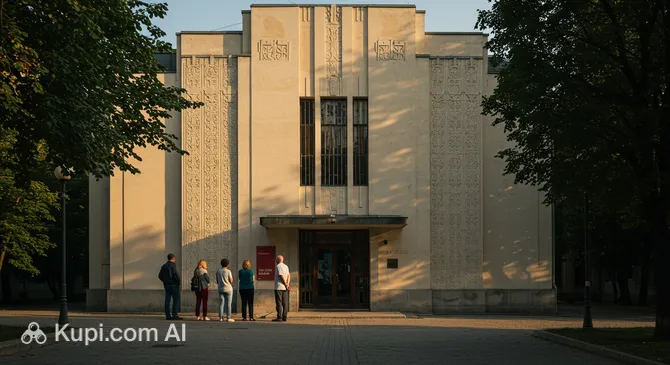
Nikola Tesla Museum. Illustration.
Source: Kupi.com AI

Traveler photos:

The museum's exhibition introduces visitors to Nikola Tesla's immense contribution to science. Here, you can see working models of his famous inventions, including the legendary Tesla coil, and even take part in interactive demonstrations that clearly show the principles of wireless energy transmission. In addition to technical exhibits, the collection includes over 160,000 original documents, drawings, books, and personal items transferred to Belgrade according to the inventor's final wishes.

The museum building itself deserves special attention. It is an elegant two-story mansion built in 1927 according to the design of the famous Serbian architect Dragiša Brašovan. Formerly a villa belonging to the industrialist Đorđe Genčić, its white stone facade, illuminated at night, has become one of the recognizable symbols of the city center.

Contacts

To plan your visit and check current information regarding exhibitions and opening hours, it is recommended to contact the museum directly or visit its official website. All necessary contact information is provided below.

How to contactContact
AddressKrunska 51, Beograd 11000, Serbia
Phone number+381 11 2433886
Websitetesla-museum.org

What to Do

A visit to the Nikola Tesla Museum is a fascinating journey into the world of science and invention. The exhibition is divided into two main parts, offering visitors different experiences. The first floor is dedicated to the interactive exhibition, featuring working models and devices created by the brilliant scientist. Here, you can do more than just look at the exhibits; you can participate in demonstrations that clearly illustrate the principles of his discoveries. Particularly popular are the experiments with the legendary Tesla coil and the demonstration of wireless energy transmission known as "Columbus's Egg."

Moving to the second floor, guests enter a more secluded and academic atmosphere. This floor houses the scientist's invaluable archive: over 160,000 original documents, manuscripts, and drawings, as well as books from his personal library and personal belongings. This part of the exhibition allows for a deeper dive into Tesla's thought process, an opportunity to study his notes, and a better understanding of the man behind the great inventions. This is also where his death mask is kept, and in a separate room, the spherical urn containing the scientist's ashes is located.

Thanks to this combination of interactive scientific demonstrations and a rich historical archive, the museum attracts a wide audience. It is equally interesting for students fascinated by physics experiments and researchers of scientific history who gain access to unique primary sources. Every visitor, regardless of age or level of knowledge, will find something amazing and educational here, connecting with the legacy of one of the greatest minds in history.

Getting There

The Nikola Tesla Museum is located in the central Vračar district of Belgrade, at 51 Krunska Street, making it easily accessible for tourists. Thanks to its convenient location, you can reach it in several ways, including public transport, taxi, or even on foot if you are in the city center.

The most convenient way to reach the museum by public transport is to get off at the "Trg Slavija" (Slavija Square) or "Pravni fakultet" (Faculty of Law) stops, which are just a few minutes' walk away. Numerous routes serve these stops: buses (e.g., A1, EKO1, 24, 74), trolleybuses (19, 21, 22), and trams (10, 12). From any of these stops, the walk to the museum takes no more than 5–10 minutes. This is a great option for those who want to get to know the city and its transport system.

For those who prefer comfort, a taxi ride or using ride-hailing apps (such as Yandex Go or Car:Go) from central Belgrade is quick and affordable. Additionally, if you are staying in central areas like Stari Grad or Palilula, you can enjoy a pleasant walk to the museum. For instance, it takes about 15–20 minutes to walk to the museum from the Temple of Saint Sava, another iconic landmark.

Nearest city: Belgrade

History & Facts

The museum's history is inextricably linked to the desire to preserve the legacy of the great inventor in his historical homeland. The official decision to establish the museum was made by the Yugoslav government on December 5, 1952. The grand opening to the public took place on July 10, 1955, a date chosen intentionally as it was Nikola Tesla's birthday. This symbolic gesture emphasized the eternal connection between the genius and his people and scientific heritage.

Although Nikola Tesla spent most of his life and scientific career in America, his roots trace back to the region that is now part of Serbia. This is why, according to the scientist's last will, his entire legacy—personal belongings, documents, drawings, and even his ashes—was transferred to Belgrade by his nephew, Sava Kosanović. This explains why this unique collection, documenting the life and work of one of history's greatest minds, found its home here, in the heart of the Serbian capital.

The global significance of the museum and Tesla's genius is widely recognized. A striking testament to this is the enthusiastic review left by the famous physicist Niels Bohr after visiting the exhibition. He noted that Tesla's fundamental discoveries, such as the polyphase system and research into high-frequency currents, laid the foundation for modern industry and radio communications, significantly impacting civilization. These words confirm that the museum houses more than just exhibits—it holds the keys to understanding the technological revolution of the 20th century.

Time Needed

When planning a visit to the Nikola Tesla Museum, expect to spend about 1.5–2 hours there. Although the museum itself is quite compact, its exhibition is very dense. The primary value of the visit lies in participating in organized tours that take place every hour, so your total time may depend on the wait for the next group.

The key part of the visit is the guided tour, which makes the experience truly engaging and educational. It begins with a short 15-minute film about the scientist's life and work, after which a guide provides interactive demonstrations of Tesla's most famous inventions, including the renowned coil. This portion usually takes about an hour and allows you to not only see the exhibits but also understand how they work.

After the tour, you'll have time for a self-guided exploration. You can focus on the second-floor exhibition, which houses Nikola Tesla's personal belongings, documents, books, and the urn with his ashes. Depending on your interest in the details, this part can take from 30 minutes to an hour. Thus, a total of 1.5–2 hours allows you to participate in the demonstrations and leisurely study the personal legacy of this brilliant inventor.

Working Hours

The Nikola Tesla Museum is open to visitors daily. According to official information, the working hours are as follows: Monday from 10:00 to 18:00, and Tuesday to Sunday from 10:00 to 20:00. Nevertheless, the schedule may change on public holidays, so it is highly recommended to check for up-to-date information on the museum's official website before your visit.

While tickets can be purchased directly at the box office, advance booking is required for group visits (more than 10 people). Guided tours, which include demonstrations of famous inventions, are held every hour and are an essential part of the visit. To avoid queues, especially during peak tourist season, it is best to arrive 15 minutes before the tour starts. Important note: According to the official website, ticket payments at the museum box office are cash only in the local currency (Serbian dinars). Credit cards are not accepted, so it is worth preparing the necessary amount in advance.

DayOpening hours
Monday10:00 – 18:00
Tuesday10:00 – 20:00
Wednesday10:00 – 20:00
Thursday10:00 – 20:00
Friday10:00 – 20:00
Saturday10:00 – 20:00
Sunday10:00 – 20:00

Nearby

A visit to the Nikola Tesla Museum is just the starting point for exploring one of Belgrade's most interesting neighborhoods. The museum's location in the prestigious and historically rich Vračar district offers excellent opportunities for further exploration. Strolling through the surrounding area allows you to immerse yourself deeper into the atmosphere of Serbia's capital and see how scientific heritage harmoniously coexists with cultural and natural attractions.

After discovering Tesla's brilliant inventions, set aside some time to explore nearby parks, churches, and other iconic spots. Many are within walking distance, allowing you to create a rich and varied day-long itinerary. Below is a list of interesting sites located nearby.

NameDistance
Academy 280.6 km
St. Mark's Church0.6 km
Church of Saint Sava0.8 km
Jevremovac Botanical Garden1 km
Museum of Illusions1.2 km
MOON Sushi & Fusion Food1.3 km
Riddle Bar1.4 km

Have you reached the end of the page?

So the route has been studied inside and out