Support

House of Flowers

About

The House of Flowers (Kuća Cveća) is an iconic memorial site located in Belgrade, the capital of Serbia. It is primarily known as the mausoleum that serves as the final resting place of the former leader of Yugoslavia, Josip Broz Tito. This site attracts many visitors interested in the history of Yugoslavia and the personality of this prominent political figure.
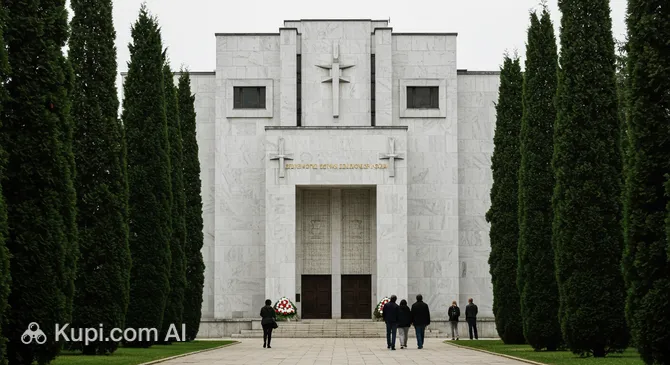
House of Flowers. Illustration.
Source: Kupi.com AI

Traveler photos:

Initially, the House of Flowers was not built as a mausoleum, but as a winter garden covering 902 square meters. It served as a place for rest and leisure for Josip Broz, located in close proximity to his official residence. Here, among greenery and flowers, the Yugoslav leader spent time in a more informal setting.

Today, the House of Flowers is a key part of the Museum of Yugoslavia. This museum complex also includes the "May 25" Museum and the Old Museum, which together present an extensive exhibition dedicated to the country's history. A visit to the House of Flowers provides an opportunity to gain a deeper understanding of an important period in Balkan history and is a popular stop for tourists seeking informative tours.

Contacts

When planning a visit to the House of Flowers, it is important to have up-to-date information. Since the House of Flowers is part of the Museum of Yugoslavia, we recommend checking the official museum website or inquiring on-site for details (opening hours, ticket prices, special events). Below are the available contact details:

How to contactContact
AddressBelgrade, Serbia
Phone number+381 11 3671485
Websitewww.muzej-jugoslavije.org

What to Do

Visiting the House of Flowers is, above all, an opportunity to connect with an important chapter of history. Here you can see the mausoleum of Josip Broz Tito, the leader of former Yugoslavia, and pay your respects. Exhibitions dedicated to his life and activities will allow for a deeper understanding of his role in the history of the country and the entire region. This place offers more than just a sightseeing tour; it provides a real immersion into the atmosphere of the past, offering a chance to learn more about Yugoslav history.

In addition to the mausoleum itself, the House of Flowers is part of a larger complex—the Museum of Yugoslavia. Within its walls, an impressive collection of gifts that Josip Broz Tito received from world leaders and compatriots over many years awaits you. Of particular note is the unique exhibition of relay batons presented in the "May 25" Museum. This collection numbers about 20,000 items, each of which carries a piece of history and symbolizes the youth movements and unity of that time.

To make your visit even more rewarding and educational, the Museum of Yugoslavia regularly organizes various thematic exhibitions. This means that every visit to the House of Flowers can offer new impressions and knowledge, revealing different aspects of Yugoslav history, culture, and Tito's heritage. Thus, this site offers a multi-faceted experience for anyone interested in 20th-century history who wants to better understand this period in the Balkans.

Getting There

The House of Flowers is located in the prestigious Dedinje neighborhood of Belgrade, at Mihaila Mike Jankovića, 6. It is approximately 5-6 kilometers from the city center, making it quite accessible for visitors. Due to its location, the memorial complex can be reached in several ways, allowing you to choose the most convenient option for you.

One of the most popular ways to get to the House of Flowers is by public transport. Various bus and trolleybus routes run here from the center of Belgrade. It is recommended to check the current route numbers and schedules in advance on the official Belgrade public transport website or using navigation apps. Taking public transport also allows you to see other parts of the city on your way to the attraction.

An alternative and more comfortable option is taking a taxi. Taxis in Belgrade are relatively inexpensive, especially if you are traveling in a small group. A ride from the city center to the House of Flowers will take about 15-20 minutes, depending on traffic. You can use official taxi companies or popular ride-hailing apps. This is a particularly convenient method if you are short on time or prefer to reach your destination with maximum comfort.

Nearest city: Belgrade

History & Facts

The House of Flowers, as we know it today, has an interesting history. It was built in 1975 according to the design of architect Stjepan Kralj. Initially, this structure was intended not as a memorial, but as a winter garden. This space was designed for the rest and leisure of the then-leader of Yugoslavia, Josip Broz Tito, and was located in the immediate vicinity of his residence.

After the passing of Josip Broz Tito in 1980, this building was destined for a new role. The winter garden was transformed into a mausoleum, becoming his final resting place. By 1982, the House of Flowers was opened to the public, becoming an important historical site. Traditionally, this place attracts many visitors on significant dates: May 25, Tito's birthday, when more than a thousand people visit, and May 4, the anniversary of his death.

An important part of the entire memorial complex is the "May 25" Museum. This building was built earlier for Josip Broz Tito's seventieth birthday, designed by architect Mika Janković. Its grand opening took place on May 25, 1962, symbolically coinciding with the Yugoslav leader's birthday. Subsequently, the "May 25" Museum was reconstructed and integrated into a larger structure, becoming the official entrance to the Josip Broz Tito Memorial Center, which also includes the House of Flowers itself.

Time Needed

When planning a visit to the House of Flowers in Belgrade, you should expect that a full tour of both the mausoleum itself and the entire Museum of Yugoslavia complex, of which it is a part, will take about 1-2 hours. This is a generally accepted time estimate that allows you to explore the main exhibitions without rushing.

During this time, you will be able to not only visit the tomb of Josip Broz Tito but also explore the interesting exhibitions presented in the "May 25" Museum and other parts of the museum complex. Such a time allocation will provide an opportunity to form a fairly complete picture of this important historical site in Serbia.

Working Hours

The House of Flowers, part of the Museum of Yugoslavia, welcomes visitors daily from 10:00 to 16:00. It is important to remember that Monday is a day off. To ensure your visit is as comfortable as possible, especially if you are traveling in a large group or planning a visit during a peak time, we recommend checking the Museum of Yugoslavia's official website for any pre-booking requirements.

DayOpening hours
MondayClosed
Tuesday10:00 – 18:00
Wednesday10:00 – 18:00
Thursday10:00 – 18:00
Friday10:00 – 18:00
Saturday10:00 – 18:00
Sunday10:00 – 18:00

Nearby

Visiting the House of Flowers in Belgrade is undoubtedly a significant event for those interested in history. However, to make your trip even more rewarding and complete, it is worth paying attention to the attractions located nearby. Exploring the surroundings will allow you to immerse yourself deeper into the city's atmosphere and discover other interesting places that will complement your impressions of visiting this historical complex.

There are several noteworthy sites near the House of Flowers, each with its own unique history and cultural value. A walk through this district of Belgrade can be a real discovery, offering various options for further exploration. Below is a list of some of them, along with approximate distances.

NameDistance
Museum of Yugoslavia0.1 km
Hilandar Monastery Foundation1.9 km
Church of Saint Sava1.9 km
Academy 282.1 km
Dogma Brewery & Tap Room2.3 km
Nikola Tesla Museum2.5 km
Sava Center3 km

Have you reached the end of the page?

So the route has been studied inside and out