Support

Parque del Ebro

About

On the banks of the country's most voluminous river lies a true emerald oasis — Ebro Park. This vast natural space in the city of Logroño, which Spain is so proud of, covers an area of about 153,000 square meters. The park is a harmonious blend of well-kept landscaped gardens and untouched floodplain forests, creating a unique ecosystem in the very heart of the city.
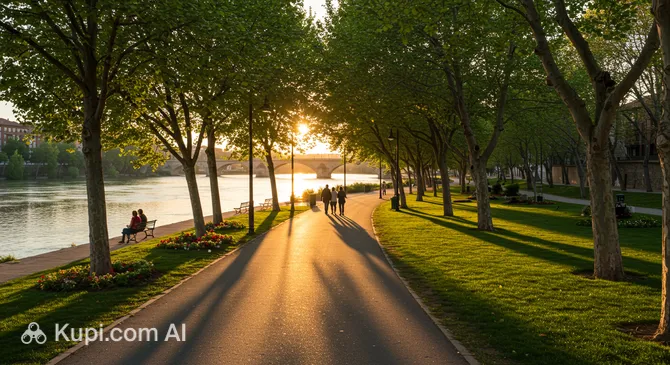
Ebro Park
Ebro Park. Иллюстрация. Источник: Kupi.com AI

Stretching between the majestic stone bridge Puente de Piedra and the historic iron bridge of 1882, the park offers guests endless shaded alleys, lush ornamental trees, and perfectly manicured lawns. This place is considered one of the city's main attractions not only for its beauty but also for the chance to see wildlife: white herons and storks can often be spotted nesting on the old towers nearby.

Thanks to its location near the historical center, the park serves as an ideal refuge from the city's hustle and bustle. Here you can feel the atmosphere of tranquility while admiring the flow of the Ebro River, which has defined the life and development of this region for centuries. Well-maintained paths and proximity to major museums make it a must-visit on any traveler's itinerary.

Contacts

For your convenience, we have gathered the essential contact information for this picturesque location. The park is situated in the northern part of the city and is easy to find by following the riverbed and the famous city bridges.

How to contactContact
AddressC. del Nte., 22, 26001 Logroño, La Rioja, Spain

What to Do

In this park, everyone will find something to enjoy — from active workouts to contemplative relaxation. You can take a stroll along the shaded alleys, admiring the panoramic river views and the architectural contrast between the two famous bridges. Photographers will find excellent opportunities here to capture the play of light on the water and original graffiti in the industrial zones near the Puente de Hierro bridge.

For nature lovers, the park turns into a real open-air observatory: it's common to watch graceful herons and storks here. If you are traveling as a family, children will love the modern playgrounds, while adults can enjoy the cool air in cozy cafes or have a picnic on one of the spacious green lawns. Fishing enthusiasts are also frequently seen on the banks of the Ebro, adding local color to the scenery.

Don't miss the chance to combine your walk with cultural enlightenment. Right at the park's edge are the Museum of La Rioja and the interactive Science Museum, as well as the ruins of the El Cubo de Revellín fortifications. This proximity makes it easy to alternate outdoor relaxation with exploring the region's rich history and science.

Getting There

Getting to this green space is easy, as it essentially borders the city's historical core. If you are already walking around the center of Logroño, the walk from San Bartolomé Church or the famous Laurel Street gastronomic hub will take no more than 5–10 minutes. You simply need to head toward the river until you reach the Puente de Piedra or Puente de Hierro bridges.

For those who prefer public transport, bus stops located near the Parliament of La Rioja and the Museum of La Rioja are within walking distance (about 200 meters). If you plan to take a taxi, just give the driver the address: C. del Nte., 22.

Travelers arriving from other regions via Logroño Airport (LOG) will find it most convenient to take a taxi or a regular bus to the city center, from where the park is reachable on foot. There are also parking areas near the park for those traveling by private or rental car.

Ближайший город: Logroño

History & Facts

The territory now occupied by Ebro Park is inextricably linked to the birth of the city itself. As early as the 1st century BC, the Roman settlement of Vareia existed on these banks, using the river as an important trade route and port. For centuries, the banks of the Ebro served as a natural border between the kingdoms of Castile and Navarre, making this location a strategically important hub.

The Way of Saint James (Camino de Santiago) played a special role in the location's history. In the 11th century, Logroño became a key point for pilgrims, and it was here that crossings were built, allowing the city to grow and prosper. The ancient stone bridge, Puente de Piedra, which borders the park on one side, still stands as a reminder of the thousands of pilgrims who crossed the river on their way to Santiago de Compostela.

The park's current appearance as a modern recreation area began to take shape in the 19th century. During this time, floodplain forests were integrated into the urban environment, preserving patches of wild nature and traces of the industrial past. Today, the park is a living monument to how the Ebro River has shaped the character and culture of this Spanish region for centuries.

Time Needed

For a leisurely walk along the main paths of the park and contemplating the river scenery, 1–2 hours will be sufficient for most visitors. This time is enough to walk from the stone bridge to the iron bridge and take beautiful photos against the backdrop of the water.

However, if you plan to have a picnic on one of the green lawns, watch rare birds, or visit the Science Museum (Casa de las Ciencias) located on the grounds, it's better to budget 2 to 4 hours. The proximity to the historical center makes it easy to combine a park visit with touring major cathedrals and wine tasting at local bodegas.

Working Hours

One of the main advantages of this place is its accessibility. Ebro Park is open to visitors 24 hours a day, seven days a week. You can enjoy a morning jog in the rays of the rising sun or take a romantic stroll under the light of night lamps when the bridges across the river are beautifully illuminated.

Entry to the park is free at any time, allowing tourists to plan their visit with maximum flexibility, without having to adhere to a strict schedule of city institutions.

Круглосуточно

Nearby

The park's location near the historical center makes it an ideal starting point for further exploration of the city. After a walk in the shade of the trees, you can reach the region's main cultural and architectural monuments in just a few minutes.

NameDistance
Church of Santiago el Real0.1 km
Revellín Wall0.3 km
Casa de las Ciencias0.3 km
Church of Santa María de Palacio0.3 km
Franco Españolas Winery0.3 km
Stone Bridge0.4 km
Calle Laurel0.4 km

Reached the end of the page?

That means the route is fully explored