Support

Puente de Piedra

About

Crossing the majestic waters of the Ebro River, you find yourself at one of the most iconic landmarks in Logroño. The Stone Bridge (Puente de Piedra) is not just a vital transport artery, but an architectural symbol of the capital of the La Rioja region in Spain. It serves as the grand entrance to the historic center for thousands of pilgrims following the famous Way of St. James.
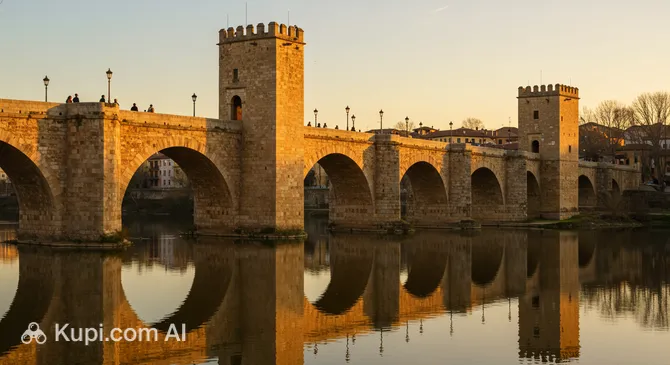
Stone Bridge
Stone Bridge. Иллюстрация. Источник: Kupi.com AI

The modern structure, erected in 1884 according to the project of engineer Fermín Manso de Zúñiga, is approximately 198 meters long and rests on seven elegant arches. The design was engineered to allow water to flow through as efficiently as possible and to withstand frequent flooding. The bridge replaced an ancient medieval structure that could not withstand the test of time and the elements.

Also known as the Puente de San Juan de Ortega, the bridge holds a place of honor on the city's coat of arms. Its historical significance cannot be overstated: for centuries, it was the only reliable crossing over the Ebro in this area, fostering the development of trade and culture in this corner of the Iberian Peninsula.

Contacts

As the bridge is an open public space, it does not have a separate office or information phone number. Up-to-date information regarding traffic conditions and pedestrian zones can be found at the city's tourist information center.

How to contactContact
AddressPuente de Piedra, 26001 Logroño, La Rioja, Испания

What to Do

The main activity on the Stone Bridge is taking a leisurely stroll to enjoy panoramic views of the Ebro River and the surrounding green areas. Photographers will find plenty of great angles here, especially at sunset when the soft light highlights the texture of the stone and reflects in the water. Observing the Camino de Santiago pilgrims crossing the bridge with their traditional staffs and scallop shells creates a unique atmosphere of connection to ancient history.

Descending to the base of the bridge, you will find yourself in the cozy Esplanada Park or Ebro Park, where you can relax in the shade of the trees, have a picnic, or go for a bike ride. In summer, this area becomes a venue for city festivals, the most vibrant of which is the celebration of San Bernabé, featuring concerts and spectacular fireworks that look especially impressive from the riverbank.

It is interesting to note the architectural details: the bridge's seven spans are designed to withstand water pressure, while the sidewalks, widened in the early 20th century, make for a very comfortable walk. After exploring the bridge, it is recommended to head into the old town, which begins right after the crossing, to sample famous Rioja wines at local tapas bars.

Getting There

The landmark is located in the heart of the city and serves as an extension of the old quarter. A walk from Casco Antiguo or the main square, Plaza del Mercado, will take no more than 10 minutes. Follow the signs for the Camino de Santiago pilgrim route, and they will lead you directly to the riverfront.

If you are using public transport, choose bus routes 2, 4, or 9 — they stop in the immediate vicinity of Esplanada Park. From the Renfe railway station, where trains from Madrid or Bilbao arrive, you can reach the bridge in 15-20 minutes on foot or by a short taxi ride.

For those traveling by car, parking areas are available along the riverfront or near Esplanada Park. However, keep in mind that this is a popular spot, so it is better to look for parking in advance on weekends. For cyclists, there are excellent conditions thanks to a developed network of bike paths connecting the bridge with other parts of the city.

Ближайший город: Logroño

History & Facts

The history of the crossing at this location dates back to the 11th century. The first mention of the bridge appears in the charter (fuero) of King Alfonso VI in 1095. It is traditionally believed that the original stone bridge, featuring 12 arches and defensive towers, was built by Saint Juan de Ortega in the 12th century. In those times, the structure turned Logroño into a fortified bastion, with the Ebro River acting as a defensive moat.

The bridge has had a difficult fate, regularly suffering from powerful river floods. In 1871, a catastrophic flood destroyed three arches, forcing residents to rely on temporary wooden structures for a long time. Incidents on the pontoon crossings accelerated the decision to build a new, more reliable bridge capable of withstanding the elements.

The modern project was developed by engineer Fermín Manso de Zúñiga in 1882. Approximately 496,650 pesetas were allocated for the construction. The renovated bridge, which became wider and more stable thanks to its cylindrical pillars, was officially opened on June 11, 1884, during the feast day of San Bernabé. Since then, it has remained one of the region's primary architectural treasures.

Time Needed

For a simple stroll across the bridge, taking in the river panoramas and snapping some memorable photos, most visitors find 30–45 minutes sufficient. This is plenty of time to appreciate the architecture of the arches and observe the passing pilgrims.

If you plan to combine your visit to the bridge with a walk along the embankment, a visit to Esplanada Park, or a break at the riverside cafes, we recommend setting aside 1 to 2 hours for this area. It is especially pleasant to linger here in the evening when the city lights come on.

Working Hours

Since the Stone Bridge is part of the city's infrastructure and a public pedestrian path, it is open to visitors 24 hours a day, 7 days a week. There are no gates or ticket offices, so you can come here at any time — whether for an early morning walk or to contemplate the city's night lights.

Nevertheless, if you plan to visit the bridge during major city festivals, it is worth checking the information on Logroño's official tourist portal in advance. On such days, movement may be partially restricted due to ceremonial processions or the installation of festive decorations.

Круглосуточно

Nearby

Exploring the surroundings of the Ebro River can significantly enrich your travel experience. Near the bridge, you will find both historical monuments and modern cultural centers that allow you to better understand the culture of La Rioja.

NameDistance
Casa de las Ciencias0.2 km
Church of Santa María de Palacio0.2 km
Church of San Bartolomé0.3 km
Ebro Park0.4 km
Franco Españolas Winery0.4 km
Co-Cathedral of Santa María de la Redonda0.4 km
Church of Santiago el Real0.4 km

Reached the end of the page?

That means the route is fully explored