Support

Puente De Hierro

About

In the heart of the province of Zamora, majestically spanning the waters of the Duero River, lies the impressive Iron Bridge (Puente de Hierro). This engineering masterpiece, erected in 1900, is a classic example of a steel truss bridge, which for many decades has been an important link between the historical center and the southern district of Pinilla.

This unique construction, 253 meters long, impresses with its geometric precision and late 19th-century industrial aesthetics. Unlike its ancient neighbor, the Stone Bridge, the Iron Bridge symbolizes the technical progress that reached this part of Spain at the beginning of the last century. Strong steel trusses resting on massive stone foundations create a recognizable silhouette that has become an integral part of the city landscape.
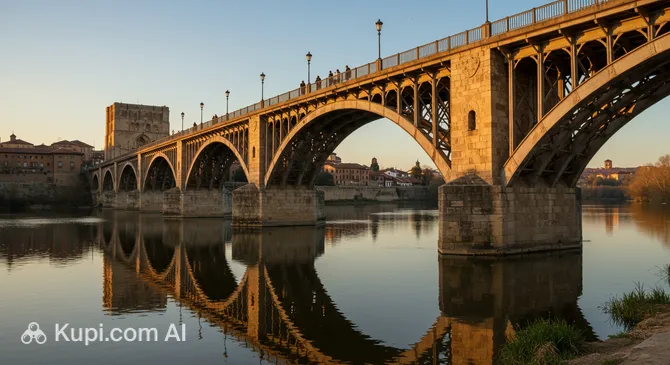
Iron Bridge
Iron Bridge. Иллюстрация. Источник: Kupi.com AI

Today, this site attracts not only locals using it for daily travel but also travelers looking for the best viewpoints. A walk across the bridge allows you to see the city from a completely different perspective, enjoying the quiet flow of the river and the opening views of old quarters and green embankments.

Contacts

If you are planning a walk along the embankment or want to check your route, it is worth saving the exact address of the site in advance. Although the bridge is part of the city's road network, it is easily found on maps using its official coordinates.

How to contactContact
AddressRío Duero,, 49028 Zamora, Испания

What to Do

A visit to this place offers much more than just a crossing from one bank to the other. The main activity here is a panoramic walk along the dedicated pedestrian path located on the western side. This point offers breathtaking views of the glassy surface of the Duero and the city's historical towers. It is an ideal location for photo shoots: the play of light and shadows within the bridge's steel latticework at sunset creates incredible shots.

After descending from the bridge, you will find yourself in the Entrepuentes area — a popular embankment that serves as a great place to relax. Here you can have a small picnic, observe the local flora and fauna, or simply sit on a bench, breathing in the river air. For active leisure enthusiasts, this is a wonderful stretch for cycling or morning jogs.

Many tourists prefer to combine a visit to the Iron Bridge with exploring other engineering monuments, creating their own "Bridges of Zamora" route. This allows you to compare the power of the modern metal structure with the elegance of ancient stone arches. In the summer, small tour groups are often seen here, and in winter, the bridge looks particularly atmospheric, rising above the snow-covered banks.

Getting There

Getting to this architectural landmark is quite easy. The Iron Bridge is located at Río Duero, 49028. If you are already in the city center, a pleasant walk from the main square will take only about 10–15 minutes. The path runs along the scenic embankment, gradually revealing views of the river.

For those who prefer public transport, city buses stop near the bridge, connecting various districts with the historical core. You can also always use a taxi service — a trip from the center or the train station will take no more than 5–10 minutes. For drivers, there are parking areas on both banks of the Duero.

Experienced travelers recommend taking a circular route: start at the Zamora Cathedral, cross the ancient Stone Bridge, and return via the modern "iron" path to appreciate the contrast between different eras and styles.

Ближайший город: Zamora

History & Facts

The history of this engineering structure dates back to the end of the 19th century. The Iron Bridge was officially opened in 1900, becoming a striking symbol of the Industrial Revolution that was sweeping the region at that time. Its construction took place almost simultaneously with the railway bridge located slightly upstream, marking a new era in the development of the city's transport network.

The bridge's design rests on monumental stone pylons made of local sillería — a durable stone characteristic of Spanish architecture of that period. The steel truss structure not only provided the necessary reliability but also showcased progressive construction methods of the time when metal began to actively replace traditional stone in large-scale infrastructure projects.

For more than a century, the bridge has served as a vital artery connecting the Pinilla district with the center. Despite several stages of reconstruction, engineers have managed to preserve its original appearance and the unique atmosphere of industrial Art Nouveau. Today, it is not just a crossing but a significant historical monument, a reminder of the time when architecture and technology united to transform urban space.

Time Needed

To cross the Iron Bridge at a leisurely pace, take some memorable photos, and admire the river landscapes, most tourists will find 30 to 60 minutes sufficient. This time is quite enough to appreciate the scale of the steel structure and capture the city panorama from a unique perspective.

If you decide to continue your walk along the Entrepuentes embankment or plan to reach the neighboring Stone Bridge, you should set aside 1.5–2 hours in your schedule. Such a route will allow you to fully immerse yourself in the riverside atmosphere and enjoy the quiet rhythm of city life.

Working Hours

The site is a public urban space and is open for visits 24 hours a day. You can take a walk across it in the early morning, watching the fog over the river, or late in the evening when the structure is beautifully illuminated by lights.

Since the bridge is part of the active infrastructure, access is free every day, including weekends and holidays. No special tickets are required for visiting.

Круглосуточно

Nearby

The bridge's location makes it easy to combine your visit with other iconic sites in the city. A stroll through the surrounding neighborhoods will reveal many historical monuments, from medieval walls to majestic squares.

Exploring the surrounding area will help you feel the spirit of this ancient city more deeply and see how harmoniously different eras coexist.

NameDistance
The Live Jazz Cave0.3 km
Mesón Bayadoliz0.6 km
Café Numancia0.7 km
Historic Centre of Zamora0.7 km
Stone Bridge0.7 km
Statue of Viriato0.8 km
Ethnographic Museum of Castile and León0.8 km

Reached the end of the page?

That means the route is fully explored