Support

Zamora Castle

About

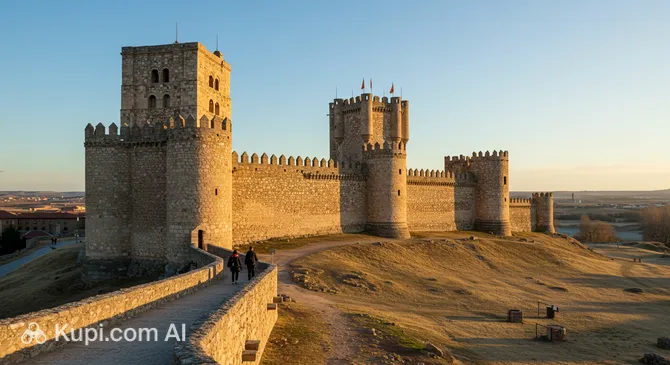
Perched on a high rocky plateau above the bends of the Duero River, the Zamora Castle rises majestically—an ancient fortress that has become a symbol of the city of Zamora. This monumental piece of early medieval military architecture is located in northwestern Spain, in close proximity to the Portuguese border.
Zamora Castle
Zamora Castle. Иллюстрация. Источник: Kupi.com AI

The castle is a classic example of Romanesque fortification style. Its irregular layout, dictated by the natural shape of the rock foundation, includes massive crenellated walls, watchtowers, and a powerful keep—the main round tower. Today, this site is recognized as a cultural heritage object and serves as a major point of interest for tourists fascinated by the history of Castile and León.

Beyond the fortifications themselves, the significance of this site is enhanced by its surroundings: the famous 12th-century cathedral is just steps away. From the top of the castle walls, breathtaking panoramic views open up over the tiled roofs of the old city and the river valley, making it a must-see on any traveler's itinerary.

Contacts

For up-to-date information on events or group visits, you can use the official contact details below.

How to contactContact
AddressC. Alcañices, 1, 49001 Zamora, Spain
Phone+34 980 53 36 94
Websitewww.romanicozamora.es

What to Do

A visit to the fortress offers guests a unique opportunity to touch the rugged aesthetic of the Middle Ages. Inside, you can explore the surviving defensive elements in detail: deep moats, massive gates, and the famous Tower of Homage. Walking among the remains of the living quarters, it is easy to imagine the daily life of the garrison across different historical eras.

One of the main highlights of a visit is climbing to the viewing platforms. From here, you get the best views of the cathedral with its unique dome, as well as the picturesque landscapes of the Duero Valley. It is an ideal spot for those who love panoramic photography and want to capture the city from a bird's-eye view.

Today, the castle grounds serve not only as an open-air museum but also as a cultural venue. Themed exhibitions and events are held here regularly, allowing for a deeper immersion into the atmosphere of the Reconquista era. The calm and majestic atmosphere of the fortress invites thoughtful walks, making it a favorite among history and classical architecture enthusiasts.

Getting There

Reaching Zamora Castle is quite simple, as it is located in the historical center at C. Alcañices, 1. If you are already exploring the old town, the walk from the main square or the cathedral will take only 5–10 minutes at a leisurely pace. The fortress is situated in the northeastern part of the old quarter, right next to a charming park.

For those arriving in the city by train or intercity bus, the journey is slightly longer. Both the train and bus stations are located about 1–2 kilometers from the site. You can walk this distance while enjoying the city’s architecture, or take a taxi, which will bring you to the castle gates in just a few minutes.

If you are traveling by car, keep in mind that parking in the historical center can be challenging. It is recommended to leave your vehicle in one of the designated parking lots near the old town and continue on foot to fully immerse yourself in the atmosphere of medieval Zamora.

Ближайший город: Zamora

History & Facts

The history of this site is rooted deep in the past. The first defensive structures appeared here as early as the 10th century, when Zamora was an important outpost of the Christian Kingdom of León. At that time, the fortifications served as a reliable defense against raids and played a key role in the defense strategy of the northern territories.

Zamora Castle began taking its current shape in the 11th and 12th centuries. It is believed that the primary construction work was carried out during the reign of King Ferdinand I and his successors. According to chronicles, the first stone walls on this foundation were erected by Alfonso II of Asturias in the mid-11th century. The fortress became a living witness to the Reconquista era and the frequent clashes between the kingdoms of Castile and León.

Over the centuries, the complex has undergone numerous transformations. Its walls have seen both periods of great prosperity and years of neglect. The castle has served not only as a military fortress but also as a prison and even a courthouse. It wasn't until the 20th century that an extensive restoration was carried out, turning the austere citadel into a cultural heritage site open to the public.

Time Needed

To explore Zamora Castle at a relaxed pace, you will typically need about 1–2 hours. This is plenty of time to stroll through the inner courtyard, examine the massive walls, and climb to the viewing platforms to take some memorable photos.

If you plan to study the architectural details closely or visit one of the temporary exhibitions frequently held here, you might want to allow for a little more time. In any case, a visit to the fortress will be a pleasant and not overly tiring addition to your city walk.

Working Hours

When planning your visit to Zamora Castle, please note its operating schedule, which includes a traditional midday break. The fortress is open to visitors from Tuesday to Sunday. The morning session runs from 10:30 AM to 2:00 PM, and after the siesta, the castle doors reopen from 5:00 PM to 8:00 PM.

It is important to remember that Monday is a closing day when access to the grounds is unavailable. It is recommended to arrive at least half an hour before the end of a session to ensure you have enough time to explore the exhibits and enjoy the views from the walls.

DayWorking hours
ПонедельникЗакрыто
Вторник10:30 – 14:00, 5:00 – 20:00
Среда10:30 – 14:00, 5:00 – 20:00
Четверг10:30 – 14:00, 5:00 – 20:00
Пятница10:30 – 14:00, 5:00 – 20:00
Суббота10:30 – 14:00, 5:00 – 20:00
Воскресенье10:30 – 14:00, 5:00 – 20:00

Nearby

The castle is located in the heart of the historic district, so a visit here is easily combined with exploring other iconic landmarks. A walk through the surrounding area will allow you to better experience the Romanesque spirit for which this region is so famous.

NameDistance
Zamora Cathedral0.2 km
Aceñas de Olivares0.3 km
Troncoso Viewpoint0.4 km
Church of San Pedro and San Ildefonso0.4 km
San Martín Park0.4 km
Pelambres Beach0.5 km
Walls of Zamora0.7 km

Reached the end of the page?

That means the route is fully explored