Support

Afrasiyab Museum

About

The Afrasiyab Museum invites you to immerse yourself in the deep antiquity of one of the world's oldest cities. This unique historical institution, located in the city of Samarkand, is entirely dedicated to the history of the settlement that preceded the modern city. Uzbekistan carefully preserves the treasures of the Sogdian civilization found during many years of archaeological research here.
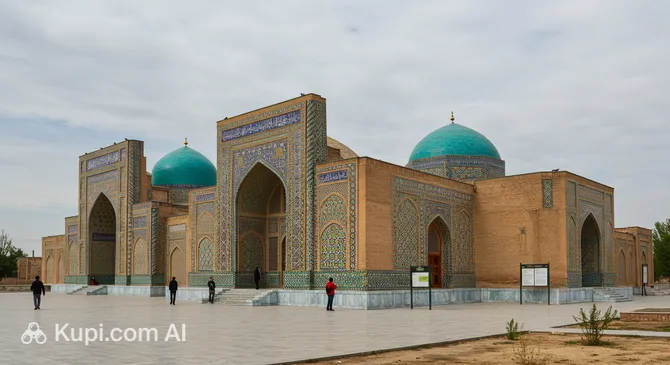
Afrasiyab Museum
Afrasiyab Museum. Иллюстрация. Источник: Kupi.com AI

The museum's main pride is its famous 7th-century frescoes, discovered in the ruins of a local ruler's palace. These vibrant wall paintings depict magnificent processions of ambassadors on elephants and camels, hunting scenes, and mythological subjects, vividly demonstrating the wealth and cultural connections of Samarkand as a key hub of the Great Silk Road.

The museum building, erected in 1970 based on a design by architect Bagdasar Arzumanyan, is an important site in its own right, as it is located directly on the excavation site. Inside, an impressive collection of 11 cultural layers is presented: from ancient ceramics and antique coins to unique Christian ossuaries and maps of ancient fortress walls.

Contacts

To confirm up-to-date information before your visit, you can use the following official details:

How to contactContact
AddressMX9V+P89, Toshkent yo'li, Samarqand, Samarqand viloyati, Узбекистан
Websitesamarkandmuseum.uz

What to Do

The best way to start your journey through the museum is at the hall of frescoes. This is the centerpiece of the exhibition, where in soft lighting, you can study the details of foreign ambassadors being received by King Varkhuman. To understand the symbolism of each character and the animals depicted, it is recommended to take a guided tour — their stories bring the ancient walls to life. Be sure to watch the video presentation, which clearly explains the process of excavating the ancient settlement.

On the upper floor, display cases with artifacts from different eras await you. Look out for the Hellenistic coins from the time of Alexander the Great, the finest Sogdian ceramics, and the tools of ancient craftsmen. The archaeological maps are also fascinating, allowing you to imagine what the defensive walls and gates of ancient Samarkand looked like thousands of years ago.

After exploring the indoor halls, it is pleasant to walk through the well-kept garden at the museum. This is a peaceful place with few tourists compared to the crowded Registan, creating the perfect atmosphere for reflecting on what you've seen and taking great photos against the backdrop of the ancient hills of Afrasiyab.

Getting There

The museum is located on the eastern edge of the ancient settlement, right on the Toshkent yo'li road, which leads towards Tashkent. If you are in the city center, the Registan Square can serve as a landmark, from which the museum is about 3–4 kilometers away.

The most comfortable way to get there is by taxi. The Yandex Go service works perfectly in Samarkand, or you can hail a car on the street; the trip from the center will take no more than 10 minutes. For those who prefer public transport, buses and minibuses (marshrutkas) running along Tashkent Street are available.

If you prefer walking, the route from the central attractions will take about 40–50 minutes. The museum is clearly visible from the road, and there is parking for private vehicles and tour buses next to it.

Ближайший город: Samarkand

History & Facts

The territory where the museum stands is the heart of ancient Marakanda. The Afrasiyab settlement existed here from the 6th century BC until the Mongol invasion in the 13th century, serving as a vital hub of the Silk Road and the capital of legendary Sogdiana.

The modern history of the museum began in 1965 quite by accident. During the construction of a new road, workers stumbled upon the remains of a palace with unique paintings. Archaeologists discovered the Hall of Ambassadors, whose walls were decorated with 7th-century frescoes depicting King Varkhuman and diplomatic missions from various countries around the world. These paintings became a global sensation, demonstrating the highest level of Sogdian art.

Excavations in this zone revealed 11 cultural layers, each preserving traces of different eras: from the Achaemenid period to the times of Alexander the Great and the Sassanids. Among the unique finds are Christian ossuaries from the 5th–7th centuries decorated with crosses, confirming the remarkable religious tolerance and cultural diversity of ancient Samarkand.

Time Needed

To explore the main exhibition at a leisurely pace, guests typically need 1 to 2 hours. This is enough time to watch the introductory video presentation, examine the famous frescoes in detail, and browse the archaeological finds on the upper floor.

If you plan to use a guide (which is highly recommended for understanding the context of the paintings), the visit may last an additional 30 minutes. It is also worth leaving some time for a stroll through the well-kept garden surrounding the museum building.

Working Hours

The museum doors are open to visitors daily from Monday to Saturday. Working hours: from 09:00 to 18:00. Please note that Sunday is a day off.

Since the schedule may change on public holidays, it is recommended to check the official website of the Samarkand State Museum-Reserve before your trip.

DayWorking hours
понедельник09:00–18:00
вторник09:00–18:00
среда09:00–18:00
четверг09:00–18:00
пятница09:00–18:00
суббота09:00–18:00
воскресеньеЗакрыто

Nearby

The Afrasiyab Museum is located in an area of rich archaeological heritage, so it is worth combining a visit here with an exploration of other iconic city sites. A walk around the neighborhood will literally allow you to trace the transformation of Samarkand from an ancient settlement to the majestic capital of the Timurid Empire.

NameDistance
Ancient Afrasiab (Maracanda)0.4 km
Khoja Daniyar Mausoleum0.5 km
Shah-i-Zinda0.9 km
Hazrat Khizr Mosque1.1 km
Ulugh Beg Observatory1.2 km
Siyob Bazaar1.4 km
Bibi-Khanym Mosque1.5 km

Reached the end of the page?

That means the route is fully explored