Support

Alisher Navoiy Theater

About

The Alisher Navoi State Academic Grand Theatre is a majestic symbol of cultural heritage located in the heart of Tashkent. The building, designed by the outstanding architect Alexey Viktorovich Shchusev, harmoniously combines the monumentality of European classics with the exquisite national flair that Uzbekistan is proud of.
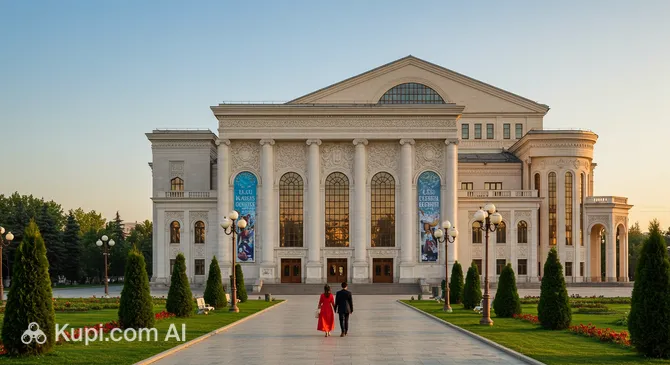
Alisher Navoi State Academic Bolshoi Theatre
Alisher Navoi State Academic Bolshoi Theatre. Иллюстрация. Источник: Kupi.com AI

The main facade of the theatre is decorated with a grand three-arched portal and elegant bas-reliefs, while the sides feature long arched colonnades that give the structure an Oriental character. A special atmosphere is created by the square in front of the theatre with its famous musical fountain, which becomes a center of attraction for residents and guests of the capital in the evenings.

This is not just a theatrical venue, but a true architectural monument where every hall is a work of art. Visiting the theatre is an opportunity not only to see masterpieces of world opera and ballet but also to touch the living history and traditions of Uzbek architecture.

Contacts

To plan your visit and check the current playbill, it is recommended to use the theatre's official contact details. The ticket offices are usually open daily, and the website provides the repertoire for the coming month.

How to contactContact
AddressZarafshan Street 28, 100029, Тоshkent, Toshkent, Узбекистан
Phone+998 71 233 90 81
Websitewww.gabt.uz

What to Do

Within the walls of the theatre, visitors can experience the high art of opera and ballet. The repertoire includes both classic works by world composers and unique productions based on Uzbek national stories. The auditorium, which seats up to 1,400 people, is an attraction in its own right: note the ceiling in the shape of a traditional tubeteika and the massive chandelier resembling a cluster of grapes.

Be sure to take time to explore the interiors of the foyers. Each is decorated in the style of specific regions of the country: Tashkent, Samarkand, Bukhara, Khiva, Fergana, and Termez. This allows you to take a unique journey through Uzbekistan without leaving the building and appreciate the craftsmanship of ganch carving and the unique patterns of each school.

After the performance or during a walk around the city, it is worth lingering in the square in front of the theatre. Here you can admire the light and music fountain, whose jets dance to classical melodies. In the evening, the building is illuminated, creating ideal conditions for memorable photos and a relaxing break.

Getting There

The theatre occupies a place of honor in the very center of the capital at: 28 Bukhara Street. Thanks to this location, it is one of the most accessible cultural sites for tourists. The easiest way to get here is by metro — the nearest station "Alisher Navoi" is a few minutes' walk away.

In addition to the metro, the square in front of the theatre can be reached by numerous buses and minibuses passing through the central districts. If you prefer comfort, a taxi will take you directly to the main entrance. The building with its characteristic arches and the famous fountain in front of it serve as excellent landmarks that are impossible to miss.

Ближайший город: Tashkent

History & Facts

The history of the theatre dates back to the 1920s when the Uzbek concert and ethnographic ensemble was created. It was officially established as the State Academic Grand Opera and Ballet Theatre in 1939. Construction of the current building began on September 1, 1940, on the site of the former Voskresensky Bazaar, popularly known as the "Pyan-Bazar" (Drunk Bazaar).

Work was suspended during World War II but resumed as early as 1943. The grand opening took place on November 7, 1947. In 1948, the theatre was named after the great poet Alisher Navoi in honor of his 500th anniversary. For this architectural project, Shchusev and a group of folk masters were awarded the Stalin Prize of the first degree.

Interestingly, the architect Shchusev deliberately abandoned the figurative sculptures originally planned in the project in favor of rich national ornaments and decorative lanterns resembling minarets. The delicate ganch carving decorating the inner halls is still considered an unsurpassed example of the skill of 20th-century Uzbek craftsmen.

Time Needed

For a full visit to an evening performance or a ballet production, you should set aside about 3–4 hours. This time will allow you not only to enjoy the art but also to leisurely explore the interiors of all six themed foyers during intermissions.

If you only plan an external tour of the architecture and a walk around the square by the fountain, you will need 30 to 60 minutes. This is quite enough to examine the details of the facade and take high-quality photos against the backdrop of one of the city's most beautiful buildings.

Working Hours

The working hours of the Alisher Navoi Grand Theatre are tied to the current performance schedule. Productions usually start in the evening, and on weekends, there may be daytime matinees for the whole family.

To clarify the exact opening hours of the ticket offices and the start of performances, visitors are strongly encouraged to check the information on the official website of the theatre. Remember that to view the internal halls, you must purchase a ticket for one of the events.

Nearby

A walk around the surroundings of the Grand Theatre will allow you to dive deeper into the atmosphere of the capital and see how historical heritage exists alongside modern spaces. Popular parks and recreation areas suitable for the whole family are within walking distance or a short taxi ride away.

NameDistance
Tashkent Polytechnic Museum0.6 km
Amir Timur Square0.7 km
State Museum of the Temurids0.8 km
Syrovarnya1.2 km
Oblako Uz1.3 km
Museum of Applied Arts1.4 km
Monument of Courage1.6 km

Reached the end of the page?

That means the route is fully explored