Support

Hazrati Imam Complex

About

The Hazrati Imam Complex, also known as Khast-Imam, is one of the most important religious and architectural ensembles in Tashkent, located in Uzbekistan. This significant historical monument is a complex of various structures covering an area of about two hectares and serves as the city's spiritual heart, attracting both believers and enthusiasts of history and architecture.
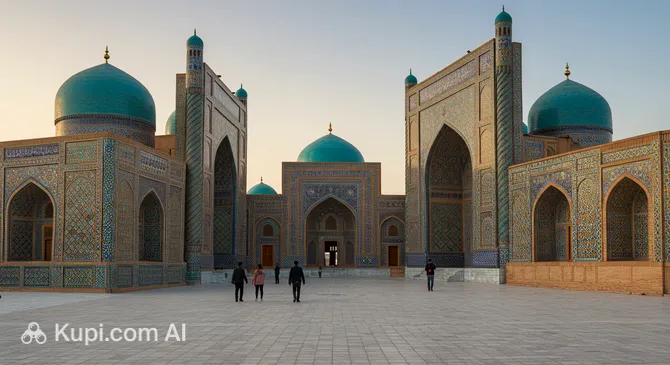
Hazrati Imam Complex. Illustration.
Source: Kupi.com AI

Traveler photos:

The complex was built near the burial site of one of the first imams of Tashkent—Abu Bakr Muhammad Kaffal Shashi, revered as Hazrati Imam (Holy Imam). He was a prominent Islamic scholar, an expert on the Quran and Hadiths, as well as a poet and skilled craftsman. The name of this revered figure gave the complex its name, which for centuries has served as a center of attraction for Muslims in the region.

In 2007, thanks to a large-scale reconstruction, previously separate buildings on the grounds were united into a single, harmonious architectural ensemble. Today, the Hazrati Imam Complex appears before visitors in its renewed splendor, featuring thoughtful landscape design that connects historical buildings with new structures, making it a must-see destination when exploring the culture and history of Uzbekistan.

Contacts

The Hazrati Imam Complex is a significant historical and cultural ensemble in Tashkent, and as such, it is a popular destination for visitors. To get the most up-to-date information regarding opening hours, tour availability, or other organizational matters, it is best to consult the official tourist resources of Tashkent, local information centers, or tour guides. The complex is located in the old part of the city and is usually accessible by public transport or taxi.

How to contactContact
Address86QQ+3X8, Qorasaroy ko'chasi, Тоshkent, Toshkent, Uzbekistan

What to Do

Visiting the Hazrati Imam Complex allows you to immerse yourself in centuries of history and spirituality. Here, you can explore a range of significant structures, each with its own unique history and architectural features. Highlights include the Barak-Khan Madrasah, known for its exquisite decoration; the Tilla-Sheikh Mosque, where tradition says the oldest Uthman Quran is kept; and the Muyi Muborak Madrasah, also associated with the preservation of Islamic relics. Additionally, the complex grounds house the tomb of Kaffal Shashi, a revered scholar and theologian; the Namazgah Mosque; and Tashkent's largest mosque—the Hazrati Imam Mosque, which is striking in its scale and beauty.

Special attention is drawn to the Hazrati Imam Mausoleum, the oldest building in the ensemble. It was built over the grave of the prominent preacher and scholar Abu Bakr Muhammad Kaffal Shashi back in the late 10th century and serves as the heart of the entire complex. Visitors can not only see this historical burial site but also feel the special atmosphere of this sacred place that has attracted pilgrims for centuries.

Walking through the complex is an opportunity to touch the rich cultural heritage of Uzbekistan. You can admire unique examples of Islamic architecture from various eras, including intricate wood and ganch (gypsum) carving, colorful mosaics, and calligraphic inscriptions. In addition to exploring the historical buildings, you can also see the administrative building of the Muslim Board of Uzbekistan, highlighting the complex's modern significance as the country's spiritual center.

Getting There

Reaching the Hazrati Imam Complex in Tashkent is quite simple, as it is one of the city's key landmarks and is located in its old quarter, known as Sebzar. One of the most convenient ways to get there is by taxi. Several popular ride-hailing apps operate in Tashkent, making the trip quick and relatively inexpensive. You can order a car from almost anywhere in the city, including the center, your hotel, or the nearest metro station.

For those who prefer public transport, the complex can be reached by bus. Tashkent has a well-developed network of bus routes, some of which pass in the immediate vicinity of Khast Imam Square. It is recommended to check the current route numbers and stops on local transport websites, with hotel staff, or by asking locals. You can also use the Tashkent Metro—the nearest stations are "Chorsu" or "Gafur Gulyam," from which you can reach the complex by taxi or bus, or, if you enjoy walking and the weather is nice, go on foot while soaking in the local flavor of the Old City.

Since the Hazrati Imam Complex is a popular tourist destination, finding it is easy. A good landmark is the large Khast Imam Square. If you are nearby—for example, exploring the Chorsu Bazaar—a walk to the complex can be a pleasant part of your itinerary. Before setting off, it's always helpful to check the location on a map and plan the most convenient mode of travel for you.

Nearest city: Tashkent

History & Facts

The name of the Hazrati Imam Complex is inextricably linked to the name of a prominent figure—Sheikh Abu Bakr Muhammad Kaffal Shashi, revered as Hazrati Imam, which means "Holy Imam." He was born in 903 in Tashkent, which at that time was known as Madina ash-Shash. Notably, his nisba (the part of a name indicating origin or profession) "Kaffal" comes from his family's craft—his father was a skilled locksmith (kaffal) who made intricate door locks.

Abu Bakr Muhammad Kaffal Shashi was an exceptionally educated and talented individual of his time. He was famous not only as a scholar of the Quran, Hadiths (sayings and deeds of the Prophet Muhammad), Islamic law, and lexicology but also as a gifted mystic poet and a profound theologian. His wisdom and spiritual teachings earned him immense respect among contemporaries and descendants. Hazrati Imam passed away in 976 or 977, leaving behind a rich spiritual and cultural legacy.

The oldest structure within the territory of the modern Hazrati Imam Complex is the mausoleum of Kaffal Shashi himself. It was built over his grave at the end of the 10th century and immediately became a site of veneration. Over many centuries, a major religious and cultural center of Tashkent gradually formed around this shrine, attracting pilgrims and scholars.

The complex acquired its current majestic appearance in 2007. As a result of large-scale reconstruction and landscaping, various historical buildings that had formed over centuries were combined into a single, harmonious architectural ensemble. Today, this area, covering about two hectares, is not only an important spiritual center of Uzbekistan but also one of the most impressive historical and architectural monuments, reflecting the region's centuries-old traditions.

Time Needed

To get a general impression of the Hazrati Imam Complex and see its main sights, visitors usually need about 2-3 hours. This time is generally sufficient to take a leisurely stroll through the vast grounds, admire the architectural features of iconic structures like the Barak-Khan Madrasah and the Tilla-Sheikh Mosque, visit the Kaffal Shashi Mausoleum, and see the grand new Hazrati Imam Mosque. During this time, you can also take photos and soak in the atmosphere of this important spiritual center.

If you plan a deeper immersion—for instance, if you want to study the exhibits in the Muyi Muborak Madrasah (home to the famous Uthman Quran) in detail, visit the library, or simply spend more time in each building enjoying the intricate craftsmanship and tranquility—you should set aside half a day (about 3-4 hours). For those very short on time who only want a quick look at the exterior of the complex, 1-1.5 hours might be enough, but to fully appreciate this landmark of Tashkent, it is recommended not to rush.

Working Hours

The Hazrati Imam Complex is an active religious and cultural center, so its opening hours may vary, especially during religious holidays. Generally, access to the grounds and exterior viewing of the buildings is open during daylight hours. However, for visiting individual museums or interior spaces, such as the library or madrasahs where valuable exhibits may be kept, specific visiting hours may be established. Usually, these sites are open to tourists year-round.

Currently, exact information on opening hours and the necessity for advance ticket booking is unavailable. To obtain the most up-to-date information, it is strongly recommended to check the official website of the Muslim Board of Uzbekistan (if available and containing tourist information), the tourist portals of Tashkent, or visit local tourist information centers upon arrival. This will help you plan your visit in the best possible way and avoid any potential inconvenience.

Nearby

Visiting the Hazrati Imam Complex is undoubtedly one of the highlights of a trip to Tashkent. However, to make your journey even more enriching and complete, it is worth paying attention to the attractions located nearby. Exploring the surrounding area will allow you to dive deeper into the atmosphere of the Old City, discover other interesting sites, and gain a more comprehensive understanding of the cultural and historical heritage of the capital of Uzbekistan.

Other significant sites are located near the complex, each interesting in its own way. These can range from historical monuments to colorful bazaars or modern recreational areas. By setting aside some time to explore them, you can broaden your horizons and bring back even more vibrant memories of Tashkent.

NameDistance
Chorsu Bazaar1.3 km
Kaarvan Indian Kitchen1.3 km
Anhor Lokomotiv Park2.6 km
Tashkent City Mall2.6 km
Minor Mosque2.9 km
Monument of Courage3.1 km
Besh Qozon Pilaf Center3.4 km

Have you reached the end of the page?

So the route has been studied inside and out