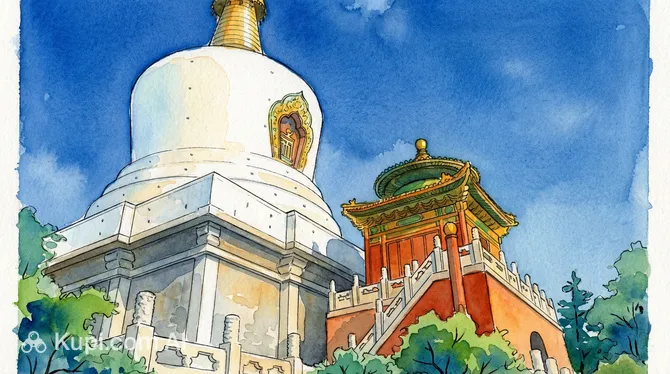
In the very heart of Beijing stands the majestic White Dagoba—one of the oldest and most recognizable monuments in China. This snow-white, Tibetan-style Buddhist pagoda is not only an architectural gem of the city but also an important spiritual center, embodying centuries of cultural interaction in the East.
White Dagoba. Illustration.
Source: Kupi.com AI
Traveler photos:
Standing 35.9 meters tall, the structure is striking for its characteristic dome shape and elegant decoration. The top of the tower is adorned with a two-tier copper parasol, with 14 bells hanging from its edges that chime gently in the wind, topped by a gilded flame spire. The base of the pagoda is decorated with niches containing inscriptions in the Tibetan language, giving it a special mystical atmosphere.
As a rare surviving example of Yuan dynasty architecture, the White Dagoba is recognized as a national treasure. For city residents and travelers alike, this site is a symbol of unity, harmony, and historical continuity, catching the eye from various points across central Beijing.
Contacts
To plan your visit to the White Dagoba, we recommend checking current information on official resources beforehand. Useful details regarding visiting rules and potential schedule changes can be found on the Beijing Park Administration website or the city's tourism portal.
As the monument is listed on China's registry of national cultural heritage, temporary restoration work may be underway, so it is worth confirming details at a local information center before your trip.
Visiting the White Dagoba offers a chance to touch ancient traditions and examine the unique architecture of the Yuan era in detail. Visitors can explore the intricate carved elements, including Tibetan mantras, and appreciate the craftsmanship of the ancient casters who created the massive copper ornaments on the spire.
The walks through the adjacent temple complexes deserve special attention. Stone steps lead up to the pagoda, and on the south side is the famous 72-step brick staircase, connecting the monument to the Pu'andian Temple. Climbing it allows you to feel the scale of the structure and enjoy changing perspectives of the tower's snow-white walls.
This location is ideal for thoughtful contemplation and artistic photography. Travelers can wander through the surrounding park, study the information boards about the pagoda's history, and simply enjoy the silence in the middle of a bustling metropolis, immersing themselves in an atmosphere of spiritual tranquility.
Getting There
The White Pagoda is located in the historic center of Beijing, in the Xicheng District. The exact address of the site is Xichengmen, making it easily accessible for travelers staying in any part of the metropolis. The surrounding area is well-developed, featuring many cozy cafes and traditional shops.
You can reach the landmark by metro, bus, or taxi. If you prefer public transport, look for metro stations located in the central part of the city. To plan an exact route, it is most convenient to use navigation apps, which will suggest the correct bus number or subway exit based on your current location.
Nearest city: Beijing
History & Facts
The history of the White Pagoda is inextricably linked with the reign of great emperors. The current structure was erected in 1651 by order of Emperor Shunzhi of the Qing dynasty. It was built on the site of the ancient Guanghandian Temple, which had existed there since the Mongol period. The traditions of this site go deep into the past: the first structures are believed to have appeared here as early as the 11th century during the Liao era.
During the Yuan dynasty, the pagoda was built under the personal patronage of Kublai Khan. The project was designed by the prominent Nepalese architect and sculptor Arniko (Anige). At that time, the structure was known as the "Golden City" or the "Jade Pagoda," and it served as a powerful symbol of the empire's unity and the ruler's spiritual authority.
Over the centuries, the pagoda has survived several earthquakes, but it has been carefully restored each time. In 1961, the White Dagoba was officially included in the first list of Major Historical and Cultural Sites Protected at the National Level in the PRC, confirming its exceptional value to the history and culture of China.
Time Needed
To leisurely explore the White Pagoda and its adjacent temple complex, tourists usually need 1.5 to 3 hours. This is enough time to study the architectural details, climb the stairs, and stroll across the open platforms.
If your goal is only a brief tour and a few striking photos against the famous silhouette, you can manage in 45–60 minutes. However, for enthusiasts of history and Eastern architecture, we suggest setting aside more time to examine the Tibetan mantras and ancient bas-reliefs in detail.
Working Hours
Currently, the exact opening hours for the White Dagoba are not listed in open sources. Like many national historical monuments, visiting hours may change depending on the season or cultural events.
We recommend that tourists check current schedules on Beijing's official tourism portals immediately before their visit. Keep in mind that access to the pagoda and internal pavilions may be limited on public holidays or during maintenance breaks.
Nearby
A visit to the White Dagoba can be easily combined with other iconic sites in the capital, as it is situated in the heart of the historic quarter. Just a few steps away lies the picturesque Beihai Park, where you can take a peaceful stroll by the water. Also nearby is Jingshan Park, which offers magnificent panoramic views of the city.
If you have time, a short walk will lead you to the famous Forbidden City. The proximity of these great architectural monuments allows tourists to see Beijing's main treasures in a single day and experience the grandeur of imperial China.