Support

Capital Museum

About

The Capital Museum in Beijing is one of China's most impressive cultural centers, where antiquity meets modern technology. Opened in its current form in 2006, the museum spans a vast area of 63,000 square meters. Its futuristic architecture is deeply symbolic: the massive bronze dome represents ancient city gates, while the facade echoes the patterns of old temples. This landmark is rightfully considered a must-visit for anyone wishing to understand the soul of the Chinese capital.
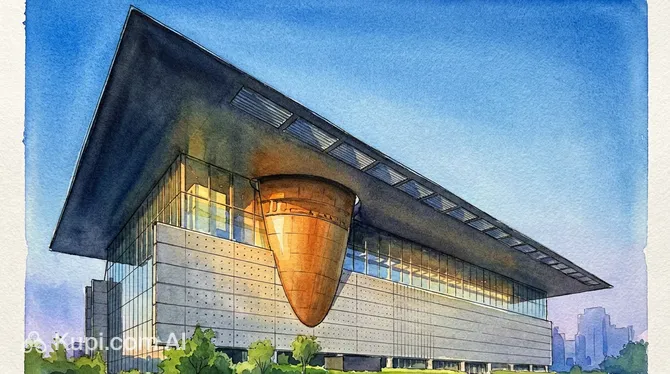
Capital Museum. Illustration.
Source: Kupi.com AI

Traveler photos:

Inside, the museum houses more than 200,000 artifacts illustrating the region's development over half a million years. Here, you can trace how Beijing grew and changed over three millennia. The collection is recognized as a first-class national treasure and includes everything from delicate porcelain and mysterious Buddhist statues to intricate calligraphy and everyday items discovered during large-scale excavations.

Special attention should be paid to the central glass-roofed atrium, designed in the style of a traditional xianyuan courtyard. The museum's exhibitions are divided into thematic and chronological galleries, among which the "Old Beijing" folk culture hall stands out. Walking through it, guests are literally transported to the past, recreated with incredible accuracy and love for detail.

Contacts

When planning a visit to the Capital Museum, we recommend checking official resources in advance for the latest information. Opening hours and admission conditions may change depending on current exhibitions or public holidays in Beijing.

For your convenience, the essential contact details, including the address, telephone number, and official website link, are provided below to help make your trip as smooth as possible.

How to contactContact
Address16 Fu Xing Men Wai Da Jie, Xi Cheng Qu, Китай, 100035
Phone+86 10 6339 3339

What to Do

A visit to the Capital Museum is a true journey through time. Start your exploration at the "Ancient Capital Beijing" permanent exhibition, where the city's history—from the Zhou to the Qing dynasties—unfolds through unique models and precious jade burial suits. Guests are particularly impressed by the gallery on the sixth floor dedicated to folk culture: it recreates the atmosphere of old hutongs with rickshaws and traditional shops, allowing you to truly feel the rhythm of the old city.

Be sure to visit the specialized galleries to see monumental bronze vessels thousands of years old, including the famous massive fangzun. Art lovers will appreciate the calligraphy and Buddhist sculpture halls, showcasing the delicate craftsmanship of past masters. If you are traveling with family, look for the children’s educational center, where history is presented in an interactive and accessible way.

Don’t forget to set aside time to admire the building's architecture: the soaring atrium and unique design elements provide an excellent backdrop for photos. Since admission to the main exhibitions is often free with advance online booking, the museum is one of the most accessible ways to experience China's great heritage in the heart of Beijing.

Getting There

The Capital Museum is located in the Xicheng District at 16 Fuxingmenwai Dajie. Since it is in the central part of the city, getting here is quite easy. The fastest and most reliable method is to use the Beijing Subway. You will need the "Capital Museum" station on Line 1. Exit through Exit A2, and the museum building will be just a five-minute walk away.

If you prefer buses, routes 1, 37, and 65 serve the station of the same name. You can also use a taxi or the Didi mobile app by searching for "Capital Museum" or providing the exact address. A trip from the Forbidden City takes very little time, as the distance between them is about 4–5 kilometers.

Keep in mind that traffic jams are common in central Beijing, so public transport remains the most predictable option. Parking spaces at the museum are limited, making a private car a less convenient choice for tourists.

Nearest city: Beijing

History & Facts

The history of the Capital Museum began in 1981, when it was established as the primary center for preserving and studying Beijing's rich cultural heritage. The museum's collections span a colossal period—over 3,000 years of the city's history and 800 years of its status as the capital of China.

A landmark moment in the museum's life was its 2006 move to a new, ultra-modern building. The design of this structure was inspired by ancient Chinese astronomical instruments, emphasizing the link between a great past and a technological future. In 2014, the collection was further enhanced by the unique "Old Beijing" gallery, which has become a major hit with visitors.

The museum's foundation is built on numerous archaeological finds made within the city and its surroundings. It houses priceless artifacts from the Shang, Zhou, Ming, and Qing dynasties. The museum does more than just exhibit everyday objects; it demonstrates the complex evolution of the metropolis from an ancient settlement into one of the world's most influential cities.

Today, the Capital Museum is recognized as a first-class national institution. It actively collaborates with major museums worldwide, participating in international exchange programs and the digitization of cultural treasures to ensure fragile relics are preserved for future generations.

Time Needed

To leisurely explore the main halls and see the key exhibits of the Capital Museum, it is recommended to set aside at least 3–4 hours. This should be enough for a standard cultural route, including the bronze and jade galleries and the exhibition on the city's development.

If you are a deep history enthusiast or plan to visit temporary exhibitions and the interactive children's center, your visit could easily last a full day. For families with children looking for a more active and quicker tour, 2–3 hours is usually sufficient to see the museum's most vibrant sections.

Working Hours

The Capital Museum welcomes visitors from Tuesday to Sunday. The museum doors are open from 09:00 AM to 4:00 PM. Please note that Monday is the official day off, and the museum is completely closed.

We recommend planning your arrival in advance, as the last entry to the building is usually allowed 30–60 minutes before closing. This allows you enough time to finish your tour of the current gallery comfortably. Before your trip, it’s a good idea to check the official website, as the schedule may vary slightly during major temporary exhibitions.

DayWorking hours
MondayЗакрыто
Tuesday09:00–16:00
Wednesday09:00–16:00
Thursday09:00–16:00
Friday09:00–16:00
Saturday09:00–16:00
Sunday09:00–16:00

Nearby

A visit to the Capital Museum can be easily combined with other iconic Beijing landmarks located within a few kilometers. Nearby is the magnificent Beihai Park, where you can escape the city bustle with a stroll along imperial lakes while admiring the White Pagoda.

If you head a little further east, you will find the legendary Tiananmen Square and the entrance to the majestic Forbidden City. This proximity allows you to plan a rich cultural itinerary that covers both modern museum exhibits and China's primary architectural symbols.

NameDistance
Beihai Park4.5 km
Tiananmen Square4.7 km
Meridian Gate4.8 km
The Palace Museum4.8 km
Forbidden City4.8 km
Prince Gong Mansion5 km

Reached the end of the page?

That means the route is fully explored