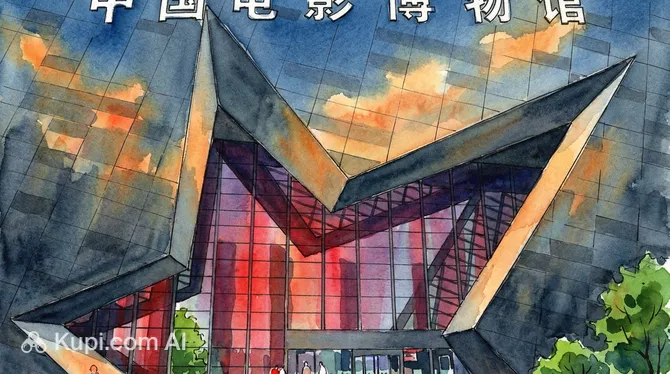
The China National Film Museum (CNFM) is a majestic architectural landmark in Beijing, recognized as the world's largest national museum entirely dedicated to the art of cinematography. The scale of the complex is breathtaking: it covers more than 8 hectares, and its futuristic interiors house 21 exhibition halls.
China National Film Museum. Illustration.
Source: Kupi.com AI
Traveller photos:
This is not just a repository of exhibits, but a leading cultural center in China where history meets the technologies of the future. The building's hallmark is its giant circular hall and the innovative "Bird's Nest" LED screen. Inside, there are six state-of-the-art cinema halls capable of accommodating over a thousand viewers simultaneously.
The museum serves as the primary archive of Chinese filmmaking achievements, guiding visitors through the industry's development from its origins to the present day. Thanks to its unique architecture and extensive collection, it is rightfully considered one of the most significant cultural sites in all of Asia.
Contacts
When planning a visit to the China National Film Museum, located in Beijing, we recommend checking the latest information in advance. Operating hours and the availability of specific exhibits may vary, so it is a good idea to confirm details before your trip by contacting the administration by phone.
At the China National Film Museum, visitors can trace over a century of cinematic history—from the first experimental steps to modern digital masterpieces. The large-scale exhibition "A Century of History, A Century of Glory" spans several floors and offers a look at rare vintage film projectors, authentic costumes, and original posters from classic films.
Guests are particularly thrilled by the interactive zones, where they can peek behind the curtain of the filmmaking process and learn how complex special effects are created. For those who want to fully immerse themselves in the magic of the silver screen, there is an IMAX theater—one of the largest in the country. Watching a film here becomes an unforgettable visual experience thanks to the colossal screen size and perfect sound.
In addition to permanent displays, the museum regularly hosts temporary exhibitions and themed screenings dedicated to the work of outstanding directors and actors. A walk through the halls allows you not only to see artifacts but also to feel the atmosphere of film sets from different eras.
Getting There
The attraction is located in the Chaoyang District at No. 9 Nanying Road. The most convenient way to reach it from central Beijing is by taxi using popular mobile apps. This is the most comfortable method, allowing you to avoid transfers on public transport.
For those who prefer the subway or buses, it is best to plan your route to the nearest stops in the Chaoyang area in advance. Many tourists also opt for organized tours, which include a transfer from the hotel directly to the museum doors, significantly simplifying logistics and allowing you to combine the trip with visits to other iconic city landmarks.
Nearest city: Beijing
History & Facts
The history of the China National Film Museum began in late 2005, when its massive construction was completed to celebrate a landmark anniversary—the 100th anniversary of the birth of Chinese cinema. The official opening of this grand institution took place on February 10, 2007, marking a new chapter in the country's cultural life.
The museum was established as a vital public institution with the support of the State Council of China. Its mission is to document the evolution of the film industry from the first black-and-white films to the digital era. Over the years, it has become one of the largest specialized museums in the world, housing a unique collection of artifacts.
In 2022, the complex underwent a technical modernization. One of the most striking updates was the introduction of the "Bird's Nest" LED screen, which highlighted the building's modern architectural style and its commitment to following the latest visual art technologies.
Time Needed
Given the immense scale of the exhibits, it is recommended to allocate 3 to 6 hours to explore the China National Film Museum. This is enough time to walk through the main halls at a leisurely pace and discover the key milestones in film history. If you plan to watch a movie in the legendary IMAX GT theater, you should budget more than half a day for your visit.
For the most dedicated visitors who wish to explore all 21 exhibition halls and interactive zones in detail, a visit can easily stretch across the entire day. The museum is so vast that one could easily spend 8–10 hours here, immersing oneself in the world of film sets, vintage equipment, and modern visual installations.
Working Hours
The museum's operating hours vary depending on the time of year. During the "high" season, from April to October, the doors are open Tuesday through Thursday from 09:00 to 17:00. On Fridays and weekends, the museum often switches to extended hours, allowing guests to stay in the central and exhibition halls until 20:00.
In the winter period (November to March), standard visiting hours are also limited to 17:00, but on Saturdays and public holidays, the museum may stay open until 19:00. It is important to remember that Monday is a day off, and visitor entry into the building stops 30–60 minutes before the official closing time.
Nearby
A visit to the film museum in Beijing can be perfectly complemented by a stroll through nearby attractions that reveal different sides of the city. Just a few kilometers away is the famous 798 Art Zone—a creative cluster located on the grounds of former factories that has become the center of contemporary art in China.
For those interested in architecture and sporting history, the Beijing National Stadium, known as the "Bird's Nest," is relatively close by. Exploring these sites in one day will allow you to see how high technology, modern art, and deep cultural traditions harmoniously coexist in the Chinese capital.