Support

Confucius Temple and The Imperial College Museum

About

The Temple of Confucius and the Guozijian Museum is a majestic architectural ensemble located in the heart of Beijing. This unique complex, with over 700 years of history, is the second-largest Confucian sanctuary in China. Here, across an area of about 22,000 square meters, a spiritual abode and the former highest state educational institution of the empire stand in harmonious proximity.
\n
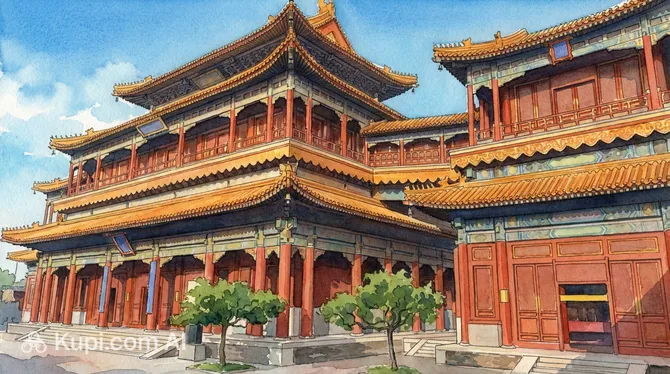
Confucius Temple and The Imperial College Museum. Illustration.
Source: Kupi.com AI

Traveler photos:

\n

Visitors are greeted by the classic aesthetics of imperial China: austere red walls, elegant yellow tiles, and shaded pavilions that preserve an atmosphere of ancient wisdom. The main architectural gems are the Hall of Great Achievement, built without a single supporting column, and Biyun Hall, surrounded by a picturesque water moat, where emperors once delivered lectures to the country's finest scholars.

\n

Today, the complex functions as a museum featuring rich exhibitions on the life of Confucius, ancient Chinese education, and ritual art. This quiet sanctuary in the center of the metropolis is perfect for those seeking a peaceful escape from the tourist crowds and wishing to touch the origins of Eastern philosophical thought.

Contacts

When planning a visit to the Temple of Confucius and the Guozijian Museum, one of the iconic landmarks of Beijing, we recommend checking the current contact information in advance. This will help you stay informed about visiting rules and any potential changes to the complex's schedule during public holidays in China.

How to contactContact
Address15 Guo Zi Jian Jie, 国子监 Dong Cheng Qu, Bei Jing Shi, Китай, 100011
Phone+86 10 6406 2418
Websitewww.kmgzj.com

What to Do

A walk through the complex should begin with a visit to the Temple of Confucius, where in the main Dacheng Hall, you can see unique calligraphic tablets from nine emperors of the Qing Dynasty. Be sure to notice the architecture of the hall itself — it is a true masterpiece, built without supporting columns. Photographers and history buffs will appreciate the forest of stone steles, which bear the names of more than 51,000 scholars who successfully passed the imperial examinations.

\n

Moving into the Imperial College through the symbolic Dragon Gate (Chijing Gate), you will find yourself at the heart of the ancient educational system. Here, you should visit Biyun Pavilion, surrounded by a moat: it was in this solemn setting that monarch’s lectures took place. Museum exhibitions dedicated to the development of Beijing and the history of Chinese enlightenment allow you to immerse yourself in the atmosphere of the “ancient university,” which remained the country's intellectual heart for centuries.

\n

For those who prefer a quiet rest, this place will be a real discovery. You can leisurely enjoy the scholarly aura, examine the detailed stone carvings, and relax in the shade of centuries-old trees, soaking in the spirit of harmony preached by the Great Teacher.

Getting There

The Temple of Confucius and Guozijian Museum complex is conveniently located in the Dongcheng District. The fastest way to get here is by metro: the nearest station is Yonghegong Lama Temple (an interchange for Lines 2, 5, and 13). From there, it is just a 5–10 minute walk through Beijing's colorful alleys to the museum entrance. You can also use the Beiyuan metro station on Line 5.

\n

If you prefer surface transport, buses No. 58, 116, and 684 stop at Guozijian. When traveling by taxi or using the Didi mobile app, simply provide the complex name or the address: 15 Guo Zi Jian Jie. The drive from the historical center and the Forbidden City takes about 20–30 minutes, depending on traffic.

\n

The optimal route is to visit the Temple of Confucius first and then the Imperial College — these two parts of the complex are connected, and a single entrance ticket covers both.

Nearest city: Beijing

History & Facts

The history of the Temple of Confucius began in 1302 under Emperor Dade of the Yuan Dynasty. Construction was completed four years later, and since then, the temple has been the primary site for solemn ceremonies honoring the great philosopher, whose ideas on morality and harmony shaped the face of Chinese civilization. Over the centuries, during the Ming and Qing dynasties, the complex was expanded; for instance, in 1737, by decree of Emperor Qianlong, the roofs were covered with imperial yellow tiles, highlighting the site's supreme status.

\n

The adjacent Imperial College (Guozijian) remained the highest educational center in the Middle Kingdom for six centuries, until 1905. It was here that the rigorous national exams for the highest academic degree were held every three years. In the majestic Biyun Hall, emperors personally delivered lectures on Confucian texts, emphasizing the importance of enlightenment in governing the state.

\n

Notably, the entire complex is designed according to the traditional canon of “temple on the left, school on the right.” This layout is deeply symbolic, demonstrating the inseparable link between honoring ancestral wisdom and acquiring academic knowledge. Today, this vast 28,000-square-meter area houses the unique Museum of Chinese Education, which carefully preserves the legacy of past eras.

Time Needed

To see both parts of the complex — the Temple of Confucius and the Imperial College — without rushing, we recommend setting aside 2 to 3 hours. This is plenty of time to not only see the main halls but also to thoughtfully study the inscriptions on the ancient steles and explore the museum exhibits.

\n

About one hour is usually spent walking through the temple grounds, while the remaining time should be dedicated to the academy halls and Biyun Pavilion. If you are passionate about calligraphy or the history of Eastern education, your visit may last longer, as the number of interesting details and historical artifacts here is truly impressive.

Working Hours

The exact operating hours of the Temple of Confucius and the Guozijian Museum can change depending on the season, so it is worth checking the complex's official website before your trip. Generally, most state museums in Beijing are open to visitors daily from 8:30 AM to 5:00 PM.

\n

Keep in mind that entry to the grounds usually stops 30–60 minutes before closing, so it is better to plan your visit for the first half of the day to see all the exhibits without unnecessary haste.

Nearby

The area surrounding the Temple of Confucius is famous for its tranquil atmosphere and abundance of historical monuments. Very close by is the famous Yonghe Temple, one of the largest Tibetan Buddhist monasteries in the world. Combining Confucian austerity with vibrant Buddhist aesthetics in one walk will allow you to experience the diverse cultural traditions of China more deeply.

\n

You can continue exploring the heritage of Beijing at the exquisite Prince Gong's Mansion or by strolling through the shaded paths of Jingshan Park, which offers a magnificent panoramic view of the imperial city. Such proximity makes the Guozijian Museum an ideal stop on a route through the capital's historical center.

NameDistance
Imperial College (Guozijian)0 km
Yonghe Temple (Lama Temple)0.4 km
Prince Gong Mansion2.6 km
Jingshan Park2.8 km
Beihai Park3.1 km
Da Dong Roast Duck3.6 km
Forbidden City3.6 km

Reached the end of the page?

That means the route is fully explored