Support

Lanting Tablet Pavilion

About

The Lanting Tablet Pavilion is a sophisticated historical gem hidden within the legendary Forbidden City in Beijing. Built in China in 1727, this architectural monument draws inspiration from the famous Orchid Pavilion in Shaoxing, made renowned by the great calligrapher Wang Xizhi.
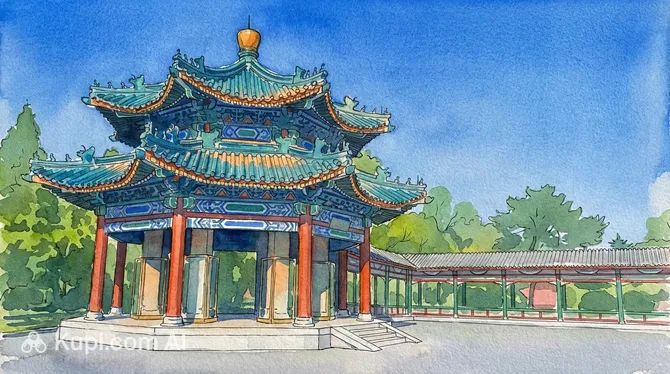
Lanting Tablet Pavilion. Illustration.
Source: Kupi.com AI

Traveler photos:

This elegant octagonal structure with a pointed roof finished in blue glazed tiles serves as a home for a unique stele. The pavilion's massive stone columns are engraved with lines from the "Preface to the Orchid Pavilion Collection," rendered by different authors in various calligraphic styles, turning the building into a kind of open-air stone library.

The site belongs to a rare type known as "pavilions of floating cups." Its interior is notable for a marble floor featuring an intricately carved stream-like groove, which was once used for traditional purification rituals and poetry competitions among the imperial nobility. Today, the pavilion remains an important symbol of the refined aesthetics and intellectual culture of ancient China.

Contacts

When planning your visit to the Lanting Tablet Pavilion, keep in mind that it is part of the vast Forbidden City museum complex. We highly recommend checking for the latest information and visiting rules directly before your trip, as access to specific halls may change due to ongoing restoration work or special events.

How to contactContact
AddressКитай, Bei Jing Shi, Dong Cheng Qu, Zhi Nv Qiao Dong He Yan, 故宫内 邮政编码: 100031

What to Do

A visit to the Lanting Tablet Pavilion offers a rare opportunity to experience the heights of Chinese visual arts. The main highlight here is contemplating the masterpieces of "Calligraphy from the Orchid Pavilion on Eight Columns." Be sure to look for the "Zuoshi Linliu" signboard ("Sitting on rocks, watching the stream"), inscribed by the hand of Emperor Hongli himself.

For travelers, this is an ideal place to take a moment away from the city's bustle and immerse themselves in the atmosphere of intellectual leisure enjoyed by the ancient aristocracy. You can recreate the old "floating cups" ritual in your imagination while looking at the winding marble groove on the floor, where poets once caught cups of wine and competed to compose verses.

The pavilion's architectural details are perfect for photography. The octagonal gazebo set against the backdrop of classic palace interiors allows for atmospheric shots that emphasize the harmony of stone, wood, and water. This location is especially recommended for those interested in the history of Chinese writing and traditional social games.

Getting There

The Lanting Tablet Pavilion is located at: Ji Nyuqiao Dong He Yan, Dongcheng District, Beijing, within the inner territory of the Forbidden City. The most convenient way to get here is by taking Metro Line 1 to "Tian'anmen East" or "Tian'anmen West" stations. After passing through the security checks at Tian'anmen Square, enter through the main palace gates and head north.

If you are arriving from Beijing Capital International Airport (PEK), take the Airport Express train to Dongzhimen station, then transfer to the metro toward the city center. A taxi ride from the airport to the entrance of the Palace Museum takes about an hour, depending on traffic. Additionally, bus routes 1, 2, and 82 run regularly toward the square.

Once inside the palace complex, follow the signs leading to the Imperial Gardens or the eastern pavilions. Using an audio guide can help you navigate the many buildings of the Forbidden City and find the site more quickly.

Nearest city: Beijing

History & Facts

The history of the Lanting Tablet Pavilion is closely tied to a legendary 4th-century event—a gathering of literati at the Orchid Pavilion, where the calligrapher Wang Xizhi composed his immortal "Preface." The Beijing version was originally built in 1727 within the Yuanmingyuan Gardens, and later, in 1779, the pavilion took on its current octagonal form. It became the embodiment of the ancient tradition of purification rituals, which evolved over time into sophisticated social pastimes.

Emperor Hongli (Qianlong) played a pivotal role in the destiny of this site. He not only personally approved the design of the pavilion but also adorned its columns with poems and inscriptions. The central stele was unique: one side depicted the famous "Meandering Stream Banquet," while the other featured poetic lines engraved by the Emperor himself, highlighting his status as a patron of the arts.

These "pavilions of floating cups" had a significant influence on the ritual and leisure culture of East Asia. The stone water channel, preserved to this day, is a direct descendant of rituals intended to ward off evil spirits, which were performed by emperors as early as the 3rd century AD. This structure symbolized the harmonious connection between the monarch, Heaven, and the Middle Kingdom through culture and poetry.

Time Needed

For a detailed viewing of the Lanting Tablet Pavilion, including its exquisite calligraphy on the columns and its unique architectural features, most tourists will need between 30 to 45 minutes. Despite its compact size, its wealth of historical detail and artistic significance warrants a thoughtful visit.

Since the pavilion is located deep within the Forbidden City, plan your time according to your overall tour of the palace complex, which typically takes between 3 to 5 hours. It is most convenient to include a visit to this specific pavilion as part of a route through the Imperial Gardens or the eastern zone of the Palace Museum.

Working Hours

Access to the Lanting Tablet Pavilion is available during the Forbidden City operating hours. During the peak season (April to October), the complex is open from 8:30 AM to 5:00 PM, with entry stopping at 4:00 PM. During the winter period (November to March), the doors close slightly earlier at 4:30 PM, and the last admission is at 3:45 PM.

Please note that the museum does not have days off, but the number of tickets is strictly limited by quotas. We strongly recommend booking tickets in advance through the official Palace Museum website, as the pavilion is located within a paid zone that requires prior registration.

Nearby

Its location in the very heart of the historical quarter makes the Lanting Tablet Pavilion an ideal starting point for exploring the main treasures of Beijing. Just a few steps away lies the majestic Forbidden City, whose halls and courtyards preserve the memory of two imperial dynasties.

Continuing your walk south, you will reach the monumental Meridian Gate (Wumen) and the famous Tian'anmen Square. Visiting these iconic landmarks in one day allows you to fully experience the grandeur of Chinese history and the massive scale of imperial power.

NameDistance
Tiananmen Square0.4 km
Tiananmen Square0.6 km
Meridian Gate0.6 km
The Palace Museum0.8 km
National Museum of China0.9 km
Forbidden City0.9 km
Wangfujing Pedestrian Street1.5 km

Reached the end of the page?

That means the route is fully explored