Support

The Ruins of Yuanmingyuan (Southeast Gate)

About

The Southeast Gate is one of the key entrances to the legendary Yuanmingyuan architectural and park complex, located in the Haidian District of northwest Beijing. Known worldwide as the "Old Summer Palace" or the "Gardens of Perfect Brightness," this site is a crucial historical monument in China, where nature and architecture are woven into a single whole.
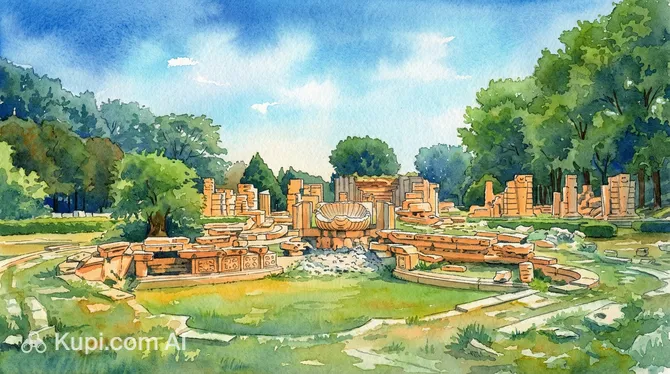
Old Summer Palace (Yuanmingyuan) - Southeast Gate. Illustration.
Source: Kupi.com AI

Traveler photos:

It was once a grand complex spanning 350 hectares that served as the residence for the emperors of the Qing Dynasty. Today, visitors come here to see the impressive ruins, among which the marble structures of the Western Palaces (Xiyanglou) are particularly prominent. These fragments of former grandeur, preserved amidst dense greenery, have become a symbol of the country's resilience and cultural wealth.

The park unites three gardens: Yuanmingyuan, Changchunyuan, and Qichunyuan. The uniqueness of this place lies in the blend of styles—traditional Chinese man-made lakes and islands coexist here with elements of European Baroque. Passing through the Southeast Gate, you enter an atmosphere of peace and contemplation, where pages of great history come to life among ancient trees and handcrafted landscapes.

Contacts

When planning a stroll to the Southeast Gate of the Old Summer Palace, it is worth remembering that it is part of a massive national park in Beijing. To ensure your journey goes smoothly, we recommend checking the current operating status of individual exhibitions on the official website or through popular travel services in advance.

Information about opening hours and the accessibility of certain areas may change depending on the season or ongoing restoration work, so a quick check before heading out will help you save time and better plan your route through China.

How to contactContact
Address2847+GWJ, Zhong Guan Cun Bei Da Jie, 圆明园 Hai Dian Qu, Bei Jing Shi, Китай, 100084

What to Do

Visiting the Southeast Gate opens the path to leisurely walks along picturesque trails, where every turn reveals a new view of the marble pavilion ruins. Be sure to reach the famous Twelve Zodiac Heads Fountain—it is one of the most photographed spots in the park. Here, you can spend hours studying the information plaques that help reconstruct the appearance of lost architectural masterpieces in your imagination.

For those seeking solitude, the park offers many quiet corners among lakes and islands, perfect for meditation or reading. In the shade of trees planted in the middle of the last century, you can often see people practicing yoga or sketching fragments of ancient columns from life. Outdoor enthusiasts can rent a bicycle and ride across the entire territory, observing local birds in the wooded areas.

Of particular interest is the symbolism of the "Nine Lands" on the islands—a reflection of ancient concepts regarding the structure of the world. To fully experience the scale of the imperial design, many tourists choose a route from the Southeast Gate to other entrances, such as the Zao Garden Gate. This allows you to see the full diversity of the landscape: from open water expanses to secluded gardens with remains of decorative walls.

Getting There

The Southeast Gate of the Yuanmingyuan ruins is located in the Haidian District at the following address: 2847+GWJ, Zhong Guan Cun Bei Da Jie. The most convenient way to get here from central Beijing is by metro: take Line 4 to Yuanmingyuan station. After leaving through Exit D, you will be a leisurely 10–15 minute walk from the park entrance.

For those who prefer surface transport, bus routes No. 318, 360, or 727 are suitable. You should get off at the "Yuanmingyuan Dongyuemeng" stop, from where you can reach the gate in 15 minutes by walking east. If you are traveling from the Forbidden City by taxi or via the Didi app, the trip will take about 30–40 minutes and cost approximately 30–50 yuan.

Since the attraction is located near the country's leading universities—Peking University and Tsinghua University—a visit here can be combined with a stroll through their picturesque campuses. To avoid heavy crowds, it is best to plan your visit for weekdays or early weekend mornings.

Nearest city: Beijing

History & Facts

The history of this site began in 1707 when the Kangxi Emperor of the Qing Dynasty ordered the creation of a garden on the site of Houhai Lake. The layout followed the canons of traditional Chinese landscape art: nine islands in the center symbolized the nine provinces of the Middle Kingdom. Later, in 1709, the park became the residence of his son, the Yongzheng Emperor.

The park's heyday occurred during the reign of the Qianlong Emperor. It was under his rule that the unique European-style Xiyanglou palaces were built on the grounds. Jesuits Giuseppe Castiglione and Michel Benoist worked on the design, successfully harmonizing marble pavilions and grand fountains with the classic Chinese landscape. Today, the Southeast Gate stands as a witness to the imperial grandeur that was created over the course of 150 years.

For five generations of emperors, Yuanmingyuan served not just as a place of rest, but as a true political center where important state decisions were made. By 1770, the three-garden structure was fully completed. The surviving ruins of the Western Palaces and the wall fragments near the entrance serve as reminders of the incredible strength of the marble structures of that era.

The modern era of the park began in the mid-20th century. Since 1951, the ruins have been under state protection, and in 1960, the site was officially included in the list of national monuments. Today, the territory of Yuanmingyuan is not only a historical monument but also a vast green space, restored thanks to large-scale landscaping efforts that began in the 1950s.

Time Needed

To explore the Southeast Gate and the adjacent fragments of ancient buildings, about 1 hour is sufficient for most travelers. However, considering the scale of the entire complex, we recommend setting aside at least 2–3 hours for your visit. This will give you enough time to stroll along the alleys to the Xiyanglou ruins and enjoy the tranquility of the local lakes.

If you plan a detailed exploration of all three gardens, including hiking trails and numerous photo stops by the surviving columns, it is better to budget 4–5 hours for the visit. Remember that the park territory is very vast—about 350 hectares—so comfortable shoes will be your best ally on this historical journey through Beijing.

Working Hours

The Old Summer Palace (Yuanmingyuan) welcomes guests daily, opening at 6:00 AM. During the spring and summer periods, the gates are open until 9:00 PM, though it is important to note that entry stops one hour before closing—at 8:00 PM. Depending on the season, the schedule may shift slightly, so it is helpful to check the information board at the entrance before your trip to Beijing.

The entrance ticket price ranges from 10 to 30 yuan, making this national park accessible to everyone. An additional fee may be charged for visiting specific ruined areas, such as Xiyanglou. Given the vast territory, an early visit will allow you to enjoy the beauty of the Southeast Gate without the extra hustle and large groups of tourists.

Nearby

The Haidian District, where the gate is located, is considered the cradle of imperial garden architecture. A walk in these areas offers a unique opportunity to see the contrast between ancient ruins and the modern face of Beijing. Its proximity to the country's leading universities fills the atmosphere around the park with a special energy and vibrancy.

Just a few kilometers away lies the magnificent Summer Palace (Yiheyuan), which is often visited alongside the Old Summer Palace to compare the two styles of garden art. If you feel like trading historical settings for the architecture of the future, you can head to the Olympic sites, such as the famous Beijing National Stadium.

NameDistance
Old Summer Palace1.4 km
Summer Palace3.4 km
Beijing National Aquatics Center6.6 km
Chinese Ethnic Culture Park (North Gate)7.1 km
Beijing National Stadium7.1 km
Prince Gong Mansion9.9 km
Imperial College (Guozijian)10.7 km

Reached the end of the page?

That means the route is fully explored