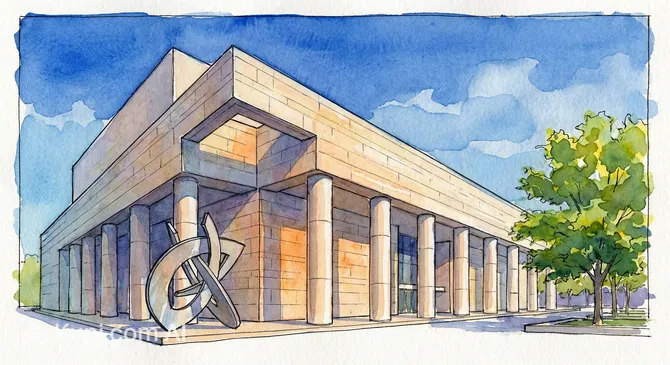
Tsinghua University Art Museum is a world-class modern cultural center located on the campus of one of China's most prestigious universities. Opened in 2016 in Beijing, it quickly became a significant destination for art lovers, combining academic depth with innovative exhibition solutions.
Tsinghua University Art Museum. Illustration.
Source: Kupi.com AI
Traveler photos:
The museum's collection is impressive in its scale: it houses more than 13,000 exhibits covering a wide range of artistic styles. The collection includes rare examples of ancient paintings, exquisite calligraphy, unique porcelain, antique furniture, and bronze pieces. A significant portion of the items came from the Academy of Arts & Design or was donated by university alumni, making the museum's holdings truly unique.
The museum building itself is an architectural landmark that harmoniously complements the campus landscape. It serves not just as a repository for artifacts, but also as a platform for international cultural exchange, where traditional Chinese heritage meets modern global trends through regular temporary exhibitions and collaborative projects.
Contacts
When planning a visit to the Tsinghua University Art Museum, we recommend checking the official website or calling in advance for the latest information. Since the museum is located on a secured campus, access rules may change periodically.
Before your trip, be sure to check for any special registration requirements for international tourists on specific dates to ensure your introduction to masterpieces of Chinese art is as comfortable as possible.
At the Tsinghua University Art Museum, visitors can take a true aesthetic journey through time. It is worth spending time exploring the permanent collections, which feature masterpieces of classical Chinese painting and porcelain. The halls with traditional furniture and textiles are of particular interest, allowing for a detailed look at the craftsmanship of artisans from past centuries.
In addition to contemplating antiquities, museum guests can visit temporary exhibitions often organized in collaboration with leading global galleries. After exploring the displays, be sure to take a stroll through the Tsinghua campus itself — it is a recognized cultural center of Beijing with a unique atmosphere, beautiful architecture, and cozy green spaces. Photography is usually allowed in the museum (without flash), allowing you to capture the most impressive artifacts for your personal collection of memories.
Getting There
The museum is located in the northwest of the capital, on the grounds of the famous university campus at 30 Shuangqing Road, Haidian District. The most convenient way to get here is by the Beijing Subway. The nearest stations are Tsinghua Garden (Line 4) or Culture University (Line 10). From the subway exit, it is a pleasant 10–15 minute walk through the campus to the museum building.
You can also reach the university by numerous buses (such as routes 320 or 436) to the "Tsinghua University" stop. Important rule: Since access to the university grounds is restricted, international guests must carry their original passport to pass through the security checkpoint. During rush hours, we recommend taking the subway, as traffic in this area can be quite heavy.
Nearest city: Beijing
History & Facts
The history of this cultural institution began long before the modern building was constructed. The museum's roots date back to 1926, when an archaeology exhibition hall was opened at the university. After decades of reorganization and the careful collection of relics, the Tsinghua University Museum of Cultural Relics was officially established in 1950, forming the foundation of today's extensive collection.
A new chapter in the museum's history began in 2012, when construction of a high-tech museum complex started thanks to the support of patrons and distinguished alumni. The work was completed in December 2015, and the grand opening for the general public took place on September 10, 2016. This event brought the university collection to a new level of international recognition.
Interestingly, a significant portion of the exhibits was transferred to the museum by the Academy of Arts & Design, and the collections continue to grow today. Currently, the museum is not only a repository for national heritage but also a living symbol of the continuity of generations of Beijing scholars and artists dedicated to preserving Chinese culture.
Time Needed
To explore the main halls of the Tsinghua University Art Museum at a relaxed pace, most visitors need about 2–3 hours. This is enough time to view the permanent collection and pay attention to the most interesting temporary exhibitions.
If you are a deep admirer of Oriental art, plan to study the details of every calligraphic work, or wish to combine your visit with a thorough walk around the campus, it is better to allow up to 4 hours for your visit. Remember that the intellectual atmosphere of this place encourages thoughtful and unhurried contemplation.
Working Hours
The museum doors are open to guests daily from 9:00 AM to 5:00 PM. Please note that entry for new visitors and ticket sales stop at 4:30 PM, so we recommend arriving early to ensure you have enough time to see all the halls.
The museum is closed on Mondays, except when public holidays fall on that day. To ensure your trip goes smoothly, it is worth checking the current schedule on the institution's official website before your visit.
Nearby
A visit to the museum can be perfectly combined with other iconic sights in the Haidian District, allowing for a full day in the northern part of Beijing. Nearby is the famous Yuanmingyuan Park, where the ruins of the Old Summer Palace rest among picturesque ponds and gardens, preserving the memory of the empire's former glory.
If you continue your route, be sure to visit the Summer Palace (Yiheyuan) — a masterpiece of Chinese landscape garden design located just a few kilometers away. This proximity allows travelers to see both the modern cultural achievements of the university and the great historical heritage of Imperial China in a single day.