Support

Yonghegong

About

The majestic Yonghe Temple, known worldwide as the Lama Temple, is the largest active Tibetan Buddhist monastery in Beijing. Founded in 1694 during the Qing dynasty, this unique complex is a magnificent example of the harmonious fusion of Chinese imperial architecture and Tibetan sacred traditions. Its name translates poetically as the "Palace of Peace and Harmony," perfectly reflecting the spiritual atmosphere within its walls.
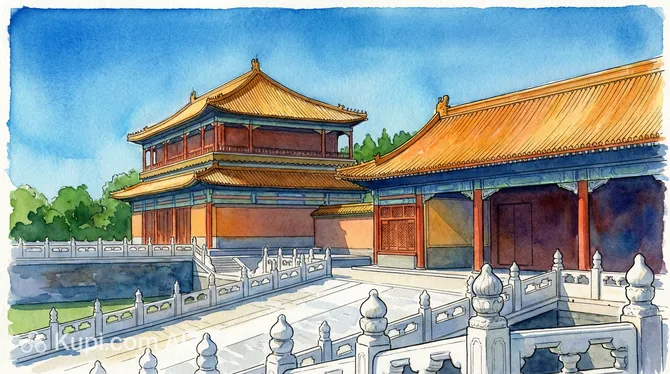
Yonghe Temple. Illustration.
Source: Kupi.com AI

Traveler photos:

Spanning over 46,000 square meters, the grounds feature exquisite pavilions with golden roofs. The yellow roof tiles signify that the monastery once enjoyed special patronage from the emperors of China. Today, Yonghe Temple remains a living spiritual center, where the scent of incense fills the air and the deep voices of monks chanting sutras resonate through the halls.

The temple's crowning jewel is the colossal 18-meter statue of the Maitreya Buddha. This world-class masterpiece, carved from a single trunk of white sandalwood, is listed in the Guinness World Records. In addition to the giant Buddha, visitors can admire rare thangka paintings, intricate embroideries, and bronze statues dating back centuries.

Contacts

To plan your visit to Yonghe Temple, we recommend checking the latest information in advance, as visiting rules and opening hours for the active monastery may change depending on religious holidays or internal events.

Below are the key contact details and links to help you clarify specifics before your journey to this spiritual heart of Beijing.

How to contactContact
AddressW9CX+7FQ, Дунчэн, Пекин, Китай, 100006
Websitewww.dpm.org.cn

What to Do

Your journey through Yonghe Temple begins with a walk through a series of halls, each more beautiful than the last. Be sure to visit the Hall of the Heavenly Kings and the former throne hall of the emperor — the Hall of Harmony and Peace. The path leads to the architectural peak of the ensemble: the Pavilion of Ten Thousand Happinesses, where the towering Maitreya Buddha statue stands, inspiring awe with its incredible scale.

Beyond the architecture, you can experience living traditions: watch lamas in their signature saffron robes performing ceremonies, turn the prayer wheels, or light incense sticks in one of the courtyards. Local shops offer authentic souvenirs, including prayer beads, deity figurines, and prayer flags blessed within the temple walls.

For photography enthusiasts, Yonghe Temple offers endless inspiration. The contrast between the vibrant red walls and golden tiles against Beijing's blue sky makes for perfect shots. To capture the monastery at its most mysterious and tranquil, try to arrive right at opening — the time when the morning light falls softly on the ancient statues.

Getting There

Yonghe Temple is located in the historic Dongcheng District. The fastest and most convenient way to get here is via the Beijing Subway. Take the train to Yonghegong station (the intersection of Lines 2 and 5) or Lama Temple station (Line 5). Upon exiting onto Yandai Xiejie Street, you will find yourself at the entrance to the temple complex after just a five-minute walk.

If you prefer surface transport, bus routes 13, 18, 116, and 684 serve the temple. A taxi or Didi ride from the city center, such as from Tiananmen Square, takes about 30 minutes, while the journey from Beijing International Airport takes 40 to 60 minutes, depending on traffic.

While parking is available near the complex, we advise visitors to the Chinese capital to use public transport. This avoids traffic jams and allows you to fully experience the atmosphere of the old Beijing hutongs surrounding the monastery.

Nearest city: Beijing

History & Facts

The history of the majestic Yonghe Temple complex began in 1694, when the Kangxi Emperor of the Qing dynasty ordered the construction of a residence for court eunuchs. Later, the building became the palace of his fourth son, Prince Yinzhen. When the prince ascended the throne as the Yongzheng Emperor in 1722, half of the palace was handed over to Tibetan monks of the Gelug school, while the other half remained imperial quarters.

A landmark turning point occurred in 1744 under the Qianlong Emperor, who officially granted Yonghe Temple the status of an imperial monastery. To signify this, the turquoise roof tiles were replaced with golden-yellow ones — a color that, by law, could only be used by the rulers of the Middle Kingdom. Since then, the temple has been the site of annual ancestor memorial ceremonies for the imperial family.

In 1774, the monastery solidified its role as the primary center of Tibetan Buddhism in inner China, hosting high lamas from Tibet and Mongolia. Remarkably, the temple survived the turbulent events of the 20th century almost unscathed. In 1981, Yonghe Temple was reopened to the public, and today, about 70 monks live and pray here, carefully preserving ancient traditions.

Time Needed

To explore all the pavilions and halls of Yonghe Temple at a leisurely pace, we recommend allowing 2–3 hours. About an hour is usually spent visiting the main shrines and unique statues, while the remaining time is perfect for strolling through the courtyards and observing the monks' daily rituals.

If your goal includes artistic photography or a deeper immersion in the peaceful atmosphere through meditation, consider adding another 30–40 minutes to your visit. Visiting in the morning will help you avoid the main tour groups and enjoy the silence of the monastery walls.

Working Hours

Yonghe Temple is open to visitors daily from 9:00 AM to 4:30 PM. Please note that ticket counters close and the last entry is at 4:00 PM. Traditionally, the temple is closed to visitors on Mondays, so plan your route accordingly.

During the peak tourist season (April to October), opening hours may be slightly extended. The entrance fee is approximately 25 RMB; audio guides are available for an additional fee to help you better understand the symbolism of Buddhist art.

Nearby

A visit to Yonghe Temple can be easily combined with other iconic Beijing landmarks, as the monastery is located in the heart of the capital's cultural belt. Exploring the surrounding area will allow you to deeper experience the imperial grandeur of the ancient city and discover its architectural treasures.

The legendary Forbidden City and the Palace Museum are very close by, housing the rich history of the Ming and Qing dynasties. Also within walking distance are the scenic Jingshan and Beihai parks, whose hills offer the best panoramic views of the old city's rooftops.

NameDistance
The Palace Museum0.5 km
Forbidden City0.5 km
Jingshan Park0.5 km
Meridian Gate0.8 km
Beihai Park1 km
Tiananmen Square1.3 km
Wangfujing Pedestrian Street1.5 km

Reached the end of the page?

That means the route is fully explored