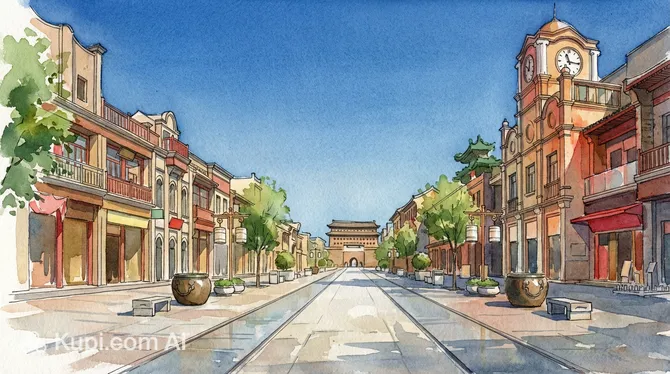
Zhengyangmen Gate, also widely known as Qianmen ("Front Gate"), is a majestic historical monument located in the heart of Beijing. Built during the Ming Dynasty, it served for centuries as the main southern gate of the Inner City and remains one of the most grand symbols of the capital of China today.
Zhengyangmen (Qianmen Gate). Illustration.
Source: Kupi.com AI
Traveler photos:
This architectural complex is unique in that it includes two monumental structures: the main gatehouse and a separate archery tower (Jianlou). Standing over 42 meters high, Zhengyangmen is the tallest among all the city's historical gates, impressing with its power and the clean lines of classical fortress architecture.
Situated on the city's famous Central Axis, the gate once served as the ceremonial entrance for emperors heading to the Temple of Heaven for rituals. Today, it is a popular attraction that allows travelers to touch the ancient traditions of Beijing and see a rare surviving fragment of the old city wall.
Contacts
When planning a visit to the Zhengyangmen Gate, it is recommended to check for current information in advance, as opening hours and access rules may change depending on the season or official events.
Since this is a significant national historical monument, the most accurate data can be obtained by phone or directly at the information stands near the site.
At Zhengyangmen, visitors can climb to the top of the tower, which offers one of the best panoramic views of Beijing's Central Axis. From this height, you can appreciate the scale of Tiananmen Square and see how historical buildings harmoniously sit alongside modern avenues.
Inside the complex, there are interesting exhibitions dedicated to the architecture of the old city and daily life during the imperial period. Here, you can examine ancient defensive mechanisms and learn about the significance of the rulers' ritual processions. Look out for the swift figurines under the tower roof—these birds are considered traditional inhabitants and symbolic protectors of the gate.
Right behind the gate begins the lively Qianmen Pedestrian Street. After exploring the towers, be sure to take a stroll there to visit historic teahouses, try traditional snacks, and buy souvenirs at shops, many of which have been operating here for over a century. It is the perfect place to experience the vibrant rhythm of old commercial Beijing.
Getting There
The Zhengyangmen Gate is located in the heart of Beijing, right at the southern tip of Tiananmen Square. The most convenient way to get here is by using the city's subway system. You need the Qianmen station (Lines 2 and 7), where the exits lead almost directly to the foot of the towers.
If you prefer a taxi, give the driver the name Qianmen or the address Qian Men Da Jie. A trip from central areas usually takes 10 to 20 minutes. Numerous buses also stop in this area, including routes 5, 8, and 17.
For those who enjoy walking, a great option is the route from the Forbidden City. The path along the straight Central Axis takes about 15–20 minutes, allowing you to see key monuments of the Chinese capital along the way. Keep in mind that parking in this area is very limited, so public transport remains the preferred choice.
Nearest city: Beijing
History & Facts
The history of the Zhengyangmen Gate began in 1419 during the reign of the Yongle Emperor of the Ming Dynasty. Originally built as the main southern gate of the Inner City, the ensemble was augmented in 1439 with a powerful archery tower. This gate was considered the most important among the city's nine gates: it was through here that imperial processions solemnly traveled to the Temple of Heaven to perform vital rituals.
Over the centuries, the structure has been rebuilt and restored several times. In the early 20th century, following damage from historical events, the archery tower underwent extensive repairs. Later, in 1915, the complex was partially reconstructed to adapt the urban space to Beijing's growing automobile traffic.
Remarkably, Zhengyangmen managed to survive in 1965 when most of Beijing's ancient city walls were demolished for road and subway construction. Today, this complex is one of the few surviving authentic fragments of the Ming-era defensive belt, serving as a living reminder of five centuries of Imperial China's history.
Time Needed
To fully explore the Zhengyangmen Gate and see the indoor exhibitions, it is recommended to set aside 1–2 hours. This is plenty of time to climb the tower, study the history of the city's fortifications, and take panoramic photos of the city center.
If you plan to combine your visit with a walk along the adjacent historical Qianmen Street and visits to nearby museums, you should allow at least 3–4 hours for this route. The morning is considered the best time to visit, as it allows you to avoid the largest crowds of tour groups.
Working Hours
An exterior view of the Zhengyangmen Gate is available 24/7, as it is part of the architectural ensemble of the city center. The towers and internal museum exhibits are typically open to visitors daily, though the exact schedule may vary by season.
As official working hours may change due to restoration work or holidays, visitors are advised to confirm details on-site or check current information on tourist maps before visiting.
Nearby
The area around the Zhengyangmen Gate is the cultural and historical core of the city, so exploring the surroundings will significantly enrich your experience. Just a few hundred meters away lies the legendary Tiananmen Square, as well as the National Museum of China, which houses unique treasures from ancient dynasties.
You can continue your walk toward the Forbidden City or head to the lively Wangfujing Pedestrian Street for shopping and culinary delights. Exploring this area allows you to see the contrast between grand imperial architecture and the dynamic rhythm of a modern metropolis.