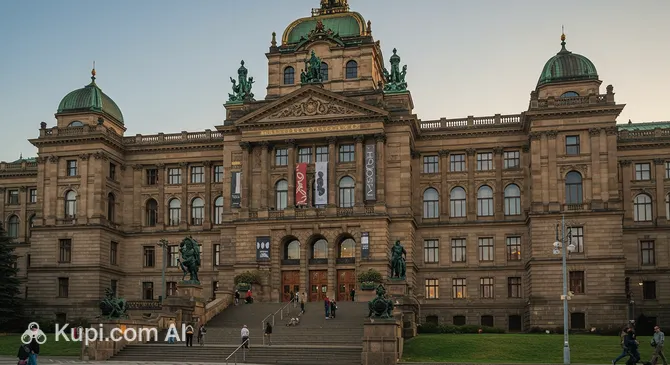
The National Museum (Czech: Národní muzeum) is not only the largest state museum in Prague but also a true symbol of Czechia's national pride and cultural heritage. Founded in the early 19th century, it is housed in a majestic Neo-Renaissance building that serves as the architectural centerpiece of the famous Wenceslas Square. The monumental structure, standing over 70 meters high with a facade nearly 100 meters long, immediately captures attention with its splendor and expressive central dome.
Traveler photos:
The museum's architecture is full of symbolism and deserves special attention. The main facade is decorated with a sculptural ramp, in the center of which sits Bohemia—the patroness of science and arts—on a throne. Next to her are allegorical figures representing the country's main rivers: a young girl as a symbol of the Vltava and an old man representing the Elbe (Labe). The composition is completed by allegories of the lands of Moravia and Silesia, which together reflect the unity of the Czech lands.
The interior is just as impressive as the exterior. A luxurious lobby and grand staircase lead to the Pantheon—a hall containing busts and statues of prominent figures in Czech history, science, and culture. The National Museum is not only a repository for priceless natural history and historical collections but is also a major historical and cultural landmark in its own right, a must-visit for anyone wishing to understand the soul of Czechia.