Support

Prague Astronomical Clock

About

The Prague Astronomical Clock, also known as the Prague Orloj (Pražský orloj), is a unique medieval tower clock located in the heart of Prague. It adorns the southern wall of the Old Town Hall tower on Old Town Square and is one of the hallmarks of the Czech Republic's capital. This clock is the third-oldest astronomical clock in the world and undoubtedly one of the most famous clockwork mechanisms ever created. Every hour, crowds of tourists gather here to see a small performance with moving figures.
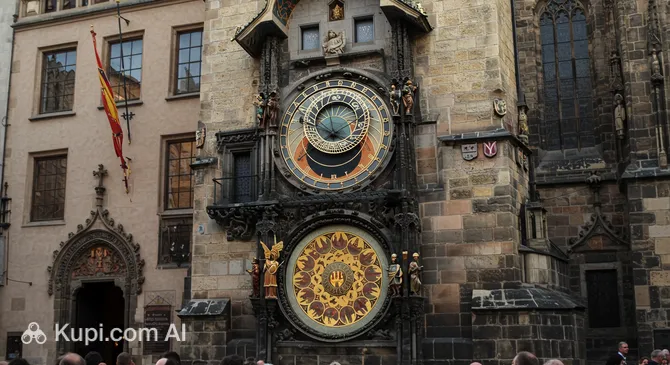
Prague Astronomical Clock. Illustration.
Source: Kupi.com AI

Traveler photos:

The design of the clock is strikingly complex and consists of several key parts. The main element is the astronomical dial, which shows not only the time but also the position of the Sun and Moon in the sky, their sunrise and sunset, and other astronomical data. Above it is a mechanism with moving figures of the apostles, and on the sides of the dial, you can see allegorical sculptures symbolizing human vices and virtues, such as Death depicted as a skeleton.

Besides its technical genius, the Prague Astronomical Clock is a true work of art. The decorative elements and sculptures were created by masters from the circle of the famous architect Peter Parler, whose hand touched such masterpieces as St. Vitus Cathedral and Charles Bridge. Thanks to this, the clock blends harmoniously into the Gothic appearance of old Prague and serves as a reminder of the city's rich history and cultural heritage.

Contacts

The Prague Astronomical Clock is part of the Old Town Hall and is located on its exterior wall, so it can be viewed completely freely and for free. To see the famous clock, you don't need to contact the administration or buy a ticket. Simply head to the Old Town Square in Prague, where you can watch the famous performance of moving figures every hour.

How to contactContact
AddressStaroměstské nám. 1, 110 00 Praha 1-Staré Město, Czechia
Phone number+420 236 002 629
Websitewww.prague.eu

What to Do

The main reason visitors gather at the Prague Astronomical Clock is the mesmerizing performance that takes place every hour from 9 AM to 11 PM. At that moment, the figures of the twelve apostles, led by Christ, appear alternately in two small windows above the astronomical dial. Simultaneously, other sculptures "come to life": Death in the form of a skeleton rings a bell, and the figure of Vanity looks into a mirror, serving as a reminder of human vices. This short but impressive medieval show is a signature of Prague and a must-see for every guest of the Czech Republic's capital.

In addition to watching the performance from the outside, you have the opportunity to climb the Old Town Hall tower to see the city from above. By purchasing a ticket, you can access the observation gallery located at a height of about 70 meters, offering breathtaking panoramic views of Old Town Square, the Church of Our Lady before Týn, and Prague Castle in the distance. Both a spacious ramp and a modern elevator lead to the top, making the climb accessible to everyone.

For the most curious travelers, the visit isn't limited to just the observation deck. As part of a tour of the town hall's historical halls, you can peek "behind the scenes" of the famous clock. From the Gothic chapel, there is a unique opportunity to see the mechanism of the apostolic procession from a close distance. Additionally, it's worth taking the time to study the dials themselves: the upper astronomical dial shows the positions of the Sun and Moon, while the lower calendar disk is decorated with medallions featuring signs of the zodiac and scenes from rural life, created by the Czech artist Josef Mánes.

Getting There

The Prague Astronomical Clock is located in the heart of Prague, on the famous Old Town Square (Staroměstské náměstí), making it easily accessible for all travelers. The most convenient way to get here by public transport is to take the metro to the Staroměstská station (Line A), which is just a 5–7 minute leisurely walk from the square. Additionally, tram routes passing through the city center stop nearby.

If you are already in the historical center, the best way to reach the clock is on foot. A stroll through the picturesque streets of the Old Town is an unforgettable part of your journey in itself. The square is located in close proximity to other iconic sites such as Charles Bridge and Wenceslas Square, so visiting the clock can easily be included in any tourist itinerary.

Nearest city: Prague

History & Facts

The history of the Prague Astronomical Clock is a fascinating tale dating back to the heart of the Middle Ages. The creation of this masterpiece began in 1410, when clockmaker Mikuláš of Kadaň and astronomy professor Jan Šindel from Charles University combined their talents. The commission for the clock came from the city council, which wanted to decorate the Old Town Hall tower with a mechanism representing the wealth and high status of Prague. Interestingly, the clock initially broke down frequently and required constant maintenance, but over time it was perfected. Today, it is not only the third-oldest astronomical clock in the world but also the oldest one still in working order.

The most famous and dramatic chapter in the clock's history is associated with the master Jan Růže, better known as Hanuš. In the late 15th century, it was he who took on the complex repair and improvement of the mechanism, adding the calendar dial and the first moving figure—Death. A dark legend is linked to his work: supposedly, the members of the Prague city council, fearing that Hanuš might create a similar clock for another city, ordered him to be blinded. According to legend, in revenge, the master managed to stop his masterpiece, and no one could repair it for the next century. Although historians debunk this legend, it has forever remained part of the mystical aura surrounding the Prague Orloj.

The fate of the clock is closely intertwined with the history of the Czech Republic itself. Over more than 600 years, it has survived many trials, including severe damage during the Prague Uprising in May 1945 when a shell hit the town hall. The wooden figures of the apostles and the calendar dial were burned, but thanks to the skillful work of restorers, the clock was restored in just three years. There is a belief that the stopping of the clock foreshadows misfortune for the Czech people, which underscores its symbolic significance. Remarkably, even today, the mechanism consists of about three-quarters original parts, making it not just a landmark but a genuine witness to centuries of history.

Time Needed

To get a quick overview of the Prague Astronomical Clock and watch the famous performance, it is usually enough to set aside 30 to 60 minutes. This time is sufficient to walk up to the Old Town Hall, wait for the top of the hour, watch the procession of the apostles, and examine the unique dials in detail from the outside. Many tourists arrive 10-15 minutes before the performance begins to secure a good viewing spot.

If you want a more in-depth experience, you should plan additional time to visit the Old Town Hall itself. An interior tour, which includes climbing the tower's observation deck and exploring the historical halls, can take another 1-2 hours. By heading to the top, you will be rewarded with magnificent panoramic views of Prague, and during the tour of the town hall, you can see the clock's complex mechanism from the inside.

Working Hours

Since the Prague Astronomical Clock is part of the Old Town Hall facade, you can admire it from the outside at any time of day or night, completely for free. However, the main event that draws crowds of spectators—the famous performance with moving figures of the apostles—takes place every hour from 9:00 AM to 11:00 PM. This short but memorable show can be seen year-round, making the clock one of the most accessible attractions in Prague.

No advance booking or ticket purchase is required to view the performance from the square. However, it is worth noting that during the shows, especially at noon and in the evening, large crowds gather in front of the town hall. If you want to avoid big tourist groups, it is best to visit the clock early in the morning or on a weekday. For those who wish to climb the town hall tower and see the mechanism from the inside, a ticket must be purchased on-site, and this can be done in advance to avoid queues.

DayOpening hours
Monday11:00 – 19:00
Tuesday10:00 – 19:00
Wednesday10:00 – 19:00
Thursday10:00 – 19:00
Friday10:00 – 19:00
Saturday10:00 – 19:00
Sunday10:00 – 19:00

Nearby

Visiting such an iconic landmark as the Prague Astronomical Clock is just the starting point for exploring the city. To truly feel the atmosphere of Prague, it's worth exploring its surroundings as well. The historical center of the Czech Republic's capital is so full of interesting places that a new discovery awaits you around literally every corner.

A walk around the area surrounding the clock will allow you to dive deeper into the city's history and culture. Just a few minutes' walk away are other famous squares, ancient buildings, and colorful markets that will complement your impressions and make your journey even more fulfilling. For example, the clock complex itself is part of the Old Town Hall, located on the square of the same name, which is packed with attractions.

NameDistance
Thrill Park Prague0.3 km
Klementinum0.3 km
Four Seasons Hotel Prague0.4 km
Powder Tower0.5 km
Old Town Bridge Tower0.5 km
Sad Man's Tongue Bar & Bistro0.5 km
Naše maso0.6 km

Have you reached the end of the page?

So the route has been studied inside and out