Support

Désert Jean-Jacques Rousseau

About

Tucked away in the foothills of the Alps, in the commune of Seyssinet-Pariset, lies a remarkable natural area—Jean-Jacques Rousseau’s Desert (Le Désert de Jean-Jacques Rousseau). This picturesque spot near the city of Grenoble is an open space where forest massifs meet the rolling landscapes of Upper Isère. The site is highly popular with those seeking solitude and wishing to enjoy the beauty that France offers in its less touristy, yet deeply significant locations.
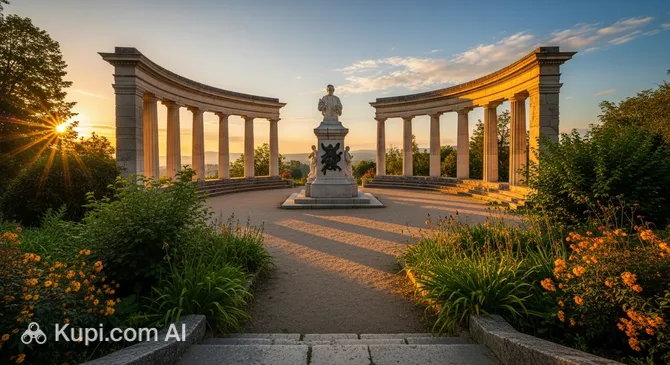
Jean-Jacques Rousseau Desert. Illustration.
Source: Kupi.com AI

Traveler photos:

The attraction earned its name in honor of the great Enlightenment philosopher, whose ideas regarding the harmony between man and nature are felt particularly strongly here. It is not a museum in the traditional sense, but rather a philosophical landscape that invites reflection amidst wild greenery and panoramic views of the surrounding mountain ranges.

The site holds a high rating among visitors due to its authenticity and accessibility. There is no complex infrastructure here, which allows the territory to be preserved in its pristine state, turning a walk into a true journey back in time to an era when secluded "deserts" were the favorite retreats of thinkers and poets.

Contacts

For those planning to visit this picturesque spot, information regarding the exact location will be helpful. Reaching the site is quite easy, as it is situated in close proximity to the city limits.

How to contactContact
Address115 Rte de Saint-Nizier, 38170 Seyssinet-Pariset, Франция

What to Do

The main reason to visit this place is for the hiking along its winding natural trails. The routes here are suitable for both seasoned hikers and families with children. As you ascend the slopes, you can find the perfect spots for photography—from here, breathtaking views of the Grenoble valley and Alpine peaks unfold.

Those who prefer a quieter pace will appreciate the chance to have a picnic in the shade of ancient trees or engage in meditation. The absence of city noise creates ideal conditions for bird watching and soaking in the silence. This space is perfectly designed for temporarily slowing down the rhythm of life.

Depending on the season, Jean-Jacques Rousseau’s Desert changes its appearance: in summer, it is a pleasant refuge from the heat under thick canopies, while in autumn, the slopes are painted in incredible golden and crimson tones. Every visit promises new visual impressions and a deep sense of connection with nature.

Getting There

Getting to this natural retreat from the city center is quite simple. By car, the drive along Rte de Saint-Nizier takes only about 10–15 minutes. For those who prefer navigating by coordinates, you can use 45.171692, 5.6731179. Visitor parking is available at the entrance.

If you are using public transport, choose bus routes heading to the commune of Seyssinet-Pariset, and then continue on foot, following the signs. Alternatively, you can always use taxi services from the city center for maximum comfort during your journey.

For active travelers, there are cycle paths leading from the city straight to the foothills. If you are arriving from Grenoble-Isère Airport, the drive via the A48 highway takes approximately 40 minutes.

Nearest city: Grenoble

History & Facts

The name of this place is a tribute to the great philosopher Jean-Jacques Rousseau (1712–1778), whose ideas about the "return to nature" and the natural state of man fundamentally changed European thought. Although historians have found no direct documentary evidence that the thinker spent time on these specific slopes, the atmosphere of the location perfectly captures his life philosophy.

In the 18th century, the term "desert" was used by intellectuals to describe secluded natural areas where one could escape the bustle of society for reflection. Rousseau frequently sought out such places, turning forests and hills into his open-air "study," as was the case with his famous Hermitage in Montmorency.

The space near Grenoble became a symbolic continuation of these traditions. It was chosen to immortalize the philosopher's name precisely because of its wild, untouched beauty, which inspired Rousseau's contemporaries to seek harmony between humanity and the world around them. Today, this site remains a living monument to the Age of Enlightenment.

Time Needed

Typically, travelers need 1 to 2 hours to explore this natural area. This is sufficient time to leisurely stroll along the main paths and enjoy the panoramic views of the valley and mountains.

However, if you plan to have an outdoor picnic or wish to engage in quiet meditation, it is worth setting aside half a day. The secluded atmosphere invites long contemplation, so many visitors prefer not to rush, fully immersing themselves in the tranquility of the setting.

Working Hours

The attraction is open to visitors daily and 24 hours a day. This allows travelers to plan a walk for early morning to catch the sunrise in the mountains, or for the evening hours when the city below begins to sparkle with lights.

As the site is an open natural area, there are no specific ticket offices or checkpoints. However, it is recommended to check the official regional website or consult the local tourist office before your trip, as access to the trails may be limited during extreme weather conditions.

Open 24 hours

Nearby

Exploring the surrounding area after your nature walk will help make your day even more fulfilling and interesting. Within a radius of several kilometers, you will find both historical sites and places for active family recreation.

NameDistance
Ruins of the Tour Sans Venin0.4 km
Champs-Élysées Park2.7 km
Pirate Challenges Grenoble2.8 km
La Belle Électrique3 km
VIP Restaurant Brasserie3.2 km
La Girafe3.9 km
Caserne de Bonne4.1 km

Reached the end of the page?

That means the route is fully explored