Support

Musée de l'Ancien Évêché

About

In the heart of the historical quarter, where legends of the past come to life, lies the Old Bishop's Palace Museum (Musée de l'Ancien Évêché). This unique cultural complex, located in Grenoble, occupies the building of the former residence of the bishops, which itself is recognized as an important historical monument. Here, in the modern-day country of France, antiquity meets the Middle Ages, offering guests a true journey through time.
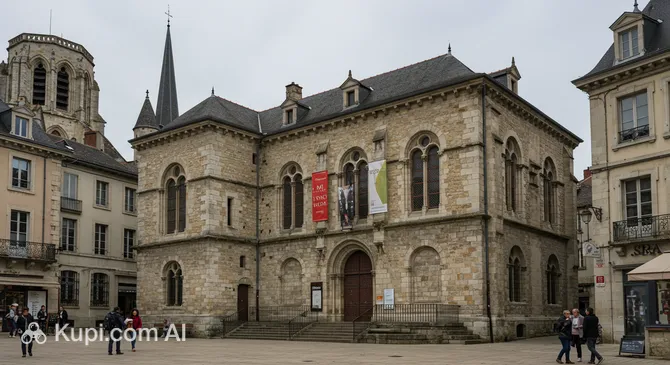
Museum of the Old Bishop
Museum of the Old Bishop's Palace. Иллюстрация. Источник: Kupi.com AI

One of the museum's main gems is the rare 4th-century baptistery—one of the oldest Christian sites in Europe, discovered during archaeological excavations. Descending into the vaulted underground crypts, visitors can see ancient walls dating back to the 3rd century, which served as the foundation for the later 13th-century structures.

The museum's exposition masterfully combines archaeological artifacts, items of religious art, and historical interiors. This place is perfect for those who want to understand how the city developed from Roman rule to the present day and feel the authentic spirit of the old Dauphiné region.

Contacts

For further details before your visit, you can contact the museum administration using the details below. The staff are always ready to help with information about current exhibitions or special events.

How to contactContact
Address2 Rue Très Cloîtres, 38000 Grenoble, France
Phone+33 4 76 03 15 25
Websitemusees.isere.fr

What to Do

A visit to the museum begins with an immersion into the depths of history—literally. The main thing to do is descend into the archaeological crypts to see the ancient baptistery and the remains of Roman fortifications. Strolling through the vaulted halls of the bishop's residence, you can examine antique household items, elegant religious relics, and unique artifacts found during excavations around the city.

For architecture lovers, the 13th-century building itself is of particular interest. Here you can study the craftsmanship of medieval builders in detail and see how the tastes of the nobility and clergy changed over the centuries. Don't forget to stop by the temporary exhibition halls, which often feature contemporary art projects or themed historical collections.

If you have come with your family, pay attention to the interactive zones. The museum offers special programs and activities for children that introduce young explorers to archaeology in a playful way. After viewing the exhibition, it's pleasant to step out into the quiet inner garden, which offers a sense of peace and privacy in the very center of the bustling city.

Photography enthusiasts should definitely capture the elegant architecture of the palace and the atmospheric interiors of the bishop's apartments. Thanks to its proximity to the cathedral, a visit to the museum can easily be turned into a rich cultural route through the most significant sites of the old city.

Getting There

The museum is located at 2 Rue Très Cloîtres, in the very heart of the historical center, in close proximity to the Cathedral of Saint-André. Thanks to the compact nature of the old quarters, it is easily reachable on foot from popular squares like Place Saint-André or Place de la Gare.

If you prefer public transport, use tram lines A, B, or C. The nearest stops are within a 5–10 minute walk of the museum. For those arriving from other regions, the journey from the Grenoble Gare railway station takes very little time, and the trip from Grenoble-Isère Airport by bus or train to the city center takes about an hour.

For travelers by car, please note that the museum is located in a limited traffic zone. It is recommended to leave your car in one of the parking lots on the outskirts of the center and enjoy a walk through the picturesque streets. A taxi from the central districts will bring you almost to the entrance in just a few minutes.

Ближайший город: Grenoble

History & Facts

The building that houses the exhibition today is a valuable exhibit in itself. The former bishop's residence was built in the 13th century, but its roots go much deeper—the foundations of the structure date back to the 3rd century. For centuries, this site served as the spiritual and administrative center of the region, reflecting the settlement's transformation from a Roman fortress into a medieval city.

An interesting fact: it was in these very halls in 1798 that the famous Museum of Grenoble was born. Founded by Louis-Joseph Jay, it initially occupied rooms on the ground floor of the bishopric. By the time of its grand opening in 1800, the collection included nearly 300 works of art, which later moved to a separate building, leaving the palace with its own rich history.

Archaeological studies of the site revealed that during the early Christian era, a 4th-century baptistery stood here. This structure is considered one of the oldest of its kind in Europe and has miraculously survived to this day. Later, in the Middle Ages, a Franciscan monastery flourished nearby, eventually becoming part of the urban fabric.

Over the centuries, the appearance of the palace changed: walls were reinforced, halls were rebuilt, but its eastern part has retained authentic 19th-century features. A visit to the museum is an opportunity to see, layer by layer, how the history of the Dauphiné region was created, from ancient times to the period of the height of episcopal power.

Time Needed

To leisurely explore the main archaeological finds and soak in the atmosphere of the ancient halls, it usually takes between 1 and 2 hours. This is quite enough time to get acquainted with the permanent exhibition and see the famous baptistery.

If you plan to visit the temporary exhibitions, spend time in the cozy garden, or are traveling with children who might enjoy the interactive elements, it's better to budget about 2.5 hours. The museum encourages thoughtful contemplation, so there is no need to rush.

Working Hours

The museum's doors are open to visitors throughout the week, though the schedule varies depending on the day. On weekdays (except Wednesday) and on Friday, the museum is open from 9:00 AM to 6:00 PM. On Wednesdays, visiting is only possible in the afternoon—from 1:00 PM to 6:00 PM.

On weekends, Saturday and Sunday, the museum welcomes guests from 11:00 AM to 6:00 PM. This schedule makes it easy to plan a visit whether as part of a business trip or during a leisurely tourist weekend.

DayWorking hours
Понедельник9:00 – 18:00
Вторник9:00 – 18:00
Среда1:00 – 18:00
Четверг9:00 – 18:00
Пятница9:00 – 18:00
Суббота11:00 – 18:00
Воскресенье11:00 – 18:00

Nearby

Exploring the surroundings of the old bishopric is a wonderful way to gain a deeper feel for the atmosphere of the ancient city. The museum's location in the historical core allows you to easily combine your cultural program with walks to other iconic sites, each of which holds its own unique legends.

Within walking distance, you will find both monumental architectural monuments and modern entertainment centers, making this area ideal for tourists with a wide range of interests.

NameDistance
Grenoble Cathedral0.1 km
Grenoble Museum0.2 km
Lion Fountain0.4 km
Museum of the Resistance and Deportation of Isère0.4 km
Dauphinois Museum0.5 km
Saint-Laurent Archaeological Museum0.5 km
Grenoble-Bastille Cable Car0.5 km

Reached the end of the page?

That means the route is fully explored