Support

Téléphérique Grenoble - Bastille

About

Floating over the Isère River, the transparent spheres have become a true symbol of how France masterfully combines history with futuristic design. This unique cable car connects the bustling center of Grenoble with the rugged and majestic Bastille fortress, rising 476 meters above sea level.
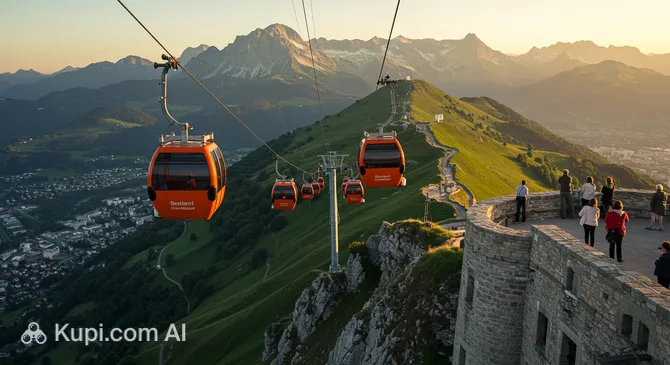
Grenoble-Bastille Cable Car
Grenoble-Bastille Cable Car. Иллюстрация. Источник: Kupi.com AI

Opened in 1934, it holds the status of one of the oldest urban cable cars in Europe. The modern cabins, affectionately called "Les Bulles" (the bubbles) by locals, allow passengers to literally soar over the city's rooftops in 3.5 minutes while admiring the Alpine panorama. It is not just transportation, but a full-fledged attraction that delivers unforgettable emotions from the very first seconds of movement.

The route's destination—the Bastille fortress—is a powerful 19th-century fortification ensemble. Monumental walls, deep casemates, and bastions are harmoniously integrated into the rocky landscape, creating the perfect place for walks and discovering the region's military past. Today, it is the main observation deck, offering a bird's-eye view of the entire city.

Contacts

To plan your visit to one of the city's main landmarks, it is worth saving the necessary details in advance. Official representatives are always ready to answer tourist questions, and up-to-date information on special events can be found on their website.

Below are the main contact details to help you find your way and get in touch with the site management.

How to contactContact
Address3 Quai Stéphane Jay, 38000 Grenoble, France
Phone+33 4 76 44 33 65
Websitebastille-grenoble.fr

What to Do

The main adventure begins while you are still in the boarding queue, as the famous "bubble" cabins glide above you. Keep your camera ready during the ascent: the transparent walls provide a 360-degree view, revealing the bends of the Isère River and the snow-capped peaks of the surrounding mountains. This is one of the most photogenic moments of the entire trip.

Once at the top, it is worth taking the time to explore the defense complex in detail. You can wander freely through the bastions, peer into the cool casemates, and imagine artillerymen of past centuries on duty here. Information boards are available for curious visitors, detailing the fortress's layout and its role in border protection.

Outdoor enthusiasts will enjoy the hiking trails branching out from the fortress. You can walk back down, enjoying the fresh Alpine air, or simply relax in one of the local cafes. The terraces offer a great chance to enjoy a cup of coffee while watching the city lights flicker on below as evening falls.

Getting There

The lower station of this famous transport system is located in the heart of the city at 3 Quai Stéphane Jay. Finding it is easy—it is situated right on the picturesque embankment of the Isère River. You can reach it on foot from the city center in about 5–10 minutes or take a city bus to the stops near the bridge.

The ride to the top takes just 3.5 minutes and is the fastest and most impressive way to reach the fortress. If you prefer active recreation, you can use the winding hiking trails that lead up from the foot of the hill. Such an ascent takes about 30–45 minutes and allows you to enjoy nature at a more relaxed pace.

For those traveling by car, there are parking spaces near the embankment, although they can fill up quickly during peak season. You can also use a taxi from anywhere in the city by giving the driver the address of the lower station.

Ближайший город: Grenoble

History & Facts

The first defensive structures on this strategically important hill appeared as early as the late 16th century. After capturing the city, the military commander François de Bonne, Duke of Lesdiguières, ordered the construction of a fortress, which eventually became known as the Bastille. This name became firmly attached not only to the fortification itself but also to the entire Mount Rachais.

In the 19th century, the complex underwent a massive reconstruction under the leadership of General Haxo, whom contemporaries called the "Vauban of the 19th century." It was then that the fortress acquired its modern appearance, with powerful casemates and bastions cascading down toward the water. The site retained its military significance for a surprisingly long time—the Bastille was officially considered an active defensive point until 1940.

The history of the cable car itself began on September 29, 1934. It became the first urban cable car of its type in the world, initially carrying passengers in large 21-person cabins. The modern transparent "bubbles" that have become the city's symbol appeared much later, making the ascent even more futuristic and exciting.

Time Needed

To fully enjoy the views and explore the fortress fortifications, you will typically need 2 to 3 hours. The ride itself is lightning-fast, but time flies at the summit due to the abundance of observation decks and hidden corners of the fortress.

If you plan to not only explore the bastions but also relax in a cafe with a panoramic view or take a short walk along the mountain trails, it is better to set aside half a day. This will allow you to avoid rushing and capture great photos in different lighting, especially if your visit coincides with sunset.

Working Hours

The cable car schedule allows you to plan your visit for either the daytime or evening, which is especially valuable for fans of nighttime panoramas. On Mondays, the cabins start running later than usual—at 11:00 AM—and operate until 7:00 PM. On Sundays, the schedule is similar to the morning opening but also concludes at 7:00 PM.

From Tuesday to Saturday, the site operates on an extended schedule: the doors are open from 9:15 AM until midnight. This offers a unique opportunity to see the city in the light of the sunset and admire its nighttime illumination from a bird's-eye view.

DayWorking hours
Понедельник11:00 – 19:00
Вторник9:15 – 12:00
Среда9:15 – 12:00
Четверг9:15 – 12:00
Пятница9:15 – 12:00
Суббота9:15 – 12:00
Воскресенье9:15 – 19:00

Nearby

Visiting the fortress and riding the cable car is just one part of an interesting route through the historical center. Numerous sites are concentrated around the lower and upper stations, helping you dive deeper into the atmosphere of the region and uncover its secrets.

Exploring the surroundings will allow you to see ancient gates, elegant fountains, and museums located within walking distance. Below is a list of interesting sites nearby:

NameDistance
Jardin de Ville0.1 km
Dauphinois Museum0.2 km
Lion Fountain0.3 km
Porte de France0.5 km
Grenoble Museum0.5 km
Museum of the Old Bishop's Palace0.5 km
Grenoble Cathedral0.5 km

Reached the end of the page?

That means the route is fully explored