Support

Isartor

About

Isartor is one of Munich's three majestic city gates that have been perfectly preserved since the days of medieval fortifications. Located in the eastern part of the Old Town at the end of the busy Tal street, this gate once served as an important entrance to Munich—the capital of Bavaria and one of the key cities in Germany. It is named after the Isar River, which flows nearby, although the river itself is about 300 meters away.
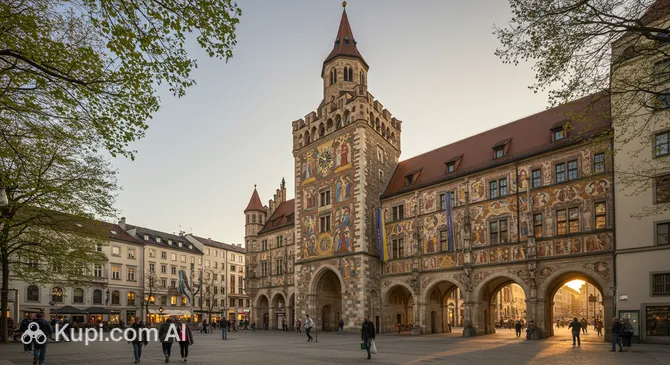
Isartor. Illustration.
Source: Kupi.com AI

Traveler photos:

The architectural ensemble of Isartor consists of a massive central tower, roughly 40 meters tall, flanked by two side towers added later to strengthen its defensive functions. These gates are a striking example of medieval fortification architecture and silent witnesses to the city's rich history.

Today, Isartor is more than just a historical monument. Its towers house a very original museum dedicated to the famous Bavarian comedian Karl Valentin and his partner Liesl Karlstadt—the Valentin-Karlstadt-Musäum. This site attracts lovers of humor and local culture. An interesting fact: the clocks decorating the central tower were originally intended for another gate, Karlstor, but were moved here in 1860 after Karlstor was damaged in an explosion.

Visiting Isartor allows you to touch Munich's past, imagine what the city looked like centuries ago, and enjoy the unique atmosphere of this historic corner. It is an excellent spot to begin or end a walk through the Old Town, offering both historical immersion and cultural entertainment.

Contacts

For the most up-to-date information on visiting Isartor, including the Karl Valentin Museum's opening hours and potential events, it is recommended to consult official sources. The main contact methods and information sources are listed in the table below:

How to contactContact
AddressTal 50, 80331 München, Germany
Phone number+49 89 223266
Websitewww.muenchen.de

What to Do

When visiting Isartor, you have a wonderful opportunity to immerse yourself in the medieval history of Munich. First and foremost, pay attention to the gate's architecture—it is a beautifully preserved example of defensive craftsmanship. Be sure to examine the impressive fresco decorating the archway. This large-scale work by artist Bernhard Neher, created in 1832, depicts the triumphal return of Emperor Ludwig IV the Bavarian to the city after his victory at the Battle of Mühldorf in 1322. It is a true work of art that tells the story of a significant moment in the city's history.

A visit to the Karl Valentin Museum (Valentin-Karlstadt-Musäum), located within the Isartor towers, is equally fascinating. This museum is dedicated to the famous Munich comedian, actor, and writer Karl Valentin and his stage partner Liesl Karlstadt. The museum's exhibits are full of humor and quirky items, offering a glimpse into the work of this iconic figure of Bavarian culture. This visit will add a touch of fun and local character to your exploration of Isartor.

In addition to the fresco and the museum, take a closer look at the details: you can see coats of arms on the flanking towers installed during the 19th-century reconstruction, and the central tower is adorned with historic clocks that appeared here in 1860. Walking around Isartor and through its archway is a small journey back in time in itself. The gate is an important part of any tourist route through Munich's Old Town and is easy to include in your walk, for example, on the way to the famous Deutsches Museum nearby.

Getting There

Isartor is conveniently located in the eastern part of Munich's Old Town, making it easily accessible on foot. If you are exploring the historic center, you will likely come across this majestic gate. It stands at the end of Tal street and serves as a prominent landmark on the main thoroughfare crossing the Old Town from west to east. Isartor is particularly easy to find if you are heading from the central squares of Munich toward the famous Deutsches Museum located nearby.

Reaching Isartor via public transport is also very simple. The most convenient way is to take the S-Bahn (suburban train). The "Isartor" station is located right by the gate. Almost all S-Bahn lines passing through the center of Munich stop here, providing excellent connections to any part of the city and its surroundings. This makes Isartor an easy stop on your itinerary.

A tram line used to pass through the gate itself; however, after the S-Bahn was built, the tram routes were redirected and now run nearby. Thus, in addition to the S-Bahn, there are bus stops and other public transport options within walking distance of Isartor. If you prefer to travel by taxi, the ride from central hotels or other Munich attractions to Isartor will be quick and comfortable.

Nearest city: Munich

History & Facts

Isartor, one of the gems of Munich's medieval architecture, has a rich history dating back to the 13th and 14th centuries. The construction of this gate began between 1285 and 1347, during the reign of Ludwig IV the Bavarian, as part of the second city wall. The main structure was completed in 1337. Originally, Isartor was an impressive 40-meter tower that served as a vital defensive point. It was only later, as the city's fortifications expanded and an outer ring wall was built, that two flanking towers were added to enhance its military significance.

At the beginning of the 19th century, the fate of Isartor hung in the balance. The Munich City Council decided to demolish the gate, along with the wall connecting the central tower to the side ones. However, thanks to the intervention of King Ludwig I, a lover of history and art, this plan never came to fruition. In 1833, the monarch commissioned the famous architect Friedrich von Gärtner to perform a large-scale reconstruction of Isartor, aiming to restore its original historical appearance. This decision preserved one of the symbols of old Munich for future generations.

The reconstruction led by von Gärtner not only restored the gate's grandeur but also added expressive new details. Coats of arms appeared on the side towers, and a famous historical fresco was added to the interior wall above the doorways. This mural depicts the triumphal procession of King Ludwig the Bavarian after his victory at the Battle of Mühldorf in 1322, serving as a reminder of glorious pages in German history. Another interesting fact is the story of the clocks on the central tower: they were installed in 1860 and were originally intended for another gate—Karlstor. However, after Karlstor was damaged by a gunpowder explosion, the clocks found their new home on Isartor, where they remain to this day.

Time Needed

When planning a visit to Isartor in Munich, consider how deeply you want to immerse yourself in its atmosphere. If your goal is a leisurely inspection of the gate itself—including studying the famous fresco—and a visit to the quirky Karl Valentin Museum located in the towers, you will need approximately 1-2 hours. This is enough time to appreciate the architecture, learn more about the famous Bavarian comedian, and feel the spirit of this historic site.

If you are short on time or if Isartor is just one of many stops on your Old Town itinerary, 15-30 minutes is sufficient for a quick exterior look and some photos. During this time, you can admire the power of the medieval fortifications and take in the details of the facade. Many tourists successfully include Isartor in a longer walk, such as heading from central Munich to the Deutsches Museum or simply exploring the historic streets.

Working Hours

Since Isartor is an outdoor architectural monument, its exterior can be admired at any time of day, year-round. Access to the gate itself as a historical structure is not limited by opening hours.

As for the Karl Valentin Museum (Valentin-Karlstadt-Musäum) located within the Isartor towers, it is highly recommended to check the museum's official website or the Munich tourism portal for current opening hours and whether advance ticket booking is necessary. Museums generally follow a specific schedule that may vary depending on the season or special events, so verifying this information before your visit will be very helpful.

DayOpening hours
Monday11:00 – 18:00
Tuesday11:00 – 18:00
WednesdayClosed
Thursday11:00 – 18:00
Friday11:00 – 18:00
Saturday11:00 – 18:00
Sunday10:00 – 18:00

Nearby

Exploring the area around Isartor can significantly enrich your visit to Munich. The ancient gate is an excellent starting point for discovering other iconic landmarks in this wonderful city. A walk through the nearby streets will allow you to dive deeper into the history and culture of the Bavarian capital, uncovering new and interesting corners.

There are many other attractions worth your attention in the immediate vicinity of Isartor. Below is a list of some of them, along with approximate distances, so you can easily plan your route.

NameDistance
Hofbräuhaus Munich0.3 km
Marienplatz0.5 km
Ratskeller Munich0.5 km
Deutsches Museum0.6 km
Boazn – Public Restroom Bar0.6 km
Munich Residenz0.8 km
Fünf Höfe0.8 km

Have you reached the end of the page?

So the route has been studied inside and out