Support

Nymphenburg Palace

About

Nymphenburg Palace (Schloss Nymphenburg) is a majestic Baroque palace and park ensemble located in the western part of Munich. As one of Germany's most famous landmarks, it is the former summer residence of the Bavarian Wittelsbach dynasty and is rightfully considered a true gem of the region.

This palace complex is one of the largest in Europe. Its construction began in 1664 by order of Elector Ferdinand Maria to celebrate the birth of the long-awaited heir to the throne. Today, the Nymphenburg grounds include not only the luxurious main building but also an extensive landscaped park with canals, lakes, and secluded pavilions, each of which is a standalone work of art.
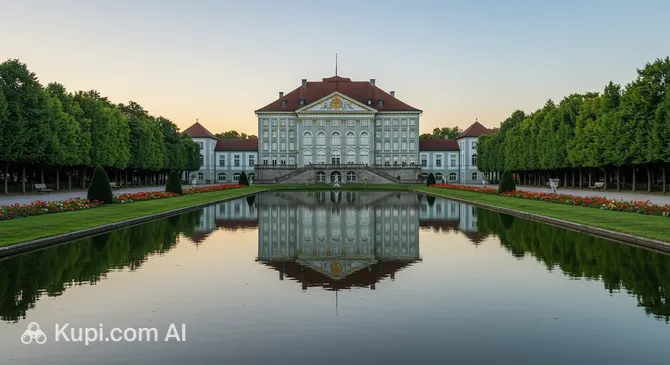
Nymphenburg Palace. Illustration.
Source: Kupi.com AI

Traveler photos:

The name of the palace, which translates as "Nymph's Castle", has a romantic origin. The residence was originally a gift from the Elector to his wife, Henriette Adelaide of Savoy, and was dedicated to the goddess of flowers, Flora, and her nymphs, giving the place a special, fairytale atmosphere. Inside the palace, visitors will find richly decorated halls, including the famous Gallery of Beauties, as well as several museums, including the Carriage Museum and the Nymphenburg Porcelain Museum.

Contacts

To plan your visit to Nymphenburg Palace, check opening hours, or get additional information, you can use the official contact details. All up-to-date information is available on the palace website and via the administration phone line.

How to contactContact
AddressSchloß Nymphenburg 1, 80638 München, Germany
Phone number+49 89 179080
Websitewww.schloss-nymphenburg.de

What to Do

A visit to Nymphenburg Palace is an opportunity to touch history and enjoy the art of several eras. Inside the main palace, you can explore the luxurious halls and apartments, designed in opulent Baroque and Rococo styles. The Great Hall deserves special attention; its interior has remained virtually unchanged since the mid-18th century and impresses with rich stucco and magnificent frescoes. In addition, several museums are located on the palace grounds, including the Carriage Museum and the Nymphenburg Porcelain Museum.

No less fascinating is a stroll through the extensive palace park, which is a true masterpiece of landscape art. Here you can walk for hours along picturesque canals and lakes where swans swim gracefully, or relax in the shade of century-old trees. The park harmoniously combines elements of a formal French garden and a more natural English landscape park, making it an ideal place for leisurely walks.

Many unique structures built in different eras are hidden throughout the park. Be sure to visit the elegant pavilions, each with its own purpose and unique appearance. These include the Amalienburg hunting lodge with its famous Hall of Mirrors, Badenburg, which served as a bathhouse complex with a heated pool, the "Chinese" Pagodenburg, and the secluded Magdalenenklause chapel, designed to look like a ruin.

Getting There

Getting to Nymphenburg Palace from the center of Munich is quite easy, as it is conveniently located in the western part of the city and well-connected by the public transport network. Whether you prefer the tram, subway, or taxi, the journey won't take long, allowing you to quickly immerse yourself in the atmosphere of Bavarian history.

The easiest and most direct way to reach the palace is by public transport. The most convenient option is Tram No. 17, which runs from the city center (for example, from Karlsplatz or the main station) directly to the "Schloss Nymphenburg" stop. The trip takes about 20–25 minutes, and you'll find yourself just a few steps from the main entrance. Alternatively, you can take the S-Bahn city train to the "Laim" station, and from there walk for about 20 minutes or take a short bus ride. Another route is to take the U-Bahn subway to the "Rotkreuzplatz" station, then transfer to a tram.

If you are traveling by car or prefer the comfort of a taxi, the ride from central Munich to Nymphenburg Palace will take only 10–15 minutes, depending on traffic. For visitors arriving by private transport, there is a spacious free parking lot near the palace complex with a capacity for about 450 cars, making this a very convenient option.

Nearest city: Munich

History & Facts

The history of Nymphenburg Palace began as a romantic gesture and gratitude for a long-awaited event. Its construction was commissioned in 1664 by the Elector of Bavaria, Ferdinand Maria, who presented the future palace as a gift to his wife, Henriette Adelaide of Savoy, to celebrate the birth of the heir to the throne, the future King Maximilian II. Initially, it was a rather modest Italian-style summer villa, designed by architect Agostino Barelli and completed by 1675.

With the rise to power of that very heir, Maximilian II, the modest country residence began to transform into a luxurious palace complex. Inspired by Versailles, the young ruler significantly expanded Nymphenburg, adding side wings and pavilions, while the facade was redesigned in the opulent French Baroque style. Renowned architects such as Enrico Zuccalli, Giovanni Antonio Viscardi, and Joseph Effner were involved in the expansion projects at various times.

Over the following decades, the palace was constantly expanded and changed, reflecting the tastes of five generations of rulers and the architectural trends of different eras; in particular, elegant Rococo elements were added to its appearance. Until the fall of the monarchy in 1918, Nymphenburg served as the main summer residence of the powerful Wittelsbach dynasty, which ruled Bavaria for centuries. It was here, in one of the palace rooms, that one of the most famous Bavarian monarchs—the "Fairytale King" Ludwig II—was born in 1845.

Time Needed

When planning a visit to Nymphenburg Palace, keep in mind that it is a vast complex, and the time needed to see it can vary greatly depending on your interests. For a brief introduction, including the main halls of the central palace such as the Great Hall and the famous Gallery of Beauties, you will need about 1.5–2 hours. This is enough to get a general impression of the splendor of the former summer residence of the Bavarian monarchs.

However, to truly appreciate the scale and beauty of Nymphenburg, it's worth dedicating at least half a day (about 4–5 hours). This will allow you not only to view the interiors of the main palace without rushing but also to walk through the extensive park, which is a work of art in itself. Additionally, unique pavilions are located within the park—Amalienburg, Badenburg, Pagodenburg, and Magdalenenklause—each of which deserves separate attention. The complex also houses the Carriage Museum (Marstallmuseum) and the Nymphenburg Porcelain Museum, for which you should also set aside extra time.

Working Hours

Nymphenburg Palace is open to visitors year-round, but its opening hours change depending on the season. During the summer period, from approximately April 1 to October 15, the palace and the museums on its grounds are usually open from 9:00 AM to 6:00 PM. In the winter season, from October 16 to March 31, visiting hours are reduced to 10:00 AM to 4:00 PM. It is worth noting that the park pavilions (Amalienburg, Badenburg, and others) are closed during the winter. The palace is closed on certain holidays, such as January 1, December 24, 25, and 31.

While advance ticket booking is not always mandatory, it is highly recommended to purchase them online, especially during peak tourist season, to avoid long queues. Last entry to the complex is 30 minutes before closing. Since opening hours and the availability of individual parts of the complex may change, it is always best to check the current information on the official Nymphenburg Palace website before your visit.

9:00 – 18:00

Nearby

After immersing yourself in the grandeur of Nymphenburg Palace, don't rush to leave this area of Munich. Exploring its surroundings will allow you to see the city from different perspectives and complete your trip's impressions. Just a few kilometers from the former royal residence, you'll find both quiet parks and modern entertainment venues that can add variety to your tourist itinerary.

Strolling through nearby attractions is a great way to continue getting to know the Bavarian capital. You can easily combine a historical tour with outdoor relaxation or a visit to sports arenas, getting the most out of your day. Below is a list of interesting places located near the palace.

NameDistance
Garden Arena3.1 km
Hotel Westend3.8 km
3D Blacklight Minigolf Munich3.9 km
Bavaria Statue4.4 km
BMW Welt4.5 km
BMW Museum4.6 km
Lenbachhaus4.7 km

Have you reached the end of the page?

So the route has been studied inside and out