Support

Archaeological Museum at the Roman Theatre

About

The Archaeological Museum at the Roman Theatre in Verona is a treasure trove of antiquities that immerses visitors in the rich history of this amazing city in Italy. Housed within the walls of the former Monastery of San Girolamo, on a scenic hill overlooking the Adige River and the majestic Roman Theatre, the museum is itself a part of the historical heritage.
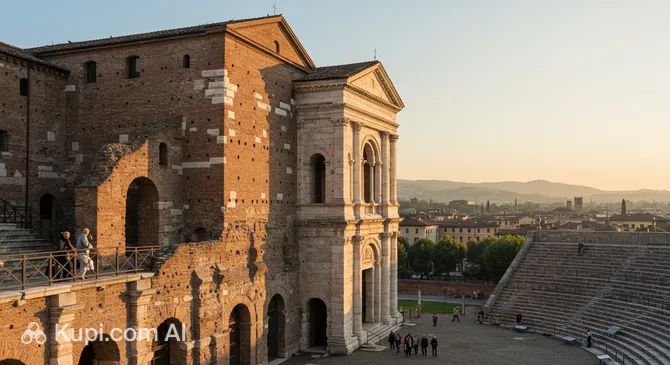
Archaeological Museum at the Roman Theatre. Illustration.
Source: Kupi.com AI

Traveler photos:

The museum's collections feature a unique assembly of artifacts found both in Verona itself and its surrounding areas. Here you can see ancient vases with stunning paintings, magnificent Roman mosaics that once adorned the villas of noble citizens, elegant bronze and marble sculptures, as well as everyday items made of glass and terracotta. Of particular interest are the epigraphic artifacts—ancient inscriptions telling stories of life and events of the past—and fragments of the ancient city's architectural structures.

One of the main features of the Archaeological Museum is its close connection with the Roman Theatre archaeological complex. This allows guests to not just look at exhibits in glass cases, but literally walk in the footsteps of ancient Romans, feeling the atmosphere of ancient Verona. A visit to the museum will be a fascinating journey through time for everyone interested in history and culture.

Contacts

To find the most up-to-date information on opening hours, ticket prices, and contact details for the Archaeological Museum at the Roman Theatre, it is recommended to visit its official website.

Additionally, useful information can often be found on Verona's tourism portals or by contacting local tourist information centers upon arrival in the city.

How to contactContact
AddressRigaste Redentore, 2, 37129 Verona VR, Italy
Phone number+39 045 800 0360
Websitemuseoarcheologico.comune.verona.it

What to Do

At the Archaeological Museum at the Roman Theatre, visitors can immerse themselves in ancient history by exploring extensive collections of artifacts. Here you can examine items from Roman, Etruscan, and Greek cultures in detail: tombstones and sacred inscriptions, fragments of ancient aqueducts, skillfully crafted oil lamps, funerary urns, and delicate figurines. Detailed models of famous Veronese monuments, such as the Arena di Verona, the Gavi Arch, and the Roman Theatre itself, are particularly captivating, helping you better imagine their original appearance.

A walk through the museum halls is also a journey through the rooms of the former monastery. Here you can admire well-preserved 15th–16th century frescoes, notably the "Annunciation" by Giovanni Francesco Caroto. This is a unique opportunity to see how historical layers intertwine in one place, creating a special atmosphere. Don't miss the chance to step out onto the panoramic terrace: from here, you'll get breathtaking views of Verona and the Adige River—the perfect spot for memorable photos.

In addition to exploring the permanent exhibition, the Archaeological Museum at the Roman Theatre often hosts various cultural events. The museum regularly holds temporary exhibitions that complement and expand on the themes of the main collections, as well as organizes interesting lectures. Thanks to this, every visit can be unique in its own way, attracting not only ancient history buffs but everyone interested in art and culture.

Getting There

Getting to the Archaeological Museum at the Roman Theatre in Verona is quite simple, as it is located on the scenic Castel San Pietro hill, in close proximity to the city's historical heart. If you prefer walking and are already in the center—for example, near the famous Piazza delle Erbe or the ancient Ponte Pietra bridge—you can easily reach the museum on foot. Just follow the signs for the Roman Theatre, and the picturesque path will lead you straight to your destination.

For those who prefer public transport, Verona offers convenient options. Several city bus routes pass near the museum, with the nearest stops just a few minutes' walk away. This makes the bus a comfortable and affordable way to reach the site, especially if you are staying in outlying areas or want to save your energy for exploring the exhibits.

If you are traveling by car, there are paid parking lots in the vicinity of the Archaeological Museum at the Roman Theatre. However, keep in mind that during the peak tourist season, the number of parking spaces may be limited. To avoid the hassle of finding a spot, it is recommended to consider alternative methods: use public transport or take a taxi, especially if you plan to visit during popular times.

Nearest city: Verona

History & Facts

The history of the Archaeological Museum at the Roman Theatre in Verona dates back to the 19th century. It was then, starting in 1857, that the city's first collections of archaeological finds began to take shape. Initially, they were carefully kept in Palazzo Pompei, but over time, as the collection grew, the need for a dedicated museum space arose. It is important to note that significant contributions to these early collections were made by dedicated private individuals, most notably Giovanni Fontana, Giacomo Verità, Girolamo Orti Manara, and Antonio Smania. Their enthusiasm and generosity laid the foundation for the future museum.

The official establishment of the Archaeological Museum as an independent institution took place in 1923–1924. The premises of the 15th-century former Monastery of San Girolamo, which picturesquely adjoins the ancient Roman Theatre, were chosen to house it. This site itself breathes history, creating a unique atmosphere for the exhibits. Thus, museum visitors have the opportunity not only to see ancient artifacts but also to experience medieval architecture.

The inseparable link between the museum and the Roman Theatre is one of its key features. The theater itself, which became one of Verona's major archaeological monuments, was discovered relatively late—during excavations in 1830. This happened when dilapidated buildings covering the ancient ruins were being demolished. The discovery of the theater was a true sensation and gave a powerful boost to archaeological research in the region, the results of which can be seen today in the museum's halls.

Time Needed

When planning a visit to the Archaeological Museum at the Roman Theatre in Verona, you should allow for about 1.5–2.5 hours. This amount of time is generally sufficient for a full exploration of both the museum's exhibits and the impressive ruins of the adjacent Roman Theatre.

During this period, you can leisurely view the main collections, including ancient artifacts, sculptures, and mosaics, as well as walk through the territory of the ancient theater, enjoying its atmosphere and city views. Of course, if you are a passionate fan of archaeology or history and wish to study every exhibit in detail or spend more time contemplating the ancient stones, your visit may take a bit longer.

Overall, this timeframe will allow you to gain a comprehensive understanding of this unique historical complex without feeling rushed. We recommend allocating this much time to ensure your immersion into Verona's history is comfortable and memorable.

Working Hours

The Archaeological Museum at the Roman Theatre in Verona is usually open to visitors, but exact opening hours may vary depending on the season and day of the week. Generally, cultural sites in Italy operate from morning until early evening, often with a closure on Mondays. To get the most up-to-date information on the schedule, ticket prices, and potential changes, it is highly recommended to visit the museum's official website or check with Verona's tourist information centers just before your visit.

Currently, we do not have specific information regarding the need for advance ticket booking. However, given the popularity of Verona and its attractions, especially during the tourist season, buying tickets online in advance or pre-booking can save you time and guarantee your visit. Check official resources for this information. Most major museums of this type are open year-round but may have reduced hours during the winter period or on national holidays.

DayOpening hours
MondayClosed
Tuesday10:00 – 18:00
Wednesday10:00 – 18:00
Thursday10:00 – 18:00
Friday10:00 – 18:00
Saturday10:00 – 18:00
Sunday10:00 – 18:00

Nearby

A visit to the Archaeological Museum at the Roman Theatre is a wonderful opportunity to experience the ancient history of Verona. However, to make your journey even richer and more complete, don't limit yourself to just one museum. Exploring the surrounding area will allow you to dive deeper into the atmosphere of this amazing Italian city and see how different eras intertwine in its streets.

The area around the Roman Theatre is the historical heart of Verona, and other iconic sites await you within a few minutes' walk of the Archaeological Museum. This allows you to easily create an interesting walking route, complementing your impressions of ancient artifacts with new discoveries. Below is a list of some attractions located nearby:

NameDistance
Castel San Pietro0.1 km
Ponte Pietra0.2 km
Castel San Pietro Funicular0.2 km
Basilica of Saint Anastasia0.3 km
Verona Cathedral0.4 km
Piazza dei Signori0.5 km
Palazzo Maffei House Museum0.5 km

Have you reached the end of the page?

So the route has been studied inside and out