Support

Castel San Pietro

About

Castel San Pietro is an iconic historical fortification majestically situated on San Pietro Hill in the beautiful city of Verona, Italy. The castle occupies a strategically advantageous position on the left bank of the Adige River, offering some of the most impressive panoramic views of the old town and the surrounding landscape from its heights. This site literally breathes history and attracts travelers with its special atmosphere.
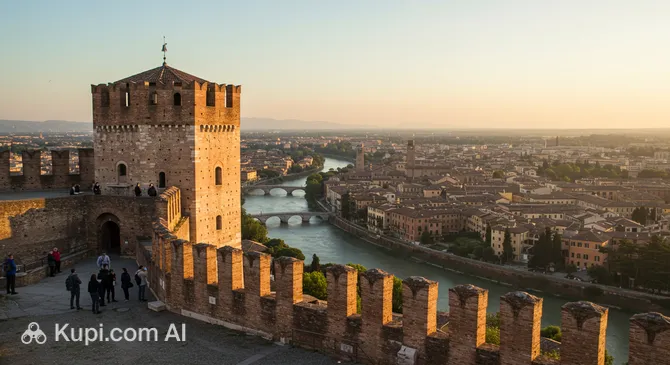
Castel San Pietro. Illustration.
Source: Kupi.com AI

Traveler photos:

The massive building that stands before visitors today is a former Austrian barracks-fortress. Its construction took place in the mid-19th century, specifically between 1852 and 1858, based on the design of the Austrian military engineer, Lieutenant Colonel Konrad Petrasch. The complex was designed as a powerful military base with barracks intended to house hundreds of soldiers, and its hilltop location provided ideal control over Verona and the river crossings.

A visit to Castel San Pietro is not just about seeing a landmark; it is a true immersion into the past. Here, you can not only appreciate the impressive 19th-century architecture but also enjoy unforgettable views that provide a perfect backdrop for your photos and leave lasting impressions of your trip to Verona. This site is a must-include on your itinerary to experience the spirit of the city from a bird's-eye view.

Contacts

Since Castel San Pietro is primarily a historical site and a popular observation point, specific contact details for visitors are not usually provided. You can reach the castle, located on San Pietro Hill, on foot while enjoying scenic views of Verona, or by taking the funicular. For the most up-to-date information regarding opening hours and access methods, we recommend consulting the official tourism resources of Verona or local tourist information centers.

How to contactContact
AddressCastel San Pietro, Piazzale Castel S. Pietro, 37129 Verona VR, Italy

What to Do

The main reason to climb up to Castel San Pietro is, without a doubt, its famous observation deck. From here, you can enjoy truly breath-taking panoramic views of all of Verona: the curves of the Adige River, the tiled roofs of the historical center, and the picturesque surroundings stretching to the horizon. It is the perfect place to take unforgettable photos to remember your trip or simply enjoy a moment of contemplating the beauty of the ancient city from above.

In addition to admiring the views, visitors can walk through the castle grounds and examine its external structures. Although access to the interior of the buildings may be limited, the walk around the hill and the fortress itself is a pleasure. An interesting addition to the experience is the opportunity to see the ruins of ancient structures dating back to the 7th century BC, which history and archaeology enthusiasts will particularly appreciate. You can reach Castel San Pietro in various ways: take a pleasant walk, ride a bicycle, or use the convenient funicular—each option offers its own unique experience on the way to the top.

Getting There

There are several ways to reach Castel San Pietro, located on a picturesque hill on the left bank of the Adige River in the district known as Veronetta. Each method offers its own unique experience, and the choice depends on your preferences, physical fitness, and the time of year.

The most romantic and perhaps most memorable route is a walk from the historical center of Verona. You will need to cross the Adige River via one of the ancient bridges, such as Ponte Pietra, and then begin your ascent up the hill. The path includes stairs and winding walkways. The climb may seem quite steep, especially on a hot day, but it rewards you with magnificent views of the city and the river that unfold as you go.

For those who prefer a more comfortable option, are traveling with children, or have limited mobility, the funicular (Funicolare di Castel San Pietro) is an excellent choice. It will take you to the top of the hill quickly and comfortably, and the ride in the glass cabin offers additional photographic perspectives and pleasant emotions. This is particularly convenient during the summer heat.

Another way to reach the castle is by bicycle. You can ride up the road that circles the hill, enjoying the fresh air and physical activity. Whichever method you choose, the views from the terrace of Castel San Pietro will be a worthy reward for your efforts.

Nearest city: Verona

History & Facts

The history of Castel San Pietro is rooted in antiquity. Archaeological finds indicate that the first settlements on San Pietro Hill, where the castle stands today, appeared as early as the Iron Age. During the Roman Empire, this site held special sacred significance and was known as "Rooster Hill" (Monte Gallo). It was here that the first sacred fortress was built to control the strategically important Via Postumia, which crossed the river, and the old part of the city. Research has even revealed the remains of an ancient Roman wall made of tuff, sand mortar, and gravel, located almost directly beneath the foundations of the current castle.

A later fortification, which preceded the current castle, stood on this hill for about four centuries. However, its fate was tragically interrupted in 1801 when French soldiers from Napoleon Bonaparte's army destroyed the fortress. This occurred in accordance with the terms of the Treaty of Lunéville between France and Austria, under which French troops were to vacate the left bank of the Adige River.

After the destruction of the old fortress, the hill remained deserted for some time. In 1840, the Austrians, who controlled Verona at the time, cleared away the remaining ruins. In 1851, they began constructing a new, much more powerful barracks-fortress, which has survived to this day and become one of the city's symbols. Construction was completed between 1856 and 1858, resulting in the Castel San Pietro we see today.

In the 20th century, the castle's history took a new turn. In 1932, the complex became the property of the municipality of Verona, although it was in a rather dilapidated state at the time. Later, in 2002, a plan was developed to restore the former Austrian barracks and preserve historical artifacts. The plans also included transforming Castel San Pietro into the headquarters of the City Museum, highlighting its enduring cultural and historical value for Verona and all of Italy.

Time Needed

To fully enjoy a visit to Castel San Pietro and its famous panoramic views of Verona, a typical visitor should set aside approximately 1-2 hours. This time is usually sufficient to ascend the hill—whether on foot, by funicular, or even by bicycle—explore the castle's exterior grounds, and, of course, spend time photographing the breathtaking landscapes from various angles of the observation deck.

Of course, the exact duration of your visit may vary depending on your preferences. If you choose a leisurely walk up the hill, stopping to enjoy every viewpoint along the way, it will take a bit longer than a quick funicular ride. Similarly, if you are a passionate photographer or simply want to linger longer to contemplate the terracotta rooftops of ancient Verona and the picturesque curves of the Adige River, feel free to add a little more time. Overall, Castel San Pietro is a place for slow enjoyment of atmosphere and beauty, so there is no need to rush.

Working Hours

The exact opening hours of Castel San Pietro itself, particularly regarding access to any interior spaces (if available to tourists), may vary. Generally, the observation deck on the hill is accessible throughout the day, and its "opening hours" often coincide with daylight hours, especially if you are ascending on foot. However, for the most up-to-date and accurate information regarding hours of operation, possible access restrictions, or the need for advance booking (for example, for the funicular or special tours), it is strongly recommended to consult Verona's official tourism resources or check on-site at tourist information centers.

The Castel San Pietro observation deck is typically accessible year-round, as the main interest lies in the panoramic view of the city. Nevertheless, the operating hours of the funicular that goes up the hill may change depending on the season. Therefore, when planning your visit, especially during the off-season, it is always best to clarify all the details in advance to ensure your visit is as comfortable as possible and leaves only pleasant impressions.

10:30 – 16:30

Nearby

A visit to Castel San Pietro is undoubtedly one of the highlights of any trip to Verona, but the charm of this historical site is not limited to the views from its summit. Exploring the castle's surroundings can significantly enrich your experience, allowing you to dive deeper into the atmosphere of the ancient city and discover other treasures hidden in its picturesque streets.

There are many interesting attractions in the immediate vicinity of San Pietro Hill, each telling the story of Verona in its own way. A leisurely stroll through this area will give you a more complete picture of the city's cultural and historical heritage. Below is a list of several notable places located near Castel San Pietro, along with their approximate distances.

NameDistance
Archaeological Museum at the Roman Theatre0.1 km
Ponte Pietra0.2 km
Castel San Pietro Funicular0.2 km
Basilica of Saint Anastasia0.4 km
Verona Cathedral0.5 km
Piazza dei Signori0.6 km
Piazza delle Erbe0.7 km

Have you reached the end of the page?

So the route has been studied inside and out