Support

Porta Leoni

About

Porta Leoni, which translates to "Lion Gate," is one of the oldest surviving city gates in Verona, Italy. This impressive archaeological site brings us the breath of Ancient Rome, as its history dates back to the Republican and Imperial eras. Porta Leoni is considered one of the most striking examples of Roman architecture in the city, allowing visitors to literally touch the past.
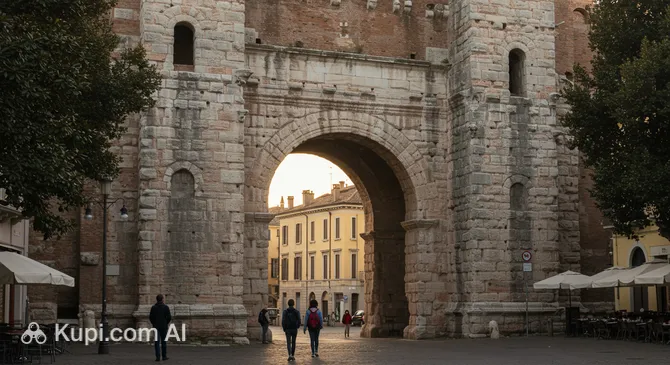
Porta Leoni. Illustration.
Source: Kupi.com AI

Traveler photos:

Originally, the gate was part of the city's defensive system. Built of marble and brick, it demonstrates a structure typical of Roman fortifications. Impressive facades, an arched passage, and the remains of once-mighty defensive towers have been preserved to this day. Although time has left its mark, the grandeur and engineering skill of the ancient builders are still clearly visible.

Today, Porta Leoni is not just ruins, but a popular historical attraction in Verona. Tourists from all over the world come here to admire the ancient architecture and feel the atmosphere of the ancient city. Walking past these gates is an opportunity to imagine what Verona looked like many centuries ago and reflect on the rich history of this amazing place in Italy.

Contacts

Porta Leoni is an ancient Roman gate and an important historical monument in Verona. Since it is an open architectural site, no specific contact details are usually required to visit.

Located in the historic part of the city, the gate is easily accessible for viewing. You can reach Porta Leoni on foot while exploring the center of Verona, or by using local public transport serving the area.

How to contactContact
AddressVia Leoni, 37100 Verona VR, Italy
Phone number+39 333 219 9645
Websitewww.veronissima.com

What to Do

By visiting Porta Leoni, you can touch the ancient history of Verona. A well-preserved part of the ancient gate will stand before you, allowing for a detailed study of the features of Roman masonry. Pay attention to the surviving elements of the marble facade and fragments of the brick walls that once formed a powerful defensive structure. Near the gate, you can see the results of archaeological excavations, including the foundation of a circular defensive tower and remains of the ancient pavement once used by the residents of the ancient city.

Porta Leoni is a wonderful place to take atmospheric photos of historical ruins and observe the skillful architectural solutions of Roman engineers. As you walk through the surrounding area, you will find information plaques. They will help you better understand the history of this structure and imagine what these majestic gates and city walls looked like in ancient times. It is a unique opportunity to visualize the past and feel the connection of times.

Thanks to its location, Porta Leoni often becomes an important point on walking tours of Verona's historical center, making it easy to combine viewing them with visits to other iconic city monuments. It is not just ruins, but a living testament to the rich history of Italy, opening a window into the Roman Empire era right in the middle of modern city life.

Getting There

Getting to Porta Leoni in Verona is quite simple, as these ancient gates are located in the very heart of the city's historical center. If you are already exploring the sights of Verona, you can most likely reach Porta Leoni on foot. For example, from the famous Piazza delle Erbe or the majestic Verona Arena, the walk takes only a few minutes, as the distance is just a few hundred meters.

For those who prefer public transport, Verona offers a convenient network of city buses. You can take a bus to one of the stops located in the immediate vicinity of the historical center and walk a short distance to Porta Leoni. This is a great way to reach the gate from more distant parts of the city.

If you are traveling by car, it's worth noting that traffic in the central part of Verona may be restricted for private vehicles (ZTL zone). However, there are several paid parking lots near Porta Leoni where you can leave your car. It is recommended to check current information on restricted traffic zones and parking locations before your trip to avoid any unpleasant surprises.

Nearest city: Verona

History & Facts

Porta Leoni is one of the oldest gates in Verona, bearing witness to the city's rich history. Its construction dates back to the 1st century BC, during the Roman Republic. Initially, the gate was built of brick and tuff and had two facades: one facing the city and an outer one. It served the important function of being the main outpost on the road from Bologna and Aquileia, providing access to the Cardo Maximo, one of the central streets of Roman Verona.

In the 1st century AD, during the Imperial period, Porta Leoni underwent significant reconstruction. A new facade made of elegant white local marble was added to the old brick one, giving it a more monumental appearance. Interestingly, the gate received its current name much later, in the Middle Ages. It is associated with lion sculptures that decorated the tympanum of a tomb located nearby. Unfortunately, the original Roman name of this gate has not been preserved, leaving only guesses for historians and tourists.

Today, only the left part of the inner city facade with its characteristic arched passage remains of the once majestic structure. Despite this, Porta Leoni continues to impress with its antiquity. Archaeological excavations conducted at the site have yielded interesting discoveries: the foundation of a sixteen-sided defensive tower, once part of the gate's fortification system, was found, as well as elements of an ancient hydraulic system. Additionally, the gate adjoins a fragment of the city wall, which in turn is part of even older fortifications, telling the centuries-long defensive history of Verona.

Time Needed

When planning a visit to Porta Leoni in Verona, it's worth considering that this is an impressive but fairly compact historical site. For most visitors, seeing these ancient Roman gates will not take much time. Based on the experience of other travelers, exploring Porta Leoni usually takes from 15 to 30 minutes.

This time is generally sufficient to carefully examine the preserved archaeological remains, appreciate the craftsmanship of ancient builders, and take a few memorable photos. Porta Leoni is a fragment of the ancient city wall, and visiting it does not involve long tours or activities. It is rather a short but educational stop for those interested in the history of Italy and the Roman Empire.

Therefore, a visit to Porta Leoni can easily fit into even the busiest itinerary through Verona. It is a wonderful opportunity to touch antiquity without spending many hours and to get vivid impressions from one of the city's oldest monuments.

Working Hours

Porta Leoni in Verona is a unique archaeological site integrated directly into the city space. Since these are the ruins of an ancient gate located outdoors and as part of a street, they are available for viewing at any time of day, 24/7 and year-round. No special tickets or prior booking are required for a visit, as it is a public space.

You can freely walk up and examine the remains of Roman architecture while strolling through the city. This makes Porta Leoni an easily accessible attraction for anyone interested in the history of Italy and the ancient heritage of Verona.

Open 24 hours

Nearby

After seeing the majestic Porta Leoni, don't rush to leave this historic corner of Verona. Exploring the surrounding area will allow you to dive deeper into the city's atmosphere, discover hidden gems, and get a more complete picture of its rich heritage. Every street and square nearby can tell its own story, and local attractions will complement your experience by showing different sides of Verona.

There are many interesting places near Porta Leoni that deserve your attention. Below is a list of some of them, including distances, so you can easily plan your route.

NameDistance
Piazza delle Erbe0.3 km
Lamberti Tower0.3 km
Palazzo della Ragione0.3 km
Bagel Road0.3 km
Piazza dei Signori0.4 km
Romeo Ristorante, Bistrot & Cocktail Bar0.4 km
Palazzo Maffei House Museum0.4 km

Have you reached the end of the page?

So the route has been studied inside and out