Support

Aokigahara Forest

About

Aokigahara Forest is a remarkable natural wonder spreading at the foot of the majestic Mount Fuji in Japan, near the town of Fujikawaguchiko. This dense woodland covers an area of about 30 square kilometers and is famous for its extraordinary vegetation density. The trees here grow so close together that they form an almost solid green wall, while the unique soil, formed by hardened volcanic lava, gives the landscape a distinct, almost mystical appearance.
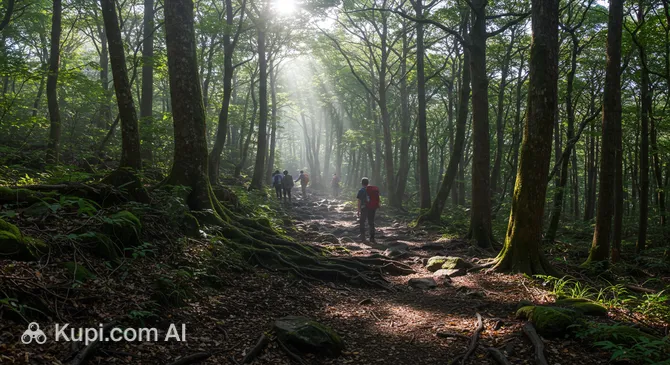
Aokigahara Forest. Illustration.
Source: Kupi.com AI

Traveler photos:

Aokigahara attracts travelers with its scenic trails, mysterious caves hidden in its depths, and unique atmosphere. As part of the Fuji-Hakone-Izu National Park, the forest offers visitors a chance to immerse themselves in pristine nature and enjoy a silence broken only by birdsong and the rustle of leaves. This place is ideal for those seeking solitude and unusual experiences.

For fans of hiking and ecotourism, Aokigahara is a real find. Established routes of varying difficulty levels allow you to explore the most interesting corners of the forest, offering breathtaking views and introducing the region's unique flora and fauna. Tours of the forest often include visits to the famous ice caves, which remain frozen even in summer, adding another highlight to the journey through this mysterious and alluring place.

Contacts

Aokigahara Forest is a vast natural site and does not have a single official contact center like a museum or office. To plan a visit, learn about available trails, rules of conduct, and possible tours, it is recommended to consult the official tourism portals of Yamanashi Prefecture or the town of Fujikawaguchiko. Up-to-date information can also be obtained at local tourist information centers upon arrival in the region.

Usually, the forest is reached by public transport or car from nearby settlements such as Fujikawaguchiko, following signs for the Fuji-Hakone-Izu National Park, of which the forest is a part.

How to contactContact
AddressNarusawa, Fujikawaguchiko, Minamitsuru District, Yamanashi 401-0300, Japan
Phone number+81 555-82-3111

What to Do

Aokigahara Forest, located at the foot of Mount Fuji, offers visitors a unique opportunity to immerse themselves in the world of wild nature. Despite its complex reputation, the forest attracts fans of hiking and natural beauty. Several official routes are laid out for tourists, allowing them to explore this dense and mysterious forest without losing their way. Walking the Aokigahara trails is a chance to see unusual landscapes formed by volcanic activity and enjoy the silence of untouched nature.

While walking through the forest, you can observe its unique flora and fauna. Trees here grow on hardened lava, their roots intricately intertwining on the surface, creating an almost fairytale-like atmosphere. The moss covering the stones and tree trunks gives the forest an emerald hue. You can encounter rare plant species here, and if you're lucky, some forest inhabitants such as foxes or snakes. The thick canopy of trees creates a dim light even on a sunny day, making the walk particularly atmospheric.

Natural caves located within Aokigahara are especially popular among visitors. The two most famous are the Ice Cave (Narusawa Hyoketsu) and the Wind Cave (Fugaku Fuketsu). These caves were formed as a result of volcanic activity and are open to the public. In the Ice Cave, you can see ice pillars and formations even in summer, while the Wind Cave is interesting for its lava tunnels. Both caves are equipped for safe viewing and offer an exciting journey into the underground world.

For photography enthusiasts, Aokigahara is a real treasure trove. The unusual textures of volcanic rock, the bizarre shapes of the trees, and the play of light and shadow in the thick thicket create countless opportunities for unique shots. Many tourists come here specifically to capture the mystical beauty of this ancient forest. Additionally, you can have a picnic in the forest, enjoying the fresh air and peaceful atmosphere, far from the city bustle.

Getting There

Getting to the Aokigahara Forest, located at the foot of Mount Fuji, is possible in several ways, depending on your starting point. If you are traveling from Tokyo, the most convenient option is a train ride to Kawaguchiko Station. This is a popular transport hub for tourists heading to the Fuji Five Lakes region. Upon arrival at Kawaguchiko Station, you will have several options to reach the forest entrance directly.

Buses run regularly from Kawaguchiko Station, passing by Aokigahara's main hiking trails and ice caves, such as the Wind Cave and the Ice Cave. This is the most common and affordable way for tourists who prefer public transport. The bus ride takes some time but allows you to enjoy the views of the surrounding area. Alternatively, you can take a taxi from the station, which is faster but more expensive.

For those traveling by car, reaching Aokigahara Forest is also straightforward. Parking lots are available along the edges of the forest and at the entrances to the main hiking routes. This is particularly convenient if you plan to explore more remote areas or combine a visit to the forest with other attractions in the Fuji-Hakone-Izu region, as Aokigahara is in close proximity to popular tourist routes around Mount Fuji.

Nearest city: Fujikawaguchiko

History & Facts

Aokigahara Forest, spreading at the foot of the majestic Mount Fuji volcano, is a relatively young natural formation. Its development began approximately 1,200 years ago following a significant volcanic eruption, whose lava flows created a unique terrain for the future forest. Notably, the last major eruption of Fuji in 1707 did not affect its northwestern slope with lava, allowing for the growth of the dense and sometimes impenetrable forest known today as Aokigahara.

Since ancient times, Aokigahara has been shrouded in many legends and mystical stories that hold an important place in Japanese culture. In medieval Japan, this forest was often associated with the world of spirits, ghosts, and various supernatural creatures. These beliefs, passed down through generations, contributed to a special, mysterious atmosphere surrounding the forest, making it a significant element of Japanese folklore.

Aokigahara's complex reputation was further shaped by an ancient, somber tradition known as "ubasute." In times of extreme hardship, when families were unable to feed their elderly or infirm relatives, some legends suggest they might have been left deep in the forest. While this practice was not widespread, it left a deep mark on folk memory and contributed to the special, sometimes haunting reputation of the place. Over time, the forest has acquired a unique symbolic meaning in the Japanese cultural consciousness, becoming a site with a rich and multifaceted history.

Time Needed

When planning a visit to the mysterious Aokigahara Forest, located at the foot of Mount Fuji in Fujikawaguchiko, it is important to budget your time correctly to fully enjoy its unique atmosphere. For a general introduction to the forest, walking along the main trails, and viewing the nearest natural beauty, 3 to 4 hours is usually enough. This will allow you to walk the marked routes at a leisurely pace and feel the special silence of this place.

However, if your plans include a deeper exploration of Aokigahara Forest—for example, visiting the famous ice caves such as the Wind Cave or the Narusawa Ice Cave, or if you want to follow one of the longer and less-traveled routes—much more time will be required. In this case, it is recommended to set aside half a day or even a full day for the excursion. This will provide the opportunity to explore the hidden corners of the forest without rushing and enjoy its natural wonders to the fullest.

Working Hours

Aokigahara Forest is open to visitors 24/7 year-round, allowing you to explore its mysterious trails at any time convenient for you. However, it's worth noting that some tourist facilities within the forest, such as caves or information centers, may have limited operating hours, typically from morning to evening.

Since the specific schedule for these facilities can change, it is highly recommended to check the current opening hours on the official regional tourism websites or directly on-site before your visit. Advance booking for walking in the forest itself is usually not required, but for visiting certain paid attractions within it, it may be useful to check the conditions beforehand.

Open 24 hours

Nearby

A visit to Aokigahara Forest is a profound experience in itself; however, the area around the town of Fujikawaguchiko offers many other interesting sites that can significantly enrich your trip. Exploring nearby attractions will allow you to dive deeper into the local culture, nature, and history of this unique region of Japan.

By setting aside time to discover what lies beyond Aokigahara Forest, you can turn a single visit into a more comprehensive and memorable adventure. This is a great opportunity to broaden your horizons and get the most out of your trip. Below is a list of some nearby attractions, along with their distances.

NameDistance
Saiko Iyashi-no-Sato Nenba3.8 km
Glamping Village Fuji Kawaguchiko4.5 km
Fujiten Snow Resort5.7 km
Fuji-Hakone-Izu National Park6.5 km
Asagiri Kogen Roadside Station8.1 km
Asagiri Food Park8.3 km
Kawaguchiko Motor Museum / Kawaguchiko Zero Fighter Museum9.4 km

Have you reached the end of the page?

So the route has been studied inside and out