Support

Hiroshima Peace Memorial Park

About

Hiroshima Peace Memorial Park is not just a landmark, but one of the most significant public spaces in Japan, dedicated to the memory of the victims of the 1945 atomic bombing and the promotion of peace. Located in the heart of the city, this memorial complex covers over 12 hectares on the site of the former Nakajima district. The architectural ensemble, created by the renowned architect Kenzo Tange, harmoniously blends elements of traditional Japanese and modern design, creating an atmosphere for quiet contemplation and reflection.
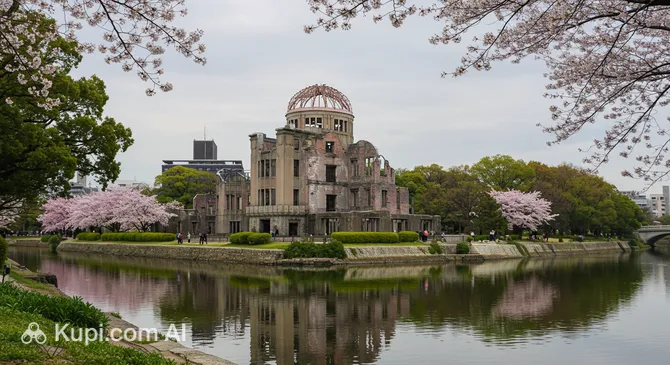
Hiroshima Peace Memorial Park. Illustration.
Source: Kupi.com AI

Traveler photos:

The park grounds feature several key monuments and sites, each carrying a profound meaning. It is home to the Peace Memorial Museum, which displays exhibits detailing the city's history and the aftermath of the tragedy. Also in the park are the Cenotaph—a symbolic tomb containing the names of all the victims—a ritual bell that every visitor can ring as a prayer for peace, and the Flame of Peace monument. This flame has burned continuously since 1964 and will only be extinguished once all nuclear weapons on the planet have been destroyed.

The central and most recognizable symbol of the park is the Atomic Bomb Dome (Genbaku Dome). It is one of the few buildings that survived at the hypocenter of the explosion and was intentionally preserved as ruins to serve as a powerful reminder of destructive force. In 1996, the Genbaku Dome was included in the UNESCO World Heritage List, highlighting its global significance as a monument calling for peace and the abolition of nuclear weapons. A visit to the park leaves a lasting impression and makes one reflect on the fragility of peace and the value of human life.

Contacts

For up-to-date information on opening hours and special events, or to contact the administration of the Peace Memorial Museum—the centerpiece of the park—you can use the official contact details. The quickest way to get answers to urgent questions is to call by phone.

How to contactContact
Address1 Nakajimacho, Naka Ward, Hiroshima, 730-0811, Japan
Phone number+81 82-504-2390
Websitewww.city.hiroshima.lg.jp

What to Do

Visiting the Peace Memorial Park in Hiroshima is primarily an opportunity for deep reflection and contemplation. Guests can stroll leisurely along the spacious, well-maintained paths, exploring numerous monuments and memorials. Each is dedicated to the memory of the victims and the promotion of world peace. The park's atmosphere encourages quiet thought, and its landscape design—combining greenery, water, and memorial structures—creates a sense of calm and solemnity. It is an ideal place to pause and reflect on the fragility of peace and the value of human life.

A central element for visitors is the Peace Memorial Museum. Here, you can study the city's history and the events of August 6, 1945, in detail. The exhibits include personal belongings of the victims, photographs, models of the city before and after the blast, and documentary evidence of the tragedy's consequences and the importance of peaceful coexistence. A visit to the museum leaves a strong emotional impression and helps in understanding the global significance of this site for all of Japan and the world.

Beyond the museum, the park has several iconic sites to interact with. You can approach the Cenotaph—a memorial arch that houses a list of the names of all who perished. Nearby burns the Flame of Peace, which is intended to burn until there are no nuclear weapons left on the planet. Additionally, every visitor can ring the ritual Peace Bell, whose sound echoes through the park as a prayer for eternal peace on Earth. These actions allow you to not just observe, but to personally participate in preserving memory and expressing hope.

Getting There

Peace Memorial Park is located in the very heart of Hiroshima, making it easily accessible from anywhere in the city. One of the most convenient ways to get here is by city tram. You should take the tram to the Genbaku Dome-mae (原爆ドーム前) stop, which is just a few minutes' leisurely walk from the park entrance. This route is especially convenient as it allows you to see the famous Genbaku Dome right away.

For travelers arriving in the city by train, Hiroshima Station will be your starting point. From there, you can either take public transport, such as a tram or bus, or enjoy a walk. The walk takes about 20–25 minutes and allows you to get better acquainted with the city center. Additionally, you can always reach the park from any district of Hiroshima by bus or taxi, which is a comfortable option for those who prefer not to use public transportation.

Nearest city: Hiroshima

History & Facts

The history of the Peace Memorial Park in Hiroshima is inextricably linked to the tragic events of August 6, 1945. The park was established on the site of the former Nakajima district, which was the political and commercial heart of the city and was completely destroyed as a result of the atomic bombing. After the war, the government of Japan made a landmark decision not just to restore this territory, but to declare Hiroshima a "City of Peace" and create a memorial complex to commemorate the victims and serve as a constant call for a peaceful future.

Construction of the park began in 1949, and its official opening took place in 1954. The project was designed by the prominent Japanese architect Kenzo Tange, whose concept harmoniously combined national traditions with modern ideas. The main architectural centerpiece is the Peace Memorial Museum, which, along with other sites like the Cenotaph and the Flame of Peace, forms a single thematic axis. Interestingly, citizens' opinions on preserving the ruins were initially divided: many wanted to erase the painful reminders of the past, but ultimately the decision was made to keep them as an eternal warning.

The most recognizable and poignant symbol of the park is the Genbaku Dome, also known as the Atomic Bomb Dome. These are the ruins of the former Industrial Promotion Hall, which partially survived despite being only 160 meters from the hypocenter. Everyone inside the building perished, but its frame stood firm. In 1966, the Hiroshima City Council officially resolved to preserve these ruins forever, and in 1996, the Genbaku Dome was added to the UNESCO World Heritage List, highlighting its global significance as a symbol of destructive power and hope for peace.

Time Needed

To fully experience the atmosphere of the Peace Memorial Park in Hiroshima and see its main sites, it is recommended to set aside at least 2–3 hours. This time is usually sufficient for a leisurely walk through the grounds, viewing key monuments such as the Genbaku Dome and the Cenotaph, and visiting the Peace Memorial Museum. This timeframe will allow you to form a broad yet deep impression of the site's significance.

If you plan to delve deeper into the history and explore the museum's exhibits without rushing, you should allow up to half a day for your visit. The extra time will let you carefully examine the documentary evidence and personal stories presented in the museum, sit in silence by the Flame of Peace, or simply reflect in one of the park's more secluded areas. This is especially important for those who want to not just see, but truly feel and contemplate this unique location in Japan.

Working Hours

One of the main advantages of the Hiroshima Peace Memorial Park is its accessibility. The park grounds themselves are open to the public 24 hours a day, year-round, allowing guests to walk through its paths at any convenient time, whether early morning or a quiet evening. Entry to the park is free for all visitors.

The main facility on the grounds, the Peace Memorial Museum, operates on its own schedule. Typically, the museum is open to visitors from 8:30 AM to 6:00 PM. However, these hours may vary depending on the season: for example, opening hours are often extended in August and shortened during the winter months (from December to February). During certain hours, a preliminary online booking may be required for entry. Given the potential changes, it is highly recommended to check the current schedule and visiting conditions on the museum's official website before your visit.

Open 24 hours

Nearby

Visiting the Peace Memorial Park in Hiroshima is a profound and moving experience, but exploring its surroundings can make your journey even more meaningful. Many of the city's most important memorial sites and cultural attractions are located in the immediate vicinity of the park, allowing you to form a comprehensive understanding of Hiroshima's history, its tragedy, and its remarkable path to revival.

A walk through nearby sites, each just a few minutes away, allows for a deeper immersion into the city's atmosphere. All these locations are closely linked to the park's main message—a call for peace and remembrance of the past. Exploring these attractions will enrich your experience and help you better understand how the city transformed its scars into symbols of hope.

NameDistance
Hiroshima National Peace Memorial Hall for the Atomic Bomb Victims0.1 km
Children's Peace Monument0.2 km
Hiroshima Peace Memorial Museum0.2 km
Hiroshima Atomic Bomb Hypocenter0.3 km
Nagataya0.3 km
Hiroshima Peace Memorial (Atomic Bomb Dome)0.3 km
Hiroshima Orizuru Tower0.4 km

Have you reached the end of the page?

So the route has been studied inside and out