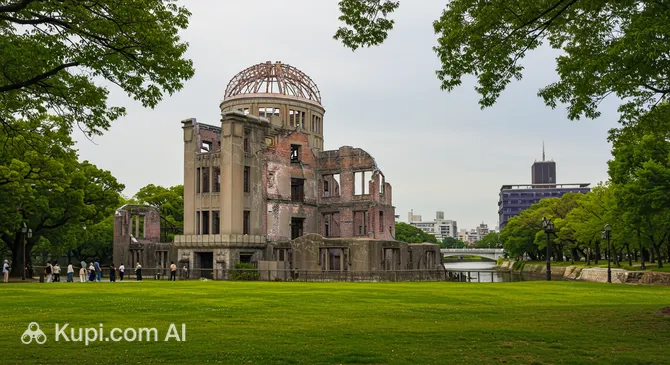
The Hiroshima Peace Memorial, known worldwide as the Genbaku Dome (Atomic Bomb Dome), is one of the most poignant and significant historical monuments in Japan. Before the tragic events of World War II, this building was the city's Industrial Promotion Hall, designed in a European style. Today, its ruins serve as a powerful reminder of the destructive power of nuclear weapons and a symbol of hope for global peace.
It is the only structure that survived in the immediate vicinity of the explosion's hypocenter, just 160 meters away. Despite the colossal destruction, the building's framework stood firm. After the war, the decision was made neither to demolish nor rebuild the dome, but to reinforce and preserve it exactly as it appeared immediately after the blast, as an eternal witness to history.
Traveler photos:
In 1996, the Genbaku Dome was added to the UNESCO World Heritage List, underscoring its global significance to humanity. This decision was made despite some political disagreements and confirmed the memorial's status as a symbol of peace that transcends national history.
The dome is the centerpiece of the larger Peace Memorial Park, which spans over 12 hectares. The park includes the Peace Memorial Museum, a cenotaph containing the names of all victims, the ceremonial Peace Bell, and numerous other monuments, each inviting reflection on the value of human life and the fragility of peace.