Support

Devi's Fall

About

Devi's Fall, also known by its Nepali name Patale Chango, which translates as "Underworld Waterfall," is one of the most amazing and mysterious natural attractions in Pokhara. Located in a picturesque area surrounded by tropical greenery, this site attracts travelers from all over the world with its unusual beauty and mystical atmosphere. It is a must-visit place for everyone who comes to Nepal in search of unique natural wonders.

The main feature of Devi's Fall lies in its unique structure. The powerful flow of the Pardi Khola River, plunging from a height of about 100 meters with a deafening roar, falls not into an open lake but into a deep karst funnel and disappears into an underground tunnel. This sight is especially impressive during the rainy season when the water flow reaches its maximum power. For the safety and convenience of visitors, observation decks with railings are equipped around the waterfall.

The mystery of this place is enhanced by the fact that the water flow does not disappear without a trace. It reappears on the surface in the famous Gupteshwor Mahadev Cave, which is located directly across the street from the waterfall. Thus, visiting Devi's Fall provides an opportunity to see two attractions at once: the waterfall itself disappearing underground and the mysterious cave where this same river continues its journey. This combination of natural power and geological mystery makes Devi's Fall a truly unforgettable place.
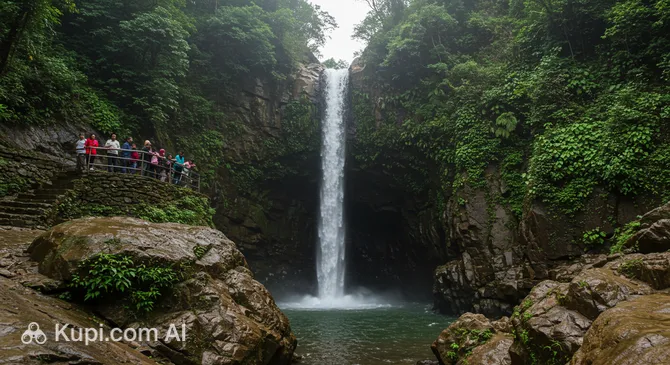
Devi's Fall. Illustration.
Source: Kupi.com AI

Traveller photos:

Contacts

Devi's Fall is a popular natural site, so it does not have a single information center. It is best to check with tourist offices in Pokhara or directly on-site for up-to-date information regarding opening hours—which typically run from early morning to evening—and entry fees. You can reach the waterfall from the Lakeside tourist area in about 10-15 minutes by taxi, scooter, or a local bus heading south from the city center.

How to contactContact
Address5XQ5+HP2, H10, Pokhara 33700, Nepal
Phone+977 980-5889741

What to Do

Visiting Devi's Fall is primarily an opportunity to enjoy an impressive spectacle of the elements. For the convenience and safety of tourists, observation decks with railings are provided here, offering excellent views of the swift water flow disappearing into the depths of the earth. It is an ideal place for taking striking photos. The noise and power of the waterfall leave a lasting impression, especially during the monsoon season when the river becomes most full and turbulent.

Exploration is not limited to just the waterfall. Directly opposite is the entrance to the mysterious Gupteshwor Mahadev cave, a visit to which perfectly complements the experience. Inside the cave, you can not only see the continuation of the river's underground path but also discover Hindu shrines and interesting rock formations. This is a unique opportunity to trace how the water that disappeared from view at the waterfall continues its journey underground.

In addition to natural wonders, other entertainment can be found on the complex grounds that allow you to get acquainted with the region's culture. For example, there are models of traditional Nepali houses and statues of people in national costumes, providing colorful backdrops for souvenir photos. Thus, a trip to Devi's Fall turns into a short but rich adventure combining an introduction to the nature and culture of Nepal.

Getting There

Devi's Fall is located in close proximity to the main tourist areas of Pokhara, making it very convenient to visit. It is situated just 3 kilometers from the popular Lakeside district and about 2 kilometers from the city airport. Thanks to this favorable location, you can reach this natural attraction quickly and without any hassle.

For travelers who prefer independent trips, there are several options. The easiest way is to take a taxi, which will get you there in 10–15 minutes. If you enjoy active recreation, you can rent a bicycle or even walk if you are staying in the central part of the city. The route is quite straightforward: head towards the southwestern outskirts, following signs for "Devi's Fall."

Additionally, you can reach the waterfall by local public transport, which is a more budget-friendly option. Another popular method is to join an organized excursion. Many travel agencies in Pokhara offer tours that include not only Devi's Fall but also the nearby Gupteshwor Mahadev Cave and other interesting sites, allowing you to make the most of your time.

Nearest city: Pokhara

History & Facts

The modern name of Devi's Fall is inextricably linked to a tragic event that occurred here in 1961. According to local accounts, it was then that a Swiss tourist named Davis drowned while swimming in the turbulent waters. This story made such a strong impression on locals and travelers alike that the name "Devi's Fall" (an adapted version of the surname) quickly stuck. Prior to this, the waterfall was known solely by its Nepali name, Patale Chango, which means "Underworld Waterfall."

Over time, the tragic story has become embellished with romantic and mystical details. According to one of the most common local legends, Mrs. Davis's lover, unable to survive the loss, followed her into the raging torrent. This sad yet beautiful myth has given the waterfall a special, slightly mysterious aura, turning it from just a beautiful natural site into a place with a deep and touching history.

Due to the combination of its natural uniqueness and dramatic history, Devi's Fall has become more than just a popular attraction; it is one of the iconic symbols of Pokhara. This place attracts not only those wishing to see the power of the river disappearing underground but also those who want to connect with its legendary past. For many residents of Nepal and guests of the country, the waterfall has become a kind of pilgrimage site where one reflects on the fragility of human life in the face of the elements.

Time Needed

When planning a visit to Devi's Fall, you should expect to spend approximately 1–2 hours exploring the waterfall and the nearby sites. This is plenty of time to not only enjoy the view of the waterfall itself but also to see other iconic attractions located in the immediate vicinity.

The main visit time is typically split between two key spots: the waterfall itself and the Gupteshwor Mahadev Cave located directly opposite, where the water flow rushes. Viewing the observation decks at the waterfall will take about 20–30 minutes. After that, you can cross the road and spend 45 minutes to an hour exploring the mysterious cave where the river continues its underground path. Additionally, there are often small exhibitions and souvenir stalls in the surrounding area, which may also take some time.

Thus, 1–2 hours is the optimal window for most tourists, allowing them to see the main attractions of this complex in Pokhara without rushing. Of course, if you are an avid photographer or want to study the Hindu shrines in the cave in more detail, you might want to stay longer. However, as a rule, visiting Devi's Fall is not a full-day excursion, making it easy to include in a more packed itinerary through Nepal.

Working Hours

Devi's Fall is usually open to visitors daily, but opening hours may vary depending on the season. Generally, the attraction is available to visit from 8:00 to 18:00. Since the schedule may be adjusted due to weather conditions, especially during the monsoon period, it is recommended to check the current information at local tourist offices before your visit.

Special booking or advance ticket purchases for visiting the waterfall are generally not required. Entrance tickets can be purchased directly on-site. The attraction is open to tourists year-round; however, the waterfall becomes most full and spectacular during the rainy season, which lasts from June to September. During the rest of the year, the water flow may be less intense, but it is no less picturesque.

6:00 – 18:00

Nearby

Visiting Devi's Fall undoubtedly leaves a vivid impression, but exploring its surroundings can turn a short excursion into a full-fledged adventure. Exploring nearby attractions allows you to dive deeper into the unique atmosphere of this region of Nepal and see how diverse and interesting this corner of the world is.

The city of Pokhara is famous for its abundance of natural and cultural treasures, many of which are within walking distance or a short drive from the waterfall. This makes it an ideal starting point for exploring other iconic sites. Below is a list of the closest attractions to help you plan your itinerary.

NameDistance
Gupteshwor Mahadev Cave0.1 km
Fish Tail Lodge1.4 km
Basundhara Park1.6 km
MED 5 Restaurant1.7 km
World Peace Pagoda1.8 km
Tal Barahi Temple2 km
International Mountain Museum2.1 km

Reached the bottom of the page?

Looks like you know this route inside out