Support

World Peace Pagoda

About

The World Peace Pagoda, also known as Shanti Stupa, is a majestic Buddhist monument with a brilliant white dome rising on a hilltop above the city of Pokhara in Nepal. Situated at an altitude of over 1,100 meters, it serves as a symbol of tranquility and spiritual unity. From here, some of the most spectacular panoramic views of Phewa Lake and the surrounding Himalayan peaks, including the Annapurna massif, are revealed.
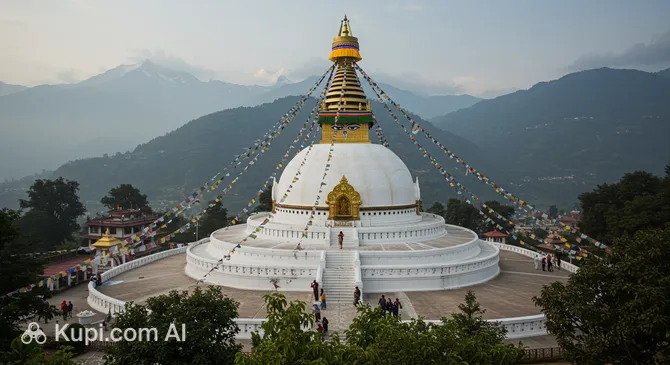
World Peace Pagoda. Illustration.
Source: Kupi.com AI

Traveller photos:

This stupa was built as a place intended to unite people of all races and creeds in their quest for peace. It is one of 80 such pagodas erected worldwide at the initiative of the Japanese Buddhist monk Nichidatsu Fujii and his Nipponzan-Myōhōji order. The idea of creating such monuments arose as a call for global peace and the rejection of violence.

A visit to the World Peace Pagoda is more than just sightseeing; it is an opportunity to immerse yourself in an atmosphere of serenity. The journey to the stupa is a small adventure in itself, whether it is a hike through the forest or a scenic boat trip across Phewa Lake followed by a climb. It is an ideal place for meditation, contemplation, and watching the stunning sunsets that paint the sky in incredible colors.

Contacts

Since the World Peace Pagoda is a public monument, it does not have a direct contact phone number for visitors. The most popular way to reach the stupa is by taking a boat across Phewa Lake and then walking up the trail. Alternatively, you can take a taxi via the bypass road directly to the base of the hill where the staircase to the pagoda begins.

How to contactContact
Address6W2V+4JQ, World Peace Stupa Access Rd, Pokhara 33700, Nepal

What to Do

Visiting the World Peace Pagoda in Pokhara is primarily an opportunity to enjoy the silence and incredible views. Perched on a hilltop, it offers a breathtaking panorama of the Annapurna mountain range and the picturesque Phewa Lake stretching out below. This place seems designed for contemplation and meditation. Many visitors come here to escape the city's hustle and bustle, reflect, and find inner harmony while admiring the majestic nature of Nepal.

The main object of exploration is the snow-white stupa itself. You can walk around it in a circle, observing the four statues of Buddha donated by different Buddhist communities around the world, symbolizing important stages of his life. The architecture of the pagoda is simple and elegant, and every detail carries a deep meaning, reflecting the ideas of peace and the unity of all peoples. It is not just a religious monument, but a powerful symbol of non-violence, attracting both pilgrims and regular travelers.

A trip to the World Peace Pagoda often becomes part of a more extensive itinerary. Many tourists combine their visit with a boat ride on Phewa Lake, during which you can stop by another important shrine—the Tal Barahi Temple, located on an island in the middle of the lake. The climb to the pagoda, whether on foot along a scenic trail or by taxi, is a small adventure in itself, rewarding every traveler with unforgettable impressions.

Getting There

The World Peace Pagoda stands majestically at the top of a hill over 1,100 meters high, offering breathtaking views of Phewa Lake, the city of Pokhara, and the snow-capped peaks of Annapurna. Reaching this iconic Nepal landmark is a small adventure in itself, and there are several ways to do it depending on your preferences and physical fitness.

The easiest and fastest way is to hire a taxi or rent a scooter in Pokhara. The drive along the winding road takes about 25–30 minutes and brings you almost to the stupa, leaving only a short final climb up the stairs. This option is ideal for those short on time or who prefer to save their energy for exploring the pagoda and enjoying the panoramic views.

For outdoor enthusiasts and those seeking scenic routes, there is a more popular and interesting path. It begins with a boat crossing across Phewa Lake to the foot of the hill. From there, a hiking trail leads up, with the climb taking between 45 minutes and an hour and a half. Although the route requires some physical effort, it rewards travelers with magnificent landscapes, passing through dense forest and small villages. This method allows you to fully experience the beauty of nature and turn a visit to the World Peace Pagoda into an unforgettable day hike.

Nearest city: Pokhara

History & Facts

The World Peace Pagoda in Pokhara is not just an impressive snow-white stupa atop a hill, but a powerful symbol of peace and harmony. Its history is inextricably linked to the life and work of the Japanese Buddhist monk Nichidatsu Fujii, founder of the Nipponzan-Myōhōji order. After a fateful meeting with Mahatma Gandhi in 1931, Fujii was so inspired by his ideals of non-violence that he decided to dedicate his life to spreading them worldwide.

In 1947, Nichidatsu Fujii initiated a global project to build Peace Stupas—monuments designed to unite people and inspire peaceful coexistence. The first pagodas were symbolically erected in the Japanese cities of Hiroshima and Nagasaki to honor the memory of the victims of the atomic bombings and serve as an eternal call for peace. By the year 2000, about 80 such stupas had been built across Asia, Europe, and America.

The World Peace Pagoda in Pokhara holds a special place in this legacy, being the 71st of the 80 stupas built. Its construction began in 1973. It is one of two pagodas built in Nepal as part of this project; the second is located in Lumbini, the sacred birthplace of Buddha. Thus, the pagoda is not only an important spiritual center but also part of a global movement for peace.

Time Needed

Exploring the World Peace Pagoda itself and the surrounding area usually takes about 1–2 hours. This is plenty of time to leisurely walk around the stupa, admire its architecture, take photos, and enjoy the peaceful atmosphere. The main value of this place is not only the pagoda itself but also the breathtaking panoramic views of Phewa Lake, the city of Pokhara, and the majestic peaks of the Annapurna massif that open up from the hilltop.

However, when planning your visit, it is crucial to consider the travel time, as it can take even longer than the stay at the top itself. There are several ways to reach the pagoda: you can take a scenic hike from the lake, which takes 1–2 hours one way, cross Phewa Lake by boat and then hike up (about 45–60 minutes), or take a taxi via the bypass road. Each of these options has its own charm and requires different amounts of time.

Therefore, to get the most enjoyment out of your trip to the World Peace Pagoda and not feel rushed, it is recommended to set aside at least half a day for the entire excursion. This will allow you to combine a pleasant walk or ride with meditative relaxation at the top, fully appreciating the beauty and tranquility of this iconic site in Nepal.

Working Hours

The World Peace Pagoda in Pokhara is usually open to visitors daily and year-round, allowing tourists to enjoy its peaceful atmosphere and magnificent views at any time. Generally, access to the grounds is open from early morning until sunset. However, exact opening hours may vary depending on the season, weather conditions, or special ceremonies.

Advance booking or ticket purchases are usually not required to visit the pagoda, as admission is free. To get the most up-to-date information on opening times, especially if you are planning a sunrise or sunset visit, it is recommended to check details at a local tourist information center in Pokhara or with your guide just before your trip.

5:00 – 17:00

Nearby

Visiting iconic sites like the World Peace Pagoda is undoubtedly a highlight of any trip. However, to truly feel the atmosphere of the city of Pokhara, it is worth spending time in its surroundings. Often, the most memorable experiences are hidden a short distance from the main tourist routes, allowing you to see daily life and discover hidden gems.

There are many other interesting sites around the World Peace Pagoda, from natural wonders to cozy establishments. Exploring these places will not only diversify your itinerary but also provide a fuller and deeper understanding of this amazing corner of Nepal. Below is a list of attractions located in the immediate vicinity.

NameDistance
Tal Barahi Temple1.1 km
Paradiso Pokhara1.5 km
Utopia Garden & Snacks Bar1.6 km
Club Sixteen1.7 km
MED 5 Restaurant1.8 km
Devi's Fall1.8 km
Gupteshwor Mahadev Cave1.8 km

Reached the bottom of the page?

Looks like you know this route inside out