Support

Frogner Park

About

Frogner Park (Frognerparken) is not only the largest public park in Oslo, but also one of the most visited attractions in all of Norway. Spanning over 45 hectares in the western part of the city, it is a favorite spot for relaxation, walks, and picnics for both tourists and locals. Manicured lawns, picturesque ponds, and shady avenues create the perfect atmosphere for a leisurely pastime.
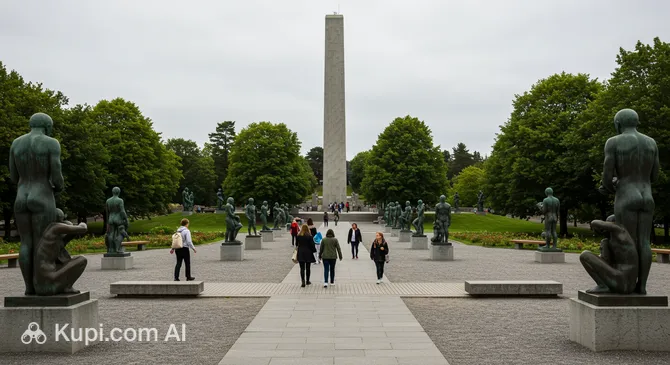
Frogner Park. Illustration.
Source: Kupi.com AI

Traveler photos:

The park's crown jewel, which has brought it worldwide fame, is the unique Vigeland Sculpture Park. This is a grand open-air exhibition consisting of more than 200 bronze and granite sculptures created by the prominent Norwegian sculptor Gustav Vigeland. The entire collection, which the master worked on for decades, is dedicated to the theme of human life in all its manifestations—from birth to death—conveying a complex range of emotions and relationships.

In addition to the famous sculptures, the Frogner Park grounds also house Frogner Manor—a historical 18th-century building that today hosts the Oslo City Museum (Oslo Bymuseum). Here, you can learn about the history and cultural development of the Norwegian capital. Thus, a visit to Frogner Park offers the opportunity not only to enjoy art and nature but also to dive deeper into the city's history.

Contacts

Since Frogner Park is a public space, it does not have a single contact center for general inquiries. For up-to-date information on the opening hours of individual facilities on the grounds—such as the Oslo City Museum or the Frognerbadet open-air pool—as well as information on events, it is recommended to consult the city's official tourism resources.

Reaching the park is very easy by public transport. You can take tram No. 12, which stops right at the park entrance at the Vigelandsparken stop. The park can also be reached by bus No. 20 and others, or you can walk from the Majorstuen metro station, which is served by all lines of the Oslo metro.

How to contactContact
AddressKirkeveien, 0268 Oslo, Norway
Phone number+47 21 80 21 80
Websitewww.oslo.kommune.no

What to Do

Frogner Park offers a wealth of activities for visitors of all ages and interests. It is an ideal place for leisurely strolls along shady avenues, enjoying manicured gardens and views of picturesque ponds. In good weather, the park's lawns fill with people having picnics, practicing yoga, playing badminton, or simply soaking up the sun. For active recreation enthusiasts, there are convenient paths for morning jogs and bike rides, as well as dedicated areas for sports.

The main draw for visitors is, undoubtedly, the famous Gustav Vigeland Sculpture Park. More than 200 works are presented here in the open air, and each one deserves attention. Be sure to see iconic works such as the Fountain, symbolizing different stages of human life, and the world-famous "Angry Boy" statue on the bridge. The culmination of the walk is the impressive "Monolith"—a 14-meter column carved from a single piece of granite, depicting 121 intertwined human figures. Completing the park's compositional axis is the "Wheel of Life" sculpture, which is also full of deep symbolism.

The park is also excellent for family recreation. It features one of the city's largest children's playgrounds, where little ones can have a great time. During the summer season, the Frognerbadet open-air pool, located at the edge of the park, provides additional entertainment. Furthermore, Frogner Park is famous for having Norway's largest collection of roses—about 14,000 plants of 150 different species—making it a wonderful place for photo shoots or simply contemplative rest. Throughout the year, various cultural events, exhibitions, and festivals are also frequently held here, filling the place with an atmosphere of creativity and celebration.

Getting There

Located in a prestigious district near the center of Oslo, Frogner Park is one of the capital's most accessible iconic landmarks. You can reach it not only by public transport but also on foot or by bicycle, making the journey an enjoyable part of your trip.

One of the most pleasant ways to get to the park is a leisurely walk or bike ride from the city center. This route allows you to enjoy the elegant architecture of the Frogner district and its cozy atmosphere. The cycling infrastructure in Oslo is well-developed, making the ride comfortable and safe.

For those who prefer speed and convenience, the extensive public transport network is an excellent choice. To avoid worrying about buying tickets before every trip, it is recommended to download the Ruter mobile app in advance. You can easily plan your route and purchase tickets for all types of transport, including trams, buses, and the metro. Tickets are also sold at Narvesen kiosks, 7-Eleven stores, and ticket machines at stations.

If you are traveling by car, please note that street parking near the park is paid and spaces are limited, especially on weekends and public holidays. A more convenient solution might be to use one of the indoor parking garages in the Majorstuen area, from which the park is a 10–15 minute walk. This will help you avoid the hassle of finding a free spot and allow you to enjoy your walk without extra worries.

Nearest city: Oslo

History & Facts

The history of Frogner Park dates back to the 18th century, when the private Frogner Manor was located on this site. Initially, it was surrounded by a small garden, which subsequent owners gradually transformed into an extensive romantic park. A major turning point in the park's history came in 1896, when the Oslo city authorities purchased the remaining territory to create a new public space for the recreation of the city's residents.

At the beginning of the 20th century, the park began to develop actively. In 1904, the first landscaped areas opened to the public, and a stadium was built on its grounds shortly before that. The park played a special role in 1914, becoming the main venue for the Jubilee Exhibition, which commemorated the 100th anniversary of the constitution of Norway. This grand event attracted about two million visitors and forever etched Frogner into the country's cultural history.

However, the park achieved worldwide fame thanks to a monumental project implemented here between the 1920s and 1940s. It was during this period that a large part of the park was dedicated to the creation of the unique Vigeland Sculpture Park. This massive open-air installation, featuring over 200 sculpture groups, became the life's work of the outstanding master Gustav Vigeland and transformed Frogner Park into one of the most iconic and visited attractions not only in Oslo but in all of Norway.

Time Needed

When planning a visit to Frogner Park, you should allow for 2 to 4 hours. This will be enough time to leisurely stroll along the main avenues, carefully examine the key sculptures of the Vigeland ensemble—including the famous "Monolith," the Fountain, and the Bridge—and soak up the unique atmosphere of the place. This duration will allow you to get a full sense of the sculptor's vision and enjoy the beauty of the park landscape without rushing.

However, the visit time can easily be adapted to your interests. If you are short on time, a quick tour of the most famous sculptures will take about an hour. If you want to spend more time here, the park offers plenty of opportunities. For example, you can plan a visit to the Oslo City Museum, located in Frogner Manor, or cool off in the Frognerbadet pool during the summer season. For those who want to fully immerse themselves in the relaxed atmosphere, the park is an ideal spot for a picnic or even a whole day of outdoor relaxation, especially if you happen to catch one of the events held here.

Working Hours

One of the main advantages of Frogner Park is its exceptional accessibility. The park itself is open to visitors 24 hours a day, 7 days a week throughout the year, making it an ideal place for a walk at any time of day or night. Furthermore, admission to the park grounds is completely free, so you don't need to buy tickets or book anything for a standard visit and to see the famous sculptures.

However, please keep in mind that other facilities are located within the vast territory of the park, such as the Oslo City Museum, cafes, and the Frognerbadet open-air pool, which operates during the summer season. These establishments have their own operating schedules and, as a rule, charge an entrance fee. If you plan to visit them, it is highly recommended to check the current opening hours and ticket prices in advance on their official websites or the Oslo tourism portal.

Nearby

A visit to Frogner Park is a highlight in itself, but you shouldn't limit yourself to just that. The park's convenient location in one of Oslo's most beautiful districts makes it an excellent starting point for further exploration of the city. A walk through the surrounding neighborhood will allow you to discover new facets of the Norwegian capital and significantly enrich your travel experience.

In the immediate vicinity of the park and just a short distance away, there are many other iconic sites—from world-famous museums to architectural masterpieces. By setting aside some time to explore the surroundings, you can gain a more complete and multifaceted understanding of the cultural and historical heritage of Norway.

NameDistance
Vigeland Park0.2 km
Frogner Baths0.3 km
The Royal Palace1.7 km
Hotel Continental2.2 km
National Museum2.2 km
Nobel Peace Center2.2 km
Gol Stave Church2.3 km

Have you reached the end of the page?

So the route has been studied inside and out