Support

Poklonnaya Hill

About

Poklonnaya Gora is one of the most iconic historical sites in Moscow, the capital of Russia. It was once a gentle hill in the west of the city, mentioned in chronicles since the 16th century, where travelers traditionally stopped to bow to the capital before entering. Today, it is a majestic memorial complex known as Park Pobedy (Victory Park), dedicated to the victory in the Great Patriotic War of 1941–1945.

The central place in the complex is occupied by the grand Victory Monument — an obelisk 141.8 meters high, symbolizing the 1,418 days and nights of the war. Nearby is the Central Museum of the Great Patriotic War, whose exhibits tell the story of the key events of those years. Three temples of different faiths have also been built on the territory, emphasizing the multi-ethnic feat of the people. The original relief of the hill was significantly changed during urban development, but the remaining elevation and massive memorials create a special, solemn atmosphere.

Park Pobedy is not only a place of remembrance but also a popular space for recreation and walks for Muscovites and guests of the capital. Here you can walk along spacious alleys, see an open-air exhibition of military equipment, and find rides and playgrounds for children. Visiting Poklonnaya Gora is an opportunity not only to touch an important page of history but also to spend time in one of Moscow's largest and most beautiful parks.
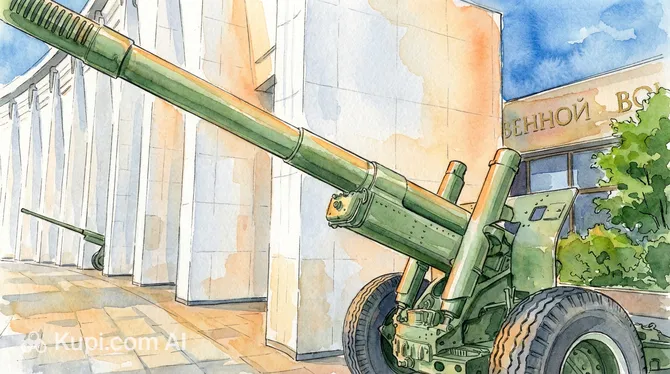
Poklonnaya Hill. Illustration.
Source: Kupi.com AI

Traveler photos:

Contacts

Since Poklonnaya Gora is a vast memorial park, most official inquiries are handled through the administration of the main site on its territory — the Victory Museum. To clarify opening hours, event schedules, or organize guided tours, you can use the museum's contact details.

How to contactContact
AddressMoscow, Russia, 121096

What to Do

A visit to Poklonnaya Gora offers guests of Moscow many experiences, combining historical immersion and pleasant outdoor recreation. The main point of attraction is, of course, the Victory Museum, where you can spend hours exploring the exhibits. Special attention should be paid to the six dioramas dedicated to the key battles of the Great Patriotic War, which recreate the atmosphere of those events with striking accuracy. A stroll along the park's central alley, named "Years of War," will lead you to the grand obelisk and the museum building, creating a sense of solemnity and scale.

In addition to the museum, there are other iconic places within the park. The open-air exhibition of World War II military equipment always draws interest from visitors. Here, you can get a close look at legendary tanks, planes, and artillery pieces. Slightly off the main alley is the active Church of St. George the Victorious, the patron saint of Moscow, which is an important spiritual component of the memorial complex. These sites allow for a deeper understanding of the many facets of the history to which this place is dedicated.

For those seeking a more relaxed pastime, Park Pobedy offers well-maintained curved alleys that converge at Victory Square. This is a favorite spot for locals for leisurely walks, rollerblading, and cycling. Spacious green zones, fountains, and benches create a comfortable atmosphere for relaxation at any time of year. Thus, Poklonnaya Gora is not only a memorial but also a beautiful urban space where everyone can find something to their liking.

Getting There

Getting to Poklonnaya Gora in Moscow is quite simple, as the memorial complex is located near the city's major transport arteries. The most convenient and fastest way is to use the metro. The nearest station, Park Pobedy, has exits leading directly to the main entrance of the park. This station serves as a cross-platform interchange for the Arbatsko-Pokrovskaya (blue) and Solntsevskaya (yellow) lines, making it accessible from many parts of the city without extra transfers. You can also travel to Minskaya station on the Solntsevskaya line, which is a convenient starting point for a walk through the greener, less crowded part of the park.

For those who prefer surface transport, numerous bus routes run along Kutuzovsky Avenue, which passes next to Poklonnaya Gora. The "Park Pobedy" and "Poklonnaya Gora" stops are in the immediate vicinity of the memorial. This option allows you to combine your trip with a view of iconic landmarks on the avenue, such as the Triumphal Arch. You can also take a suburban train to the Moskva-Sortirovochnaya-Kievskaya railway station, which is within walking distance.

Traveling by car or taxi is another comfortable way to reach the site. Poklonnaya Gora is located on Kutuzovsky Avenue, one of the capital's main thoroughfares. There are several parking lots near the park, but finding a free spot can be difficult on weekends and holidays. A taxi from the city center will take about 20–30 minutes, excluding traffic, which can be particularly convenient for families with children or small groups.

Nearest city: Moscow

History & Facts

The name "Poklonnaya Gora" has an interesting origin that dates back centuries. Contrary to the popular belief about travelers bowing, the etymology is related to the old word "poklonny," which meant 'sloping' or 'inclined.' In medieval Russia, the word "gora" (mountain/hill) was often used for any small hill, so the name literally describes a gentle elevation. Historically, this site was located far outside Moscow, and its summit offered a magnificent panorama of the city, where travelers would indeed stop to admire the capital before entering.

The idea of creating a memorial at this iconic location appeared long before its construction. The first competition for the memorial complex project was announced back in 1958, but its results were never realized. Although Park Pobedy itself was officially established in 1961, nearly thirty years passed before large-scale work began. For many years, architect A. T. Polyansky worked tirelessly on the project, and his persistence and dedication to the idea played a key role in the future of the ensemble.

Poklonnaya Gora only took on its modern appearance in the 1990s. It was then, thanks to the support of Moscow Mayor Y. M. Luzhkov, that the grand vision was realized. Construction was carried out at a rapid pace to coincide with the opening of the memorial complex for the 50th Anniversary of Victory in 1995. It is noteworthy that the original landscape of the hill was partially changed in the 1950s when its eastern part was leveled for the construction of a major highway. Thus, the majestic ensemble of Park Pobedy, designed by a large group of architects including A. Polyansky and Z. Tsereteli, was built on the remaining western part of the historical elevation.

Time Needed

When planning a visit to Poklonnaya Gora, keep in mind that the duration of your stay depends heavily on your interests. For a general introduction to the memorial complex, a walk along the "Years of War" central alley, and a view of the main monument and fountains, 1.5–2 hours is usually enough. This time is sufficient to feel the scale and solemn atmosphere of the park, take photos, and relax in one of the capital's largest green areas.

However, if you want to dive deeper into history, you will need significantly more time. The main part of the visit will be the Victory Museum; a quick tour of its exhibits will take at least 2–3 hours. To study the dioramas and numerous halls in detail, it is better to allocate even more time. You can also spend about an hour viewing the impressive open-air exhibition of military equipment.

Therefore, for a complete and leisurely visit to Poklonnaya Gora, including a walk through the park and a visit to the museum, it is recommended to set aside half a day or even more. If you are short on time, it is better to focus on one thing: either a walk through the park area or a dedicated visit to the museum, to ensure your impressions are as complete and meaningful as possible.

Working Hours

When planning a visit to Poklonnaya Gora, it is important to distinguish between the opening hours of the park itself and the sites on its territory. Park Pobedy is open to visitors year-round and 24/7, allowing you to walk along its alleys at any convenient time. Entry to the park is free. It is an ideal place for morning runs, evening strolls, or simply a quiet rest in nature.

The main site of the complex, the Victory Museum, operates on its own schedule. Typically, the museum is open to visitors daily from 10:00 to 22:00, though Monday may be a closing day. Ticket offices usually close earlier, around 21:00, so it is best to plan your visit with time to spare. To visit certain exhibits, such as "Feat of the People," you may need to purchase a separate ticket and join a guided tour group. While pre-booking for a regular visit is not always mandatory, it is recommended to check the current opening hours and visiting conditions on the official Victory Museum website in advance, especially on holidays when the schedule may change.

Nearby

Visiting Poklonnaya Gora is an opportunity to touch important pages of history, but an exploration of Moscow would be incomplete without discovering its surroundings. The area around this majestic memorial offers many other interesting sites that will help you form a more complete picture of the many facets of the Russian capital.

A stroll through nearby parks, a visit to museums, or a stop at sports facilities will allow you to see another side of this district — from quiet green areas for relaxation to centers of cultural and sporting life. Exploring the nearby attractions will enrich your trip with new impressions and show how diverse Moscow can be just a few kilometers away from this iconic historical complex.

NameDistance
Fili Park2.4 km
Filyovsky Park Beach2.7 km
Pushkin State Museum of Fine Arts6.4 km
State Tretyakov Gallery7.2 km
Moscow Kremlin7.3 km
Tomb of the Unknown Soldier7.3 km
Depo Moscow Food Mall7.6 km

Have you reached the end of the page?

So the route has been studied inside and out