Support

Moscow Kremlin

About

The Moscow Kremlin is not just the heart of Moscow, but also one of the most recognizable symbols of Russia, a majestic historical and architectural ensemble included in the UNESCO World Heritage list. Situated on the high Borovitsky Hill on the banks of the Moskva River, this complex is the oldest part of the city and serves as the official residence of the President of the Russian Federation. The Kremlin represents a unique combination of a powerful fortress, a treasury of national art, and an active center of state power.
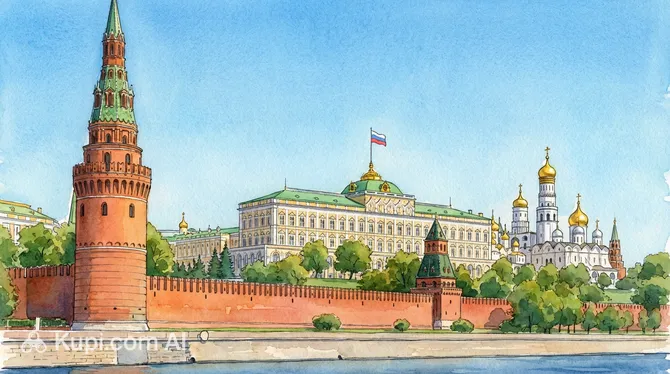
Moscow Kremlin. Illustration.
Source: Kupi.com AI

Traveler photos:

The Kremlin territory, covering an area of about 27.5 hectares, is surrounded by massive red-brick walls with twenty towers, each having its own unique history. The powerful walls, extending over two kilometers, create the unmistakable triangular shape of the fortress familiar to everyone. It was here, behind these walls, that the history of the country was made for many centuries.

Inside the fortress walls, a whole city filled with architectural masterpieces awaits visitors. On Cathedral Square stand the Dormition, Archangel, and Annunciation cathedrals—witnesses to the coronations, weddings, and burials of grand princes and tsars. The famous Faceted Chamber, Terem Palace, and the Ivan the Great Bell Tower are also located here. Special attention should be given to the Armoury Chamber—a treasury museum housing state regalia, ceremonial royal robes, weapons, and unique works of jewelry art.

A visit to the Moscow Kremlin is an opportunity to touch the centuries-old history and culture of Russia. A walk through its squares and gardens, and an inspection of its ancient cathedrals and palaces, leaves an unforgettable impression, allowing you to feel the grandeur and significance of this unique place, which is rightfully considered one of the most outstanding architectural ensembles in the world.

Contacts

To contact the administration of the Moscow Kremlin Museums for visit details, ticket inquiries, or guided tours, please use the contact information provided below. All detailed and up-to-date information is also available on the official website.

How to contactContact
AddressMoscow, Russia, 103132
Phone number+7 495 697-03-49
Websitewww.kreml.ru

What to Do

A visit to the Moscow Kremlin offers guests many opportunities to explore history and culture. One of the main highlights for many is a visit to the famous Armoury Chamber. This is not just a museum, but a real treasury where you can see legendary royal regalia, including Monomakh's Cap, luxurious coronation dresses, ancient carriages, and unique collections of weapons. Each piece of decorative and applied art here tells its own story, immersing visitors in the atmosphere of the splendor and power of the Russian court.

The heart of the Kremlin is rightfully considered to be Cathedral Square, a walk through which leaves a lasting impression. Here you will find yourself surrounded by majestic ancient temples. Be sure to look into the Dormition Cathedral, where coronation ceremonies for Russian monarchs took place for centuries, and the Archangel Cathedral—the necropolis of grand princes and the first tsars. Standing on this square, it is easy to imagine how the most important events in the country's history unfolded here. The Kremlin grounds also offer the chance to enjoy views of its well-kept gardens and architectural masterpieces, such as the famous towers with their unique clocks.

You can plan your visit in different ways: go for an independent walk armed with a guidebook, or join one of the many guided tours that will help you understand the history of this place more deeply. Don't miss the opportunity to admire the panoramic views of the Moskva River and Red Square that open up from the grounds. A special spectacle that attracts many tourists is the ceremonial changing of the guard. It can be observed hourly at the Tomb of the Unknown Soldier in the Alexander Garden by the Kremlin walls, and during the warmer months on Saturdays, a spectacular ceremonial mounting of the horse and foot guards of the Presidential Regiment takes place on Cathedral Square.

Getting There

The Moscow Kremlin is located in the very heart of Moscow, right next to Red Square, making it easily accessible for tourists. The most convenient and fastest way to reach it is by using the metro. A major interchange hub is located in the immediate vicinity of the Kremlin, connecting several stations at once: Biblioteka Imeni Lenina, Alexandrovsky Sad, Borovitskaya, and Okhotny Ryad. From any of these stations, the entrance to the grounds is just a few minutes' walk away, following the signs.

Visitor entry to the Kremlin is organized through the Kutafya Tower, which is located on the Alexander Garden side. After passing through it and across the Trinity Bridge, you will reach the security checkpoints and ticket offices. To save time and avoid queues, especially during the peak tourist season, it is highly recommended to purchase tickets in advance online on the official Moscow Kremlin Museums website. This will allow you to plan your visit and proceed directly to the entrance.

You can also reach the Kremlin by surface public transport heading to the city center or by taxi. However, it is worth considering that due to high traffic density and potential jams in the central part of the capital, a car trip may take significantly longer. For this reason, the metro remains the most predictable and reliable option for arriving at this outstanding landmark on time.

Nearest city: Moscow

History & Facts

The history of the Moscow Kremlin is rooted in deep antiquity, beginning long before it acquired its famous appearance. The first chronicle mention of Moscow dates back to 1147, and shortly after, by order of Prince Yuri Dolgoruky, the first wooden fortress was built on the high Borovitsky Hill. It was a typical fortification for that time, designed to protect the borders of the principality. A vital stage in the rise of the Kremlin was the reign of Prince Ivan Kalita in the 14th century, who moved the metropolitan's seat here and built the first stone Dormition Cathedral, establishing Moscow's status as a spiritual and political center.

The key transformations that shaped the power and grandeur of the fortress occurred in the following centuries. At the end of the 14th century, under Prince Dmitry Donskoy, the wooden walls were replaced with white stone, making the Kremlin practically impregnable and giving the capital the nickname "Moscow of the White Stone." However, the Kremlin acquired its modern, world-recognized red-brick look at the end of the 15th century during the reign of Ivan III. The best Italian architects were invited for this grand reconstruction, and they erected the powerful new walls and towers that have survived to this day.

Throughout its centuries-old history, the Moscow Kremlin has never been a static monument—it was constantly being added to and modified, reflecting the changing eras and architectural styles. Within its walls, new cathedrals, palaces, and administrative buildings appeared, each leaving its mark on the unique ensemble. It served as a fortress, a residence for tsars, and a center of spiritual life. Today, as the official residence of the President of Russia and a museum of world significance, the Kremlin continues to be a living witness to the great historical events that unfolded within its walls.

Time Needed

When planning a visit to the Moscow Kremlin, it is important to budget your time correctly to fully enjoy its treasures. For a general introduction to the architectural ensemble and a walk around the grounds, it is recommended to set aside 3 to 5 hours. This time is usually enough to leisurely walk around Cathedral Square, admire the main cathedrals from the outside, and get a general sense of the grandeur of this historical complex.

If your plans include a deeper dive into history, it is worth allowing half a day or even a full day. A significant portion of your time will be taken up by a detailed look at the rich exhibits of the Armoury Chamber—viewing it takes an average of about two hours. It is also worth considering that a thoughtful visit to each of the cathedrals on Cathedral Square—the Dormition, Archangel, and Annunciation cathedrals—will add another 1–2 hours to your itinerary. Thus, for those who want to not just see, but truly feel the spirit of the Kremlin, it is better not to limit yourself on time.

Working Hours

You can visit the Moscow Kremlin any day except Thursday, which is the official day off. The complex is open year-round, but visiting hours change depending on the season. In the winter period, from October 1 to May 14, the grounds are open to guests from 10:00 to 17:00. During the summer period, from May 15 to September 30, opening hours are extended—from 9:30 to 18:00. It is important to remember that the operating hours of individual museums and exhibitions, such as the Armoury Chamber, may differ from the general schedule and are organized by timed sessions.

To make your visit as comfortable as possible, it is highly recommended to check the current schedule on the official Moscow Kremlin Museums website immediately before your trip. You can also purchase tickets online in advance there, which will help you avoid long queues, especially during the height of the tourist season. Advance booking is particularly relevant for visiting the Armoury Chamber and other popular exhibitions, for which tickets sell out very quickly.

9:30 – 16:30

Nearby

A visit to the Moscow Kremlin is just the beginning of your acquaintance with the heart of the capital. Thanks to its central location, the Kremlin is an ideal starting point for further exploration of the historical and cultural treasures of Moscow. Within walking distance of its walls are equally iconic sites that will help you form a more complete and vivid impression of the city. A walk through the surrounding area will allow you to see famous squares, unique museums, and modern parks, each with its own unique atmosphere.

To help you plan your route, we have compiled a list of interesting sites located very close by. These attractions are in the immediate vicinity and are easily reached on foot while enjoying the views of the historical center.

NameDistance
Tomb of the Unknown Soldier0.4 km
St. Basil's Cathedral0.4 km
Vokrug Sveta0.9 km
Pushkin State Museum of Fine Arts0.9 km
Bolshoi Theatre1 km
State Tretyakov Gallery1.1 km
The Black Swan Pub1.3 km

Have you reached the end of the page?

So the route has been studied inside and out