Support

National Gallery

About

The National Gallery in Ljubljana is Slovenia's primary art museum, playing a key role in preserving and showcasing the country's cultural heritage. It is a place where visitors can take a fascinating journey through the centuries, discovering works of Slovenian and European art spanning the period from the late Middle Ages to the early 20th century.
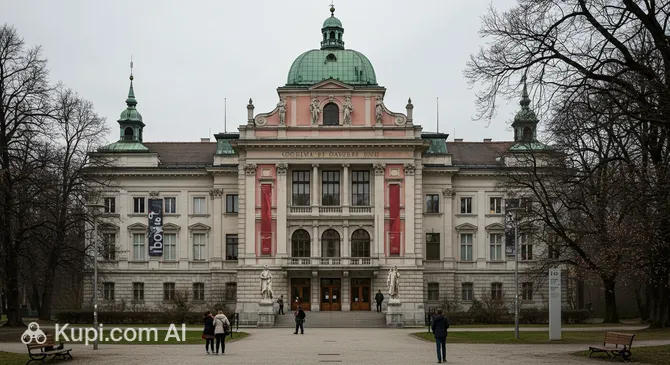
National Gallery. Illustration.
Source: Kupi.com AI

Traveler photos:

The gallery is housed in an elegant historical building located in close proximity to the famous Tivoli Park. The museum's interior is impressive with its spacious exhibition halls. Modern architectural solutions, including a striking glass gallery connecting various parts of the complex, create a harmonious blend of historical atmosphere and contemporary museum standards.

A visit to the National Gallery provides a unique opportunity to dive deep into the rich artistic tradition of the region. Here, you can see works by prominent Slovenian masters, trace the development of national art, and appreciate its place in a European context. The exhibition offers a comprehensive look at painting, sculpture, and graphic arts, making the visit both educational and memorable.

Contacts

If you are planning to visit the National Gallery in Ljubljana and need to clarify any information, you can contact the gallery representatives using the following details.

Please note that if any contact information has changed, the most up-to-date details can always be found on the gallery's official website.

How to contactContact
AddressPrešernova cesta 24, 1000 Ljubljana, Slovenia
Phone number+386 1 241 54 18
Websitewww.ng-slo.si

What to Do

A visit to the National Gallery in Ljubljana offers a deep immersion into the world of art. The main magnet for visitors is the extensive permanent exhibition. Here, you can see an impressive collection of paintings, sculptures, and graphic works created by both Slovenian and foreign masters. The exhibits cover the period from the 14th to the early 20th century, allowing you to trace the evolution of fine arts in the region and appreciate its diversity.

In addition to exploring the main collection, gallery guests can visit temporary exhibitions that are regularly updated. These exhibitions are often dedicated to the work of individual artists, artistic movements, or specific historical eras, offering a fresh look at various aspects of art. For a deeper understanding of the exhibits, guided tours are available, including themed tours, as well as educational programs and lectures.

For those who want not only to observe but also to create, the National Gallery offers participation in creative workshops. This is a wonderful opportunity to gain new experience and inspiration. After a busy cultural program, visitors can relax in a cozy cafe on the gallery grounds or stop by the museum shop, where they can purchase souvenirs, art books, and reproductions of their favorite works.

Getting There

The National Gallery is conveniently located in the heart of Ljubljana, making it easily accessible for visitors. The gallery is situated next to the picturesque Tivoli Park and is just a few minutes' walk from the charming Old Town. Due to this central location, most tourists prefer to reach it on foot, enjoying views of the Slovenian capital along the way.

If you prefer public transport, the National Gallery can be easily reached by city bus. The nearest bus stops are located on Cankarjeva Cesta and Tivolska Cesta, just a stone's throw from the gallery entrance. This is a convenient option if you are staying in more distant areas of the city or simply want to save time and energy.

For those traveling by car, paid parking is available in the vicinity of the gallery. However, please keep in mind that the number of spaces may be limited, especially during peak tourist seasons. It is also worth noting that Ljubljana's main railway station is about a 15-minute leisurely walk from the National Gallery, making it easily accessible for guests arriving in the city by train.

Nearest city: Ljubljana

History & Facts

The National Gallery in Ljubljana was founded in 1918, at a turning point just after the collapse of the Austro-Hungarian Empire and the creation of the Kingdom of Serbs, Croats, and Slovenes. This event was closely linked to the formation of Slovenia's national identity. Initially, the collection was housed in the Kresija Palace, but as early as 1919, the gallery found its permanent home by moving into the building that remains its landmark today.

The building itself, which houses the National Gallery, is an architectural attraction. It was built in 1896 based on a design by the talented Czech architect František Škabrout. Originally, this majestic structure was not intended exclusively for art exhibitions but served as a multi-functional cultural center, bringing together various societies and organizations under one roof. This fact highlights the building's important role in the cultural life of Ljubljana even before it became the home of national art treasures.

Over time and with the growth of the collection, expansion became necessary. In the 1990s and again in 2001, the National Gallery building underwent significant renovation and modernization. New wings were added, and the real highlight was the modern glass gallery. This architectural solution masterfully connected the historical parts of the complex, allowing for increased exhibition space and giving the museum a contemporary look while carefully preserving its historical atmosphere and charm.

Time Needed

To visit the National Gallery in Ljubljana and get to know its main collections, it is generally recommended to set aside 1.5 to 3 hours. This time is usually sufficient to view the permanent exhibition and familiarize yourself with the current temporary exhibitions, which are often of special interest and complement the main collection.

If you are a great art lover or plan a deeper dive into the world of Slovenian and European painting and sculpture, you may need more time. Art enthusiasts, as well as those who wish to take advantage of the guided tours or educational programs offered by the gallery, should budget extra time. In this case, your stay at the National Gallery may pleasantly stretch out, allowing you to fully enjoy all its treasures.

Working Hours

The National Gallery in Ljubljana generally opens its doors to art lovers daily, except for Mondays. Standard working hours are from 10:00 to 18:00. A pleasant bonus for visitors is the extended hours on Thursdays, when the gallery is open until 20:00, providing more time to explore the collection.

While the gallery usually operates year-round, it is always wise to check the current schedule and any possible changes, especially during public holidays, on the official website of the National Gallery. There, you can also find information on the necessity of advance ticket booking, which is often recommended for popular cultural sites to avoid queues and guarantee a visit at a convenient time.

DayOpening hours
MondayClosed
Tuesday10:00 – 18:00
Wednesday10:00 – 18:00
Thursday10:00 – 20:00
Friday10:00 – 18:00
Saturday10:00 – 18:00
Sunday10:00 – 18:00

Nearby

After immersing yourself in the world of art at the National Gallery, your journey through Ljubljana can become even more enriching if you take the time to explore its surroundings. Often, it is the short walks through neighboring streets and discovering nearby sites that allow you to feel the city's atmosphere more deeply and uncover its hidden gems.

There are many interesting places around the National Gallery that will complement your impressions of the capital of Slovenia. Whether it's other cultural institutions, cozy cafes, green parks, or modern entertainment centers—everyone will find something to their liking within walking distance. Below is a list of some of them, indicating the distance.

NameDistance
Sarajevo '84 Čevabdžinica0.3 km
Urban Club0.3 km
Holidays' Pub0.3 km
Nebotičnik0.3 km
Tivoli Park0.4 km
Escape Room Ljubljana0.5 km
Burek Olimpija0.5 km

Have you reached the end of the page?

So the route has been studied inside and out