Support

Miquel Crusafont Catalan Institute of Paleontology

About

Imagine a place where our planet's distant past comes to life. The Miquel Crusafont Catalan Institute of Paleontology (ICP) is not just a museum, but one of the leading research centers in Spain. Located in the charming city of Sabadell, it specializes in the study of fossil vertebrates, offering visitors a unique look at the evolution of mammals and primates.
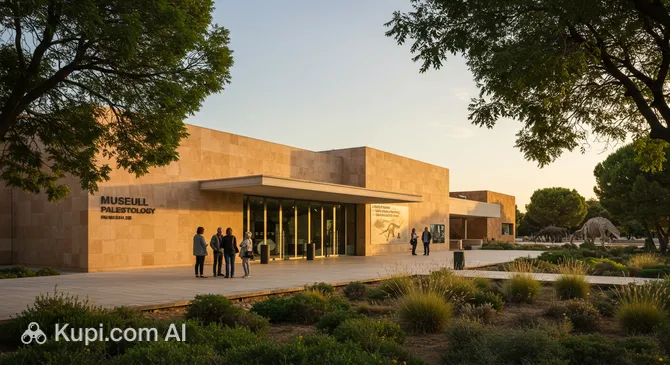
Miquel Crusafont Catalan Institute of Paleontology
Miquel Crusafont Catalan Institute of Paleontology. Иллюстрация. Источник: Kupi.com AI

The institute's collection is considered one of the most significant in Europe, boasting more than 200,000 registered specimens. Here, you can see the famous skull replica of the Miocene primate Pierolapithecus catalaunicus and detailed reconstructions of the region's ancient inhabitants that roamed these lands millions of years ago.

The museum masterfully combines serious academic science with an engaging presentation for the general public. Thanks to its modern educational exhibits, the institute has become a must-visit for anyone interested in natural history who wants to see the results of paleontologists' work with their own eyes.

Contacts

To plan your visit and check the current exhibition details, it's useful to have the official contact information at hand. The museum is located in the central part of the city, making it easily accessible on foot after arriving in Sabadell.

How to contactContact
AddressCarrer de l'Escola Industrial, 23, 08201 Sabadell, Barcelona, Испания
Phone+34 937 26 17 69
Websitewww.icp.cat

What to Do

Visitors to the institute are in for a fascinating journey through the depths of time. In the museum halls, you can take interactive tours that clearly demonstrate all stages of paleontological research — from excavation to data analysis. One of the most interesting areas is the fossil restoration laboratory, where you can watch through glass as specialists painstakingly restore ancient finds.

Special attention should be paid to the unique landscape reconstructions of what the Pyrenees region looked like 66 million years ago. You will be able to see what ancient primates looked like, such as Jordi, Montse, and Pau, who lived over 12 million years ago. These exhibits and modern 3D models help visitors understand the complex path of evolution from ancient ancestors to hominids.

The institute is excellent for family visits: special activities and courses are regularly held for children, while adults will appreciate the depth of scientific information and the professionalism of the staff. The compact size of the museum allows you to get the most out of the experience without feeling tired, making it an ideal spot for an educational break.

Getting There

The Institute of Paleontology is located at Carrer de l'Escola Industrial, 23, in the heart of Sabadell. Thanks to its proximity to Barcelona, you can reach it quickly and comfortably using your preferred mode of transport.

The most popular way is to use the FGC suburban trains (lines S2, S5, S55), which run regularly from the center of Barcelona. The museum building is just a 10–15 minute walk from the railway station. There is also an excellent bus service connecting the two cities.

If you are traveling by car, GPS coordinates will lead you to the central districts, where plenty of parking is available. The museum's proximity to the Autonomous University of Barcelona campus makes it a convenient stop for those planning an extensive exploration of the region's attractions.

Ближайший город: Sabadell

History & Facts

The history of this scientific center began in 1969, when the distinguished paleontologist Miquel Crusafont i Pairó founded the Provincial Institute of Paleontology in Sabadell. Following his passing, the scientist's family donated his priceless personal collection to the city with an important condition: it must remain in Sabadell. In recognition of his achievements, the institute has proudly borne his name since 1983.

Crusafont laid the foundation for the in-depth study of fossil vertebrates in Catalonia, introducing a paleobiological approach that was groundbreaking for its time. His work focused on the evolution of hominoids and the unique fauna of the Vallès-Penedès basin, establishing the institute as a key hub in the European paleontological network.

Since 2010, the museum has transformed into a modern center for the popularization of science. Today, its collection has grown to 200,000 fossils, and the institute actively collaborates with local heritage interpretation centers and advises on the preservation of paleontological finds throughout the country.

Time Needed

Despite its immense scientific value and status as a leading research center, the museum exhibition itself is quite compact and well-organized. Most travelers will need between 1 and 2 hours for a thoughtful tour of all the halls and interactive displays.

This time is sufficient to examine the unique fossils, study the 3D models, and observe the work in the laboratory. If you are traveling with children, who will likely want to linger by the dinosaur reconstructions, or if you plan to read every information panel in detail, you may want to set aside a bit more time for your visit.

Working Hours

When planning your visit, please note the opening hours, as they vary depending on the day of the week. The museum is closed on Mondays. From Tuesday to Thursday, doors are open from 10:00 to 14:00. On Friday and Saturday, both morning and evening hours are available (10:00–14:00 and 17:00–20:00), while on Sunday, you can explore the collection from 11:00 to 14:00.

The entrance fee is very affordable: the standard rate is 3€, and the reduced rate is 2€. A pleasant bonus is provided for children under 7, teachers, and the unemployed — admission is free for them. Additionally, on the first Sunday of every month, the museum opens its doors for free to everyone. Nevertheless, it is recommended to check the official institute website for up-to-date information before your trip.

DayWorking hours
понедельникЗакрыто
вторник10:00–14:00
среда10:00–14:00
четверг10:00–14:00
пятница10:00–14:00, 17:00–20:00
суббота11:00–14:00, 17:00–20:00
воскресенье11:00–14:00

Nearby

A stroll through the surroundings of the Catalan Institute of Paleontology will allow you to soak in the atmosphere of Sabadell. The city center is rich with historical buildings and charming squares, all within walking distance of the museum.

Exploring local landmarks is a perfect complement to the scientific exhibits, allowing you to switch from ancient history to the architecture and culture of modern Catalonia. Below are the most interesting sites located nearby:

NameDistance
Sushi210.1 km
Goiko Burger Restaurant0.3 km
Il Figlio di Emiliano0.4 km
La Creu Alta0.9 km
Water Tower of Sabadell1 km
Parc de Catalunya1.1 km
Playground1.2 km

Reached the end of the page?

That means the route is fully explored