Support

Pont del Diable

About

Located near the city of Tarragona in Spain is an impressive monument of Roman engineering—the Devil's Bridge (Pont del Diable). Officially, this structure is known as the Ferreres Aqueduct (Aqüeducte de les Ferreres). This ancient aqueduct is one of the most significant and well-preserved Roman structures in the country, attracting history and architecture enthusiasts.
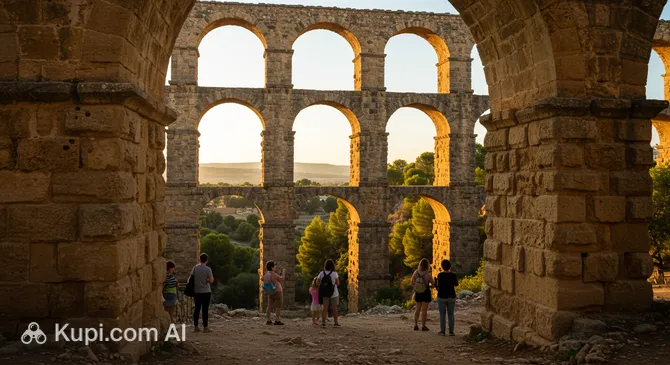
Pont del Diable. Illustration.
Source: Kupi.com AI

Traveler photos:

Built in the 1st century BC during the reign of Emperor Augustus, the aqueduct was a key part of the water supply system for the ancient city of Tarraco, the predecessor of modern Tarragona. Its main task was to transport water from the Francolí River to the city, which testifies to the high level of engineering thought of that time.

The construction is a majestic two-level arcade made of stone blocks. The best-preserved section of the aqueduct spans 217 meters in length and reaches 27 meters in height. Today, visitors can not only admire this ancient wonder from the side but also walk along its top, which offers picturesque views of the surrounding landscape.

The Devil's Bridge is an integral part of the Archaeological Ensemble of Tarraco, which is rightfully included in the UNESCO World Heritage list. Visiting this place is a unique opportunity to touch the greatness of the Roman Empire and feel the connection across time.

Contacts

The Devil's Bridge, also known as the Les Ferreres Aqueduct, is an open-air historical monument, so it doesn't have a dedicated contact center. You can find it about 4 kilometers north of Tarragona, along the CN-240 road. The easiest way to reach the aqueduct is by car or one of the local buses traveling in this direction.

How to contactContact
Address43007 Tarragona, Spain
Phone number+34 675 85 37 22
Websitewww.tarragona.cat

What to Do

Visiting the Devil's Bridge is a unique opportunity to see one of the best-preserved Roman aqueducts in Spain. The main highlight here is, of course, getting acquainted with ancient Roman engineering. You can take a leisurely stroll around this grand structure to fully appreciate its scale and the skill of the ancient builders. The aqueduct consists of two levels of elegant arches made of stone blocks, leaving a lasting impression.

This place is a real find for history buffs and photography lovers. Examine the bridge's construction up close and walk along the paths in the surrounding park to find the best angle. The impressive dimensions—217 meters long and 27 meters high—allow for truly spectacular shots, especially at sunrise or sunset when the soft light highlights the texture of the ancient stones. The upper level offers scenic views of the green valley.

The area around the aqueduct is perfect for a relaxing break. Many visitors combine viewing the historical monument with a picnic in nature or a peaceful walk through the parkland. This is a great way to escape the hustle and bustle of Tarragona and enjoy the silence while admiring this majestic testament to the Roman era.

Getting There

Getting to the famous aqueduct, known as the Devil's Bridge, is quite simple as it is located just 4 kilometers north of the city of Tarragona. The most convenient and fastest way is by car. The journey from the city center takes about 10-15 minutes. Follow the AP-7 motorway and then take the N-240 towards Valls. Tourist signs for "Aqüeducte de les Ferreres" are posted along the route, making it hard to get lost. You can also use any GPS navigator, which will easily plot the route.

If you are traveling without a car, the Devil's Bridge can be easily reached by public transport. Local buses, such as routes No. 5 and No. 85, run regularly from Tarragona. The stop is just a few minutes' walk from the aqueduct itself. This is not only an economical option but also a chance to see the suburban scenery. Alternatively, you can always take a taxi—the short trip will be quick and comfortable, though more expensive.

Nearest city: Tarragona

History & Facts

The Ferreres Aqueduct, much better known by its intriguing name the Devil's Bridge, is an outstanding monument of Roman engineering located near Tarragona. While the exact date of its construction remains a subject of debate, most historians agree it was built in the 1st century BC, during the reign of Emperor Augustus. The main purpose of this grand structure was to supply water from the Gaia River to the ancient city of Tarraco—the flourishing capital of the Roman province, where modern-day Tarragona stands today.

The bridge earned its sinister nickname through numerous medieval legends. According to one version, the head builder, facing insurmountable difficulties, in despair exclaimed that only the devil himself could build a bridge that would stand for a thousand years. Another, more dramatic story, tells of a pact with the devil, who allegedly built the aqueduct in a single night, demanding the soul of the first person to cross it in return. These mystical stories add a special charm to this ancient structure.

Despite its venerable age, the Devil's Bridge is remarkably well-preserved, though not entirely intact. From the original 25-kilometer water supply system, the most impressive fragment has survived—a double-tiered arcade 217 meters long and 27 meters high. Throughout its long history, the aqueduct has undergone several restorations, including under Caliph Abd-ar-Rahman III and in the 18th century. Today, it is not just ruins but an important part of Spain's historical heritage, protected by UNESCO as part of the Archaeological Ensemble of Tarraco.

Time Needed

For most travelers, 1–2 hours is enough to get to know the Devil's Bridge. This time is sufficient to reach the aqueduct from the center of Tarragona, stroll along the paths at its base, take impressive photos against the backdrop of the arches, and fully appreciate the scale of this ancient Roman structure.

If you want to do more than just a quick tour and wish to soak in the atmosphere and surrounding nature, it's worth allocating more time. The area around the aqueduct is a beautiful park with hiking trails. By having a small picnic here or going for a leisurely walk through the forest, you could easily spend up to half a day. Thus, the length of your visit depends entirely on your interests and pace.

Working Hours

The Devil's Bridge, also known as the Les Ferreres Aqueduct, is an ancient open-air structure, making it accessible to visit at almost any time. Generally, such historical monuments do not have strict opening hours like museums. You can come here any day of the year to admire its greatness. It is especially beautiful at sunrise or sunset when the soft light emphasizes the ancient stonework.

Admission to the aqueduct is free, and no advance booking or ticket purchase is required. This allows tourists to plan their visit flexibly. Nevertheless, it is recommended to check for current information on the official Tarragona tourism website before your trip to ensure there are no temporary restrictions due to maintenance work or events in the adjacent park area.

Open 24 hours

Nearby

Visiting such an iconic landmark as the Devil's Bridge is certainly a highlight of any trip. However, to truly experience the atmosphere of Tarragona and its rich history, it is worth exploring beyond a single site. Exploring the surroundings will allow you to discover hidden gems and get a more complete picture of the cultural heritage of this amazing region.

The proximity of other interesting spots makes the Devil's Bridge an excellent starting point for a short walk or drive. Just a few kilometers away, you will find both ancient Roman monuments and cozy parks where you can relax and enjoy the views.

NameDistance
Roman Villa of Centcelles1.8 km
The Cube Day2.8 km
Monument to the Castellers3.1 km
Camp de Mart3.1 km
Roman Walls of Tarragona3.2 km
Archaeological Promenade3.2 km
Model of the Roman City of Tarraco3.2 km

Have you reached the end of the page?

So the route has been studied inside and out